What goes into a new flat roof in Campbell
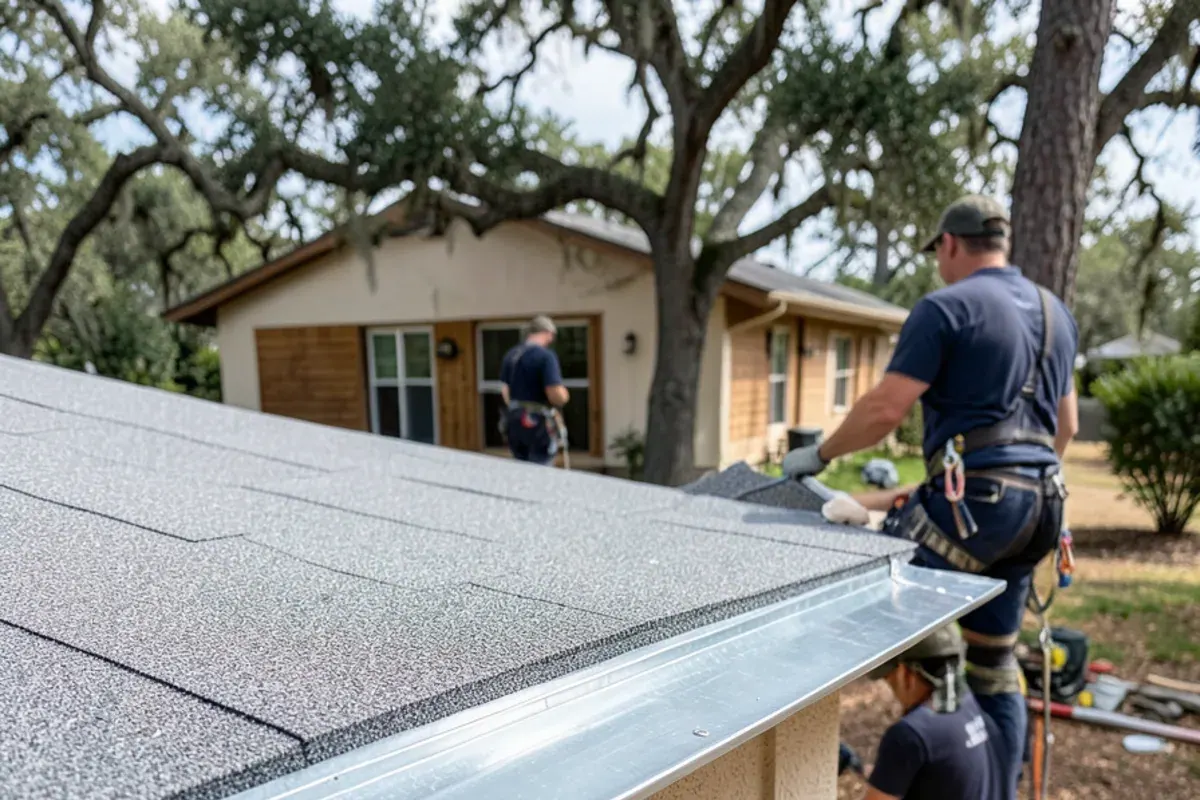
A low-slope roof is a system, and most failures we replace started at a part someone skipped. On a vaulted room or an Eichler-style ceiling there is little or no attic below, so we also check whether condensation, not the roof, is wetting the boards. Every new flat roof we quote lists these pieces separately:
- Tear-off to the deck, including old gravel, felts, rolled roofing and any second layer.
- Deck repair: new plywood or plank sections where boards are rotted, soft or delaminated.
- Slope: tapered insulation, crickets behind curbs and chimneys, or re-set drains.
- Base and cap layers of the chosen membrane, lapped and sealed to the maker's instructions.
- Edge metal and gravel stop sized to the new roof thickness.
- Wall and curb flashings run up behind siding or stucco, not just caulked to the face.
- Drains, scuppers and pipe boots replaced, not reused.
Signs your flat roof is ready for a full replacement
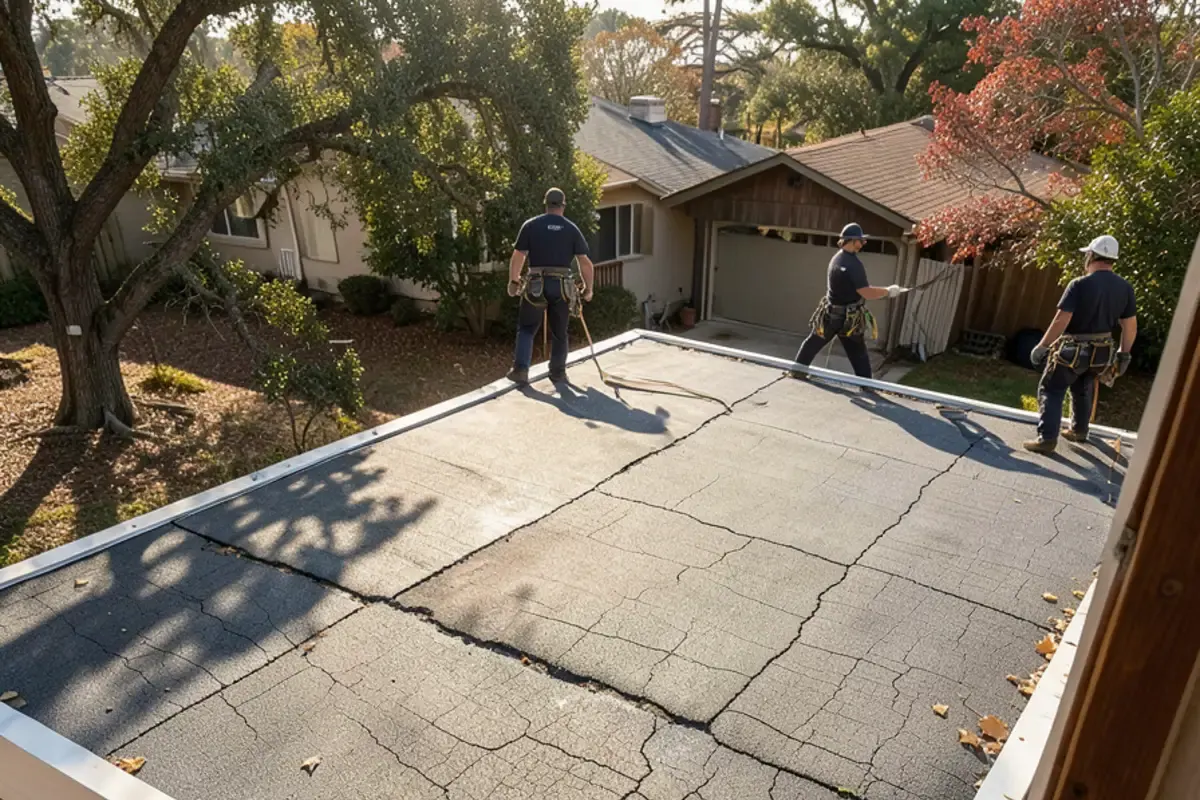
Most low-slope roofs we replace in the South Bay are failing from the top and from underneath at the same time. Long, dry summers bake the surface until the cap sheet sheds granules and the asphalt checks like old paint, while years of small leaks soak the insulation and plank decking below. By the time a ceiling stain shows, the roof has often been wet for a while.
- Age and history: a membrane near the couple of decades most systems are built for, or one patched in several places over the last few winters.
- Surface wear: bald cap sheet, alligatored asphalt, or gravel that has drifted off bare spots.
- Moisture underneath: soft areas underfoot or a probe that comes up wet.
- Prior layers: a recover already sitting on an original roof. The California Residential Code does not allow a new covering over two or more existing layers or over a water-soaked roof, so those jobs start with tear-off.
- Framing sag: ponding across large areas that tapered insulation alone may not correct.
Questions about flat roof replacement?
Call first for the quickest answer, or request a free written estimate below.
Request a free written estimate
Fastest answer: call (725) 745-8803. Or send the details below and we will call you back.
Torch-down roof replacement or single-ply: picking the membrane
| System | Strengths | Trade-offs | Typical use here |
|---|---|---|---|
| Two-ply torch-down modified bitumen | Tough, repairable, forgiving of foot traffic | Open flame; dark cap sheets absorb heat unless a cool-rated cap is used | Garages, dormers, patio covers |
| Self-adhered modified bitumen | Same layered build with no torch | Needs warm, dry weather to bond well | Roofs near dry wood, tight eaves, occupied homes |
| Cap sheet over base sheet | Simple two-layer system with mineral surface | Thinner than multi-ply builds | Smaller low-slope sections and dormers |
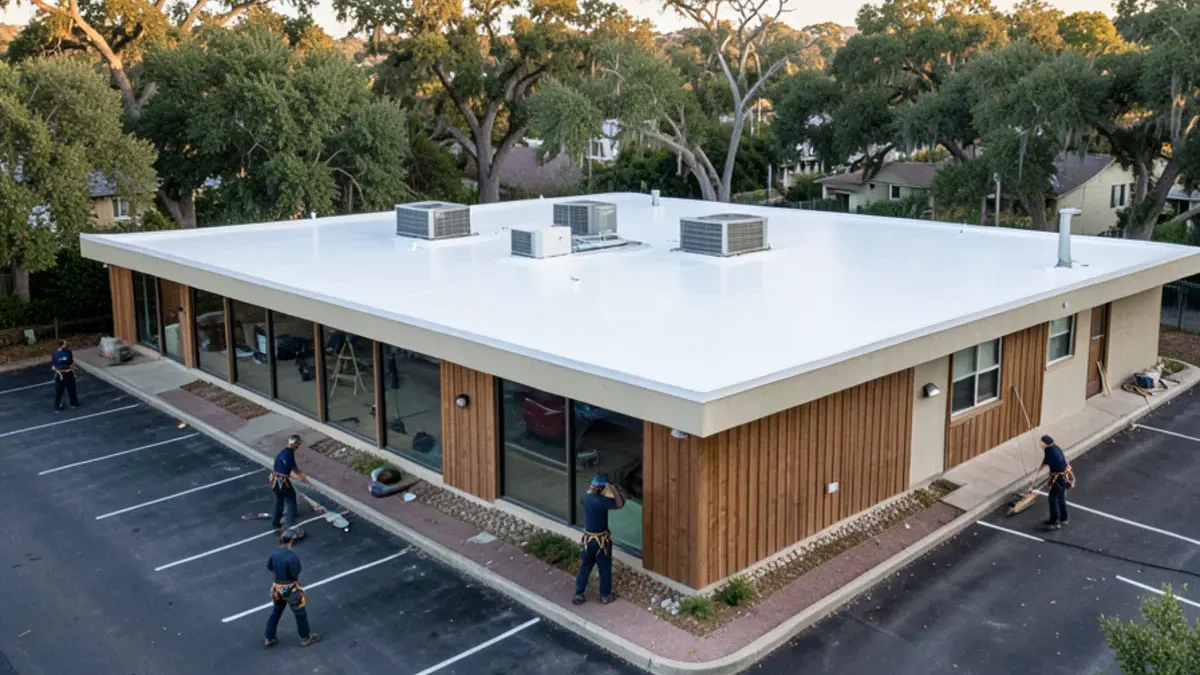
| TPO or PVC single-ply | White, reflective, heat-welded seams | Needs careful detailing; less forgiving of sharp debris | Whole-house roofs, ADUs, cool-roof jobs |
A modified bitumen roof suits a small garage roof that sees ladders and the occasional foot. A reflective single-ply membrane usually makes sense for a bigger roof over living space, where summer heat and Title 24 matter more. Our page on TPO and PVC roofing goes deeper on those membranes.
Can tapered insulation fix ponding for good?
In most cases, yes. Tapered insulation is rigid board cut at a slight angle, commonly a quarter inch of fall per foot, laid in a pattern that steers water toward drains and scuppers. Behind rooftop curbs and chimneys we add crickets, small peaked sections that split the flow around the obstacle.
Two limits apply. Tapered boards raise the roof surface, so door thresholds, wall flashings and edge heights have to be planned around the new thickness. And if framing has sagged badly, insulation can only hide so much; we will tell you if a structural fix belongs in the scope.
How does a low slope reroof unfold, day by day?
- Before work: we file the permit, confirm any cool-roof requirement, order materials and agree on where the dumpster or trailer sits.
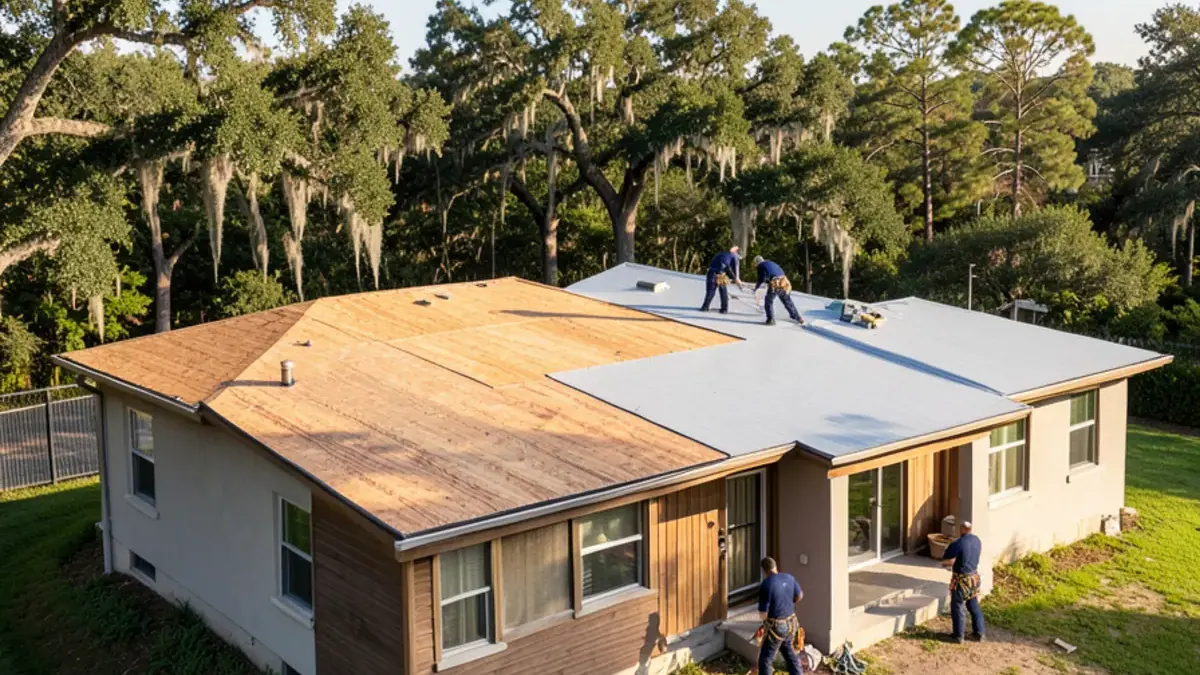
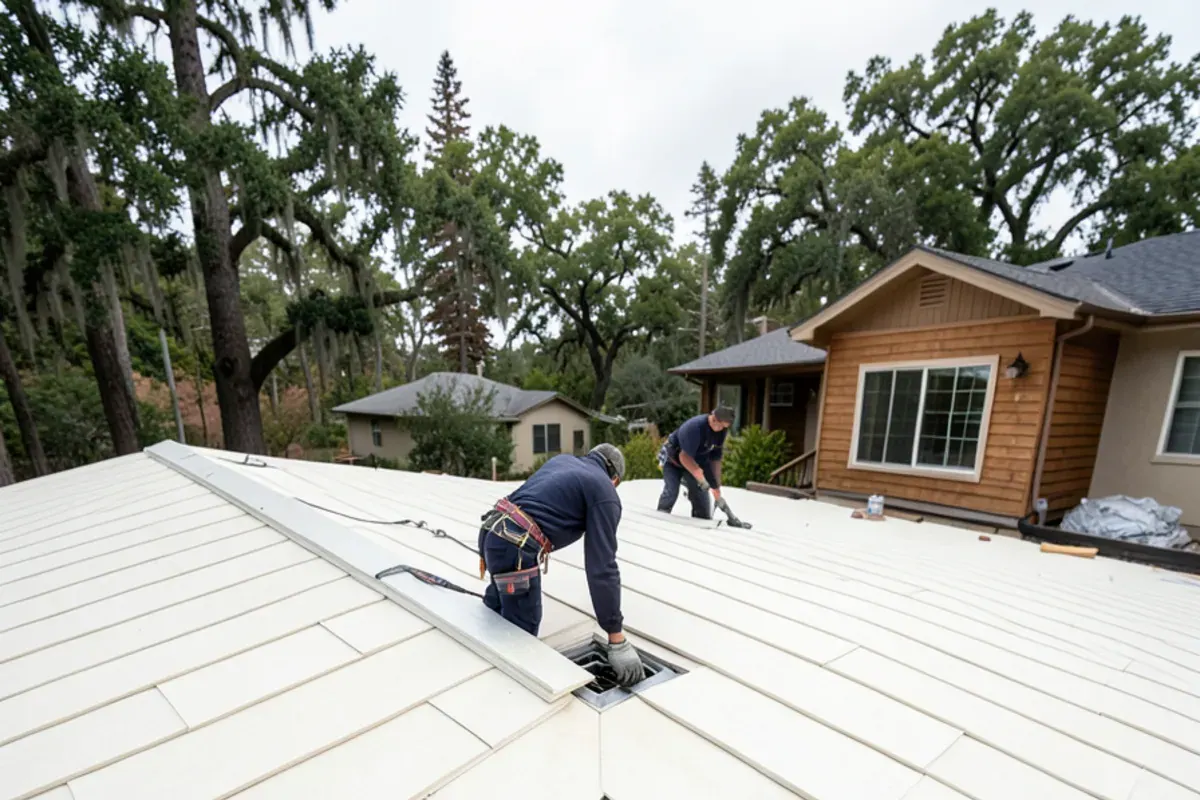
- Tear-off day: old layers come off in sections, so the deck is never left open overnight; anything removed is covered or dried-in by evening.
- Deck work: rotted boards are replaced and photographed for you and, in Campbell, inspected before covering.
- Build-up: tapered insulation, base sheet and flashings go down, then the cap sheet or membrane.
- Details: edge metal, drains, scuppers and pipe boots are set and sealed.
- Cleanup and final: magnetic sweep for nails, debris hauled out, and the final inspection scheduled.
A garage or dormer often wraps up in a day or two. A whole-house low-slope roof takes longer, and weather between November and March can add days.
Flat roof replacement in Campbell, CA: permits, inspections and Title 24
The City of Campbell issues reroof permits through its MyGovernmentOnline portal. The city issues them to C-39 roofing contractors or to owner-builders, requires a separate permit for each building, and inspects the sheathing nailing before roofing covers it, then performs a final. Rotted sheathing has to be replaced before the reroof inspection. Unincorporated parcels with Campbell or San Jose addresses are handled by the County, through its Planning and Development Department.
California's Title 24, Part 6 can require a cool roof when a low-slope roof is replaced, depending on climate zone and how much of the roof is covered by the work. Campbell sits in Climate Zone 4. We check the current requirement with the permit office and choose a cap sheet or membrane rated by the Cool Roof Rating Council when it applies.
The California Residential Code sets a minimum slope of one-quarter inch per foot for new modified bitumen and single-ply roofs, while a reroof is exempt if the roof still drains positively. That is why we map where water sits before deciding on tapered insulation. Because every reroof needs a permit, it also needs a licensed contractor; confirm the C-39 classification of anyone bidding on the CSLB license lookup.
Built up roof replacement on older houses
Original tar-and-gravel roofs still cover some 1950s-70s homes and mid-century tracts around the South Bay. They are heavy, and many were patched with hot asphalt or roof cement so often that the surface is several layers thick in places.
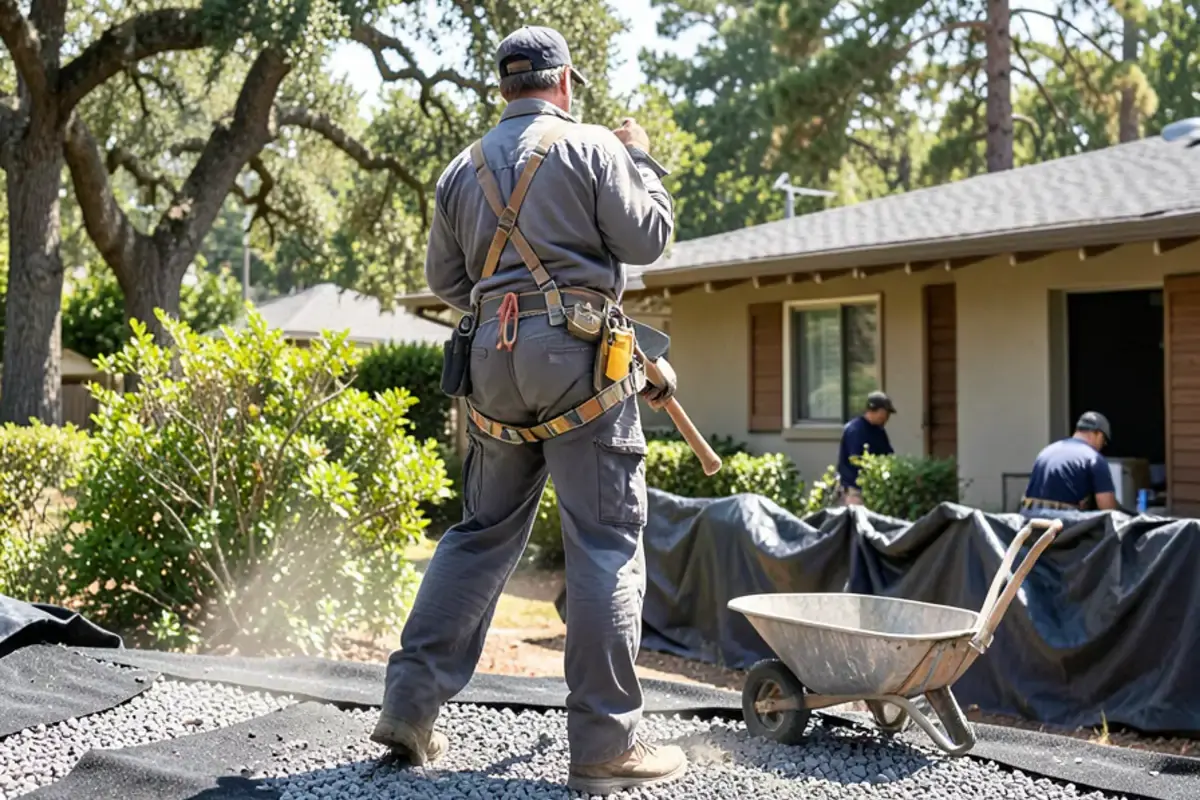
Replacing one means scraping the gravel, cutting the felts free of the deck and hauling it all away. That is slower and dustier than stripping rolled roofing, so we tarp landscaping and windows and clean up daily. The payoff is a lighter roof and a clear look at decking that has not been seen in decades.
What moves the price of a new flat roof?
We quote after measuring and probing the roof, never from a square-foot guess. The biggest swings come from:
- Layers being removed and whether gravel is involved
- Square footage of decking that turns out rotted once exposed
- How much tapered insulation it takes to reach every drain
- Membrane system and any cool-roof rating required
- Number of curbs, skylights, vents and wall transitions to flash
- Access, haul distance and permit fees
If the existing membrane is dry and well attached, a roof coating may extend it for less than a tear-off. We will say so when the moisture checks support it.
Why Campbell owners hand us the whole flat roof tear-off
We are a family-run roofing company, and the estimate is free, written and itemized, with photos of the deck, drains and flashings so you can see why each line is there. If a repair or a coating will do instead, we say so, even when that means a smaller job. During tear-off we tarp landscaping, clean up every day and haul away old felts and gravel. If a storm started the trouble, we document the damage with photos and line items your insurer can work from. Each manufacturer issues its material warranty on its own terms; our workmanship terms are spelled out in writing on the estimate.
Getting your home ready for tear-off day
- Move cars out of the garage and driveway if the work is over the garage.
- Take fragile items off shelves on walls under the roof; tear-off vibrates.
- Clear patio furniture and potted plants from the drip line.
- Let us know about pets, side-gate codes and any solar or satellite equipment on the roof.
Ready to stop patching? Call (725) 745-8803 for a free flat roof replacement estimate.
Call (725) 745-8803