
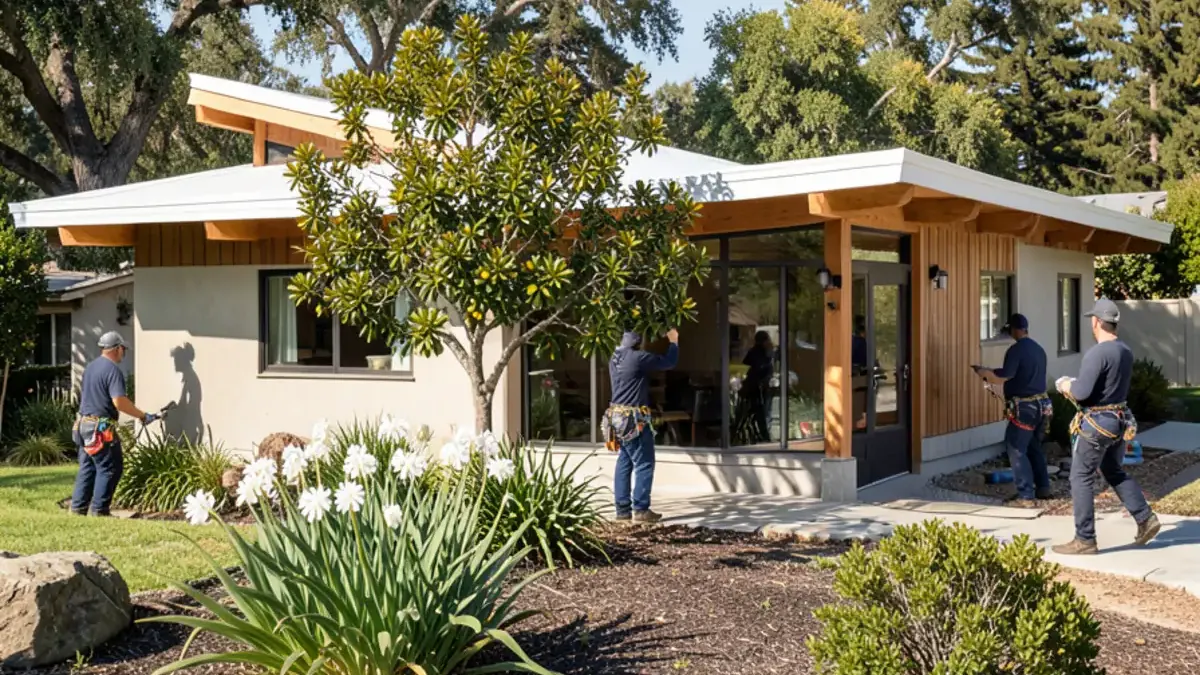
What sets flat roof replacement cost?
- System choice: coating, torch-down, TPO, PVC or EPDM, each with different material and labor costs.
- Tear-off: removing tar and gravel, old foam or several layers of rolled roofing takes time and adds disposal fees.
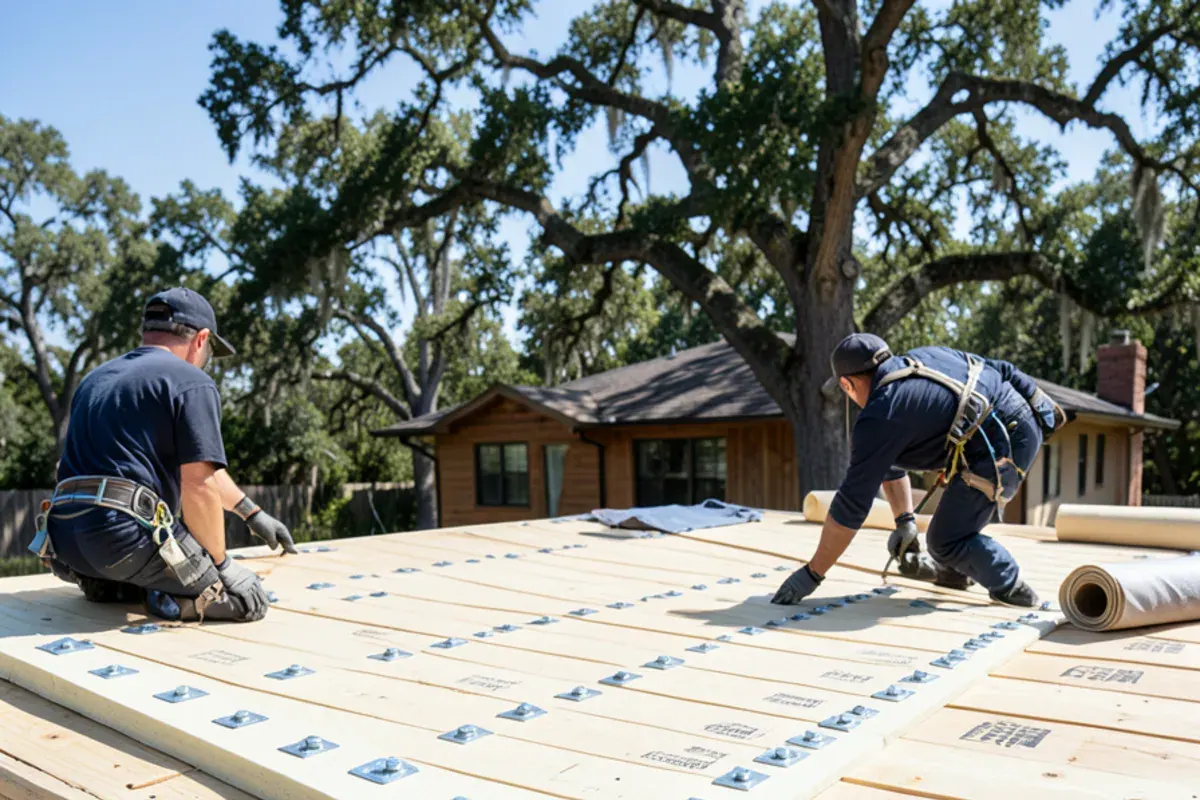
- Decking repair: low-slope roofs that ponded water often hide soft or delaminated decking.
- Insulation: rigid board above the deck can improve comfort in homes with no attic, but it adds cost and raises the roof edge.
- Drainage: new drains, scuppers, crickets or tapered insulation to stop ponding.
- Edges and walls: parapets, gravel stops, wall flashing and roof-mounted equipment all need detailing.
- Code items: Title 24 cool-roof requirements and the local permit.
Comparing flat roof systems for your home or garage? Call (725) 745-8803 for a free inspection and itemized estimate.
Call (725) 745-8803Torch-down, TPO, PVC or coating: how the prices compare
Only two flat roof figures come with a source we can name, and neither is our price. 2026 contractor listings put commercial TPO at $400–$600 per square (100 sq ft). Setup, edge detailing and disposal are spread over far fewer squares on a garage or an Eichler, so treat that as a reference point rather than a home price. A contractor's claim, not independent data, puts a silicone coating over a sound flat roof at roughly 30–50% of replacement cost. Confirm both against your written estimate.
| System | Relative cost | Sourced figure | Best suited to |
|---|---|---|---|
| Silicone coating over existing roof | Lowest, when the roof qualifies | Roughly 30–50% of replacement cost (a contractor's claim, not independent data) | Sound roofs with little wet insulation |
| Modified bitumen (torch-down) | Middle of the range | None we can source | Garages, porches, small residential flat roofs |
| TPO single-ply membrane | Higher than torch-down | Commercial TPO: $400–$600 per square (contractor listings, 2026) | Larger areas wanting a white, reflective surface |
| PVC single-ply membrane | Usually at or above TPO | None we can source | Roofs with equipment or decks, chemical resistance |
| Tear-off of old roof | Added to any full replacement; climbs with tar and gravel or extra layers | None we can source | Every replacement that is not a coating |
Our flat roof replacement page explains how each system is installed and what it needs underneath.
Torch-applied or self-adhered modified bitumen?
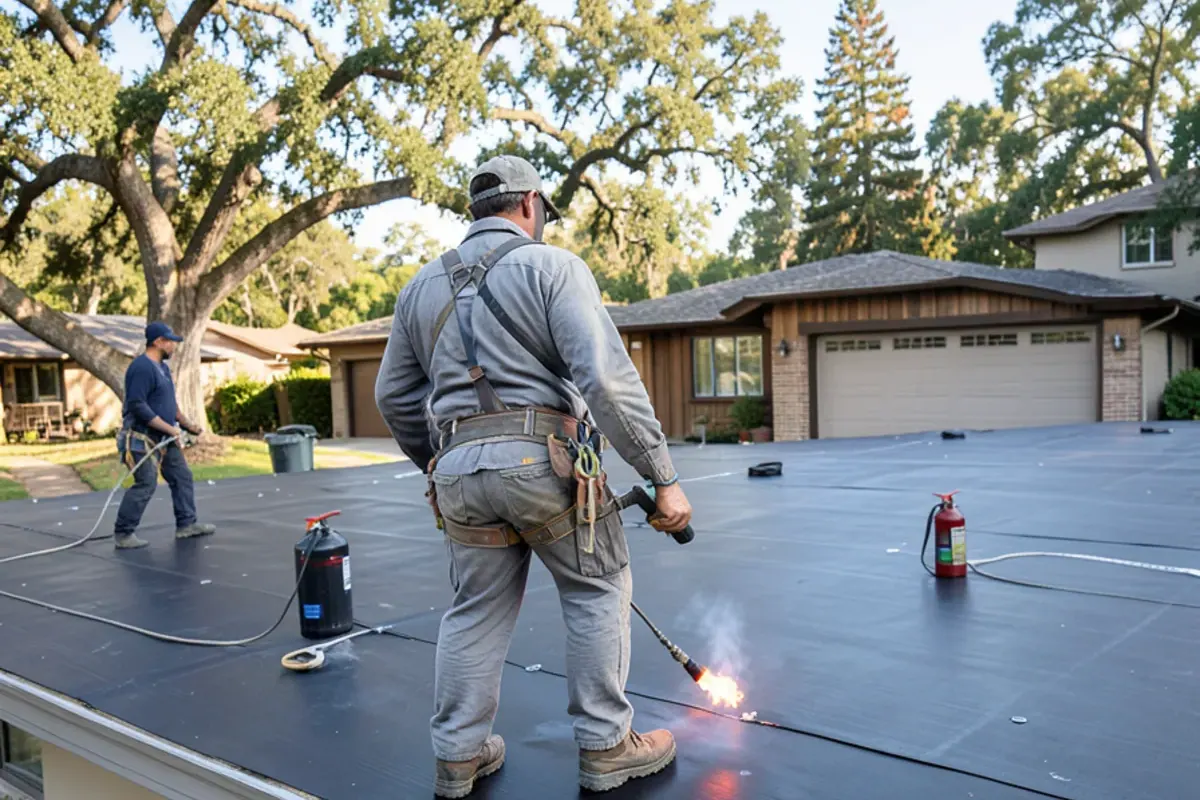
Modified bitumen comes in two common forms. Torch-applied sheets are melted into place with an open flame, and California Fire Code hot-work rules call for precautions and a fire watch after torching. Self-adhered sheets stick down without a flame, which matters next to wood fascia, exposed Eichler beams or tight wall details. The trade is usually a higher material line for self-adhered sheets against the time and fire precautions of torch work; a good estimate names which one is included.
When is a silicone coating enough?
A coating restores the surface of an existing roof; it does not fix wet insulation or rotten decking. It can be a good value when the roof underneath is still sound. Use this checklist to see whether a roof coating is realistic:
- ☐ The existing membrane is still attached and not blistered over large areas
- ☐ Core samples or moisture readings show dry insulation
- ☐ Decking feels solid underfoot with no soft spots
- ☐ Ponding is limited, or drainage can be improved first
- ☐ Seams and flashings can be repaired before coating
If two or more boxes stay unchecked, a full replacement usually costs less over time than coating a failing roof.
Drainage slope: the line item that surprises flat-roof owners
Most flat roofs are not truly flat. The California Residential Code calls for new single-ply and modified bitumen roofs to have a design slope of at least one-quarter inch per foot, so water moves toward drains instead of sitting. Reroofs get some relief: the code generally lets a replacement skip that minimum if the existing roof already drains positively. A roof that ponds does not qualify, and that is where tapered insulation and crickets enter the estimate.
Worked example: building slope into a dead-flat deck
- Measure the run. Say the roof drains to a scupper along one wall, and the far edge is 20 feet away.
- Apply the slope. One-quarter inch per foot over 20 feet means the far edge has to sit 5 inches higher than the drain side.
- Choose how to build it. Tapered insulation boards are cut to that profile; small crickets steer water around equipment and chimneys.
- Follow the ripple effects. A roof edge raised several inches may need new fascia trim, taller gravel stops and attention at door thresholds onto a roof deck.
None of that shows up in a membrane-only price, which is why drainage is one of the biggest gaps between flat-roof bids.
Eichler roofs: insulation, drains and the costs underneath
Eichler homes have exposed beams and tongue-and-groove ceilings with no attic, so the roof is the only thing between the living room and the sky. Many tracts in Sunnyvale, Cupertino, Palo Alto and San Jose carry foam, tar-and-gravel or single-ply roofs that have been replaced once or more.
Adding rigid insulation on top of the deck is the usual way to improve comfort, but it raises the roof edge and means new fascia trim and gravel stops. Drains are often original and undersized. These items, not the membrane, are where Eichler estimates differ most. Our Eichler roofing page covers the details.
Does Title 24 require a cool roof on a flat reroof?
Often, yes. California's Title 24, Part 6 cool-roof rules can apply to reroofs depending on climate zone, slope and the share of roof replaced, and low-slope reroofs are the most common trigger. Most South Bay cities sit in Climate Zone 4. White TPO, PVC and many coatings meet cool-roof ratings, while some dark torch-down cap sheets need a reflective cap or coating to comply. Ask your roofer to confirm the requirement with the permit office before choosing a system.
Compliance has a cost side and a comfort side. A rated white surface may add a little to the material line, but on a home with no attic it also cuts the heat that a dark roof pushes straight into the rooms below during a South Bay summer. Product ratings can be checked in the Cool Roof Rating Council directory.
Two details help when reading the rule. The Energy Code defines a low-sloped roof as one with a rise of 2 in 12 or less, which covers nearly every flat residential roof. And the 2025 edition of the standards took effect on January 1, 2026, so permits applied for this year fall under it; product compliance is shown with the aged reflectance and emittance values listed by the Cool Roof Rating Council.
From our roof visits: ponding water tells the story
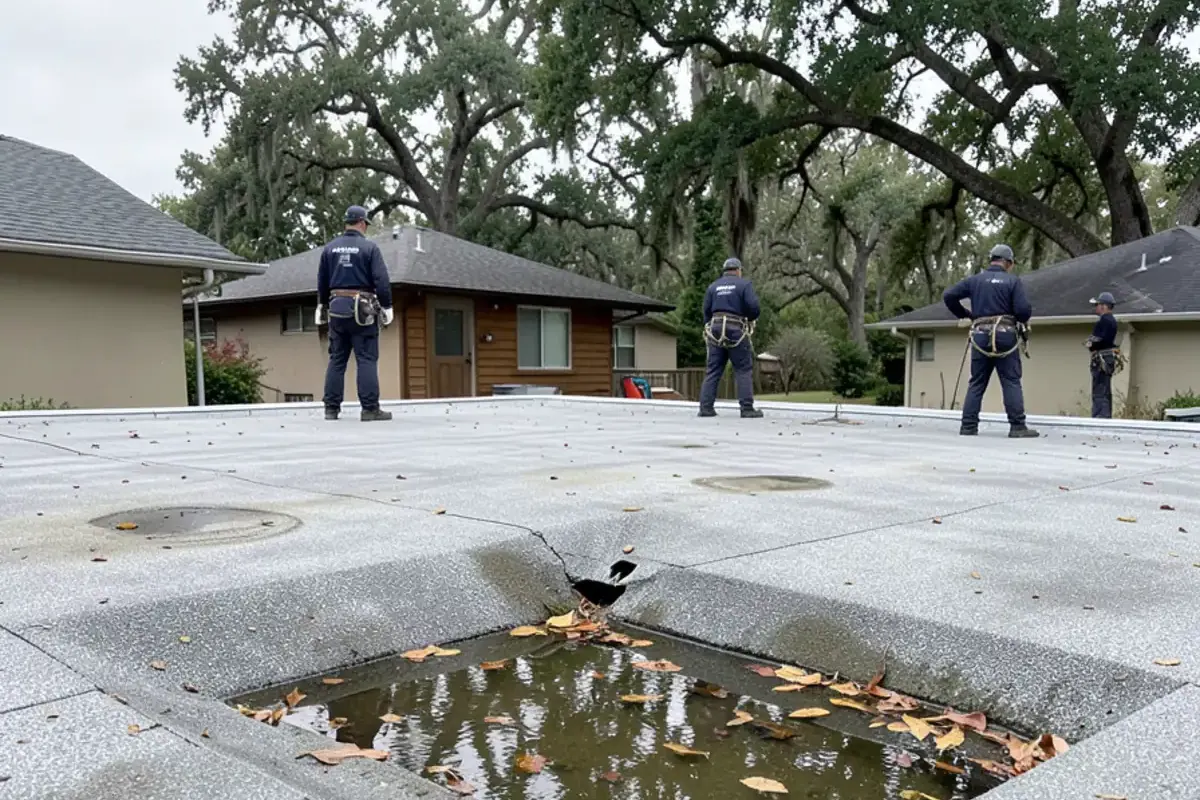
The best predictor of a flat roof's remaining life is how water behaves on it. Standing water that lingers for days after rain breaks down surfacing, loads the deck and finds every seam. Before pricing any new system, we look for ponding marks, check drains and scuppers, and photograph soft areas.
On mid-century homes around Cupertino, we also see patio covers and additions tied into the flat roof with mismatched materials. Getting those joints right during replacement prevents the leaks that usually follow a cheaper patch-over.
Trade-offs we put in front of every flat-roof owner
A coating is the cheapest path only while the roof underneath stays dry; coat over wet insulation and the savings disappear in the next repair. Tapered insulation fixes ponding for good, but it raises the edge and adds trim work. White single-ply keeps an Eichler noticeably cooler, yet some owners dislike how bright it looks from a hillside above. And a full tear-off costs more than a recover, but on a roof with soft decking it is the only way to see and fix what is underneath.
Putting a flat roof budget together, line by line
The membrane is the line everyone asks about first, but it is rarely what decides the total. Work through the estimate in this order and the price starts to make sense.
- Condition first: moisture readings or core samples decide between coating, recover and tear-off before any system is chosen.
- Deck repair allowance: a per-sheet price for soft decking, stated in writing.
- Drainage: tapered insulation, crickets, new drains or scuppers, and how the slope was calculated.
- System and color: membrane type, thickness and whether the product carries a CRRC rating for Title 24.
- Edges and walls: fascia, gravel stops, parapet and wall flashing, and any equipment curbs.
- Permit and inspections: listed as its own line, not buried in the total.
Want those lines priced for your flat roof? Call (725) 745-8803 for a free inspection, moisture check and written estimate.
Call (725) 745-8803