
What gutters in Campbell, CA are up against each winter
Almost all of Campbell's rain arrives in a few months, and much of it comes in atmospheric-river storms that drop an inch or more in a day. A gutter that coped with a drizzly week in October can overflow along its whole length in January. The weak spots show up fast: corners that open, hangers that pull out of soft wood, and downspouts that dump everything at the base of the wall.
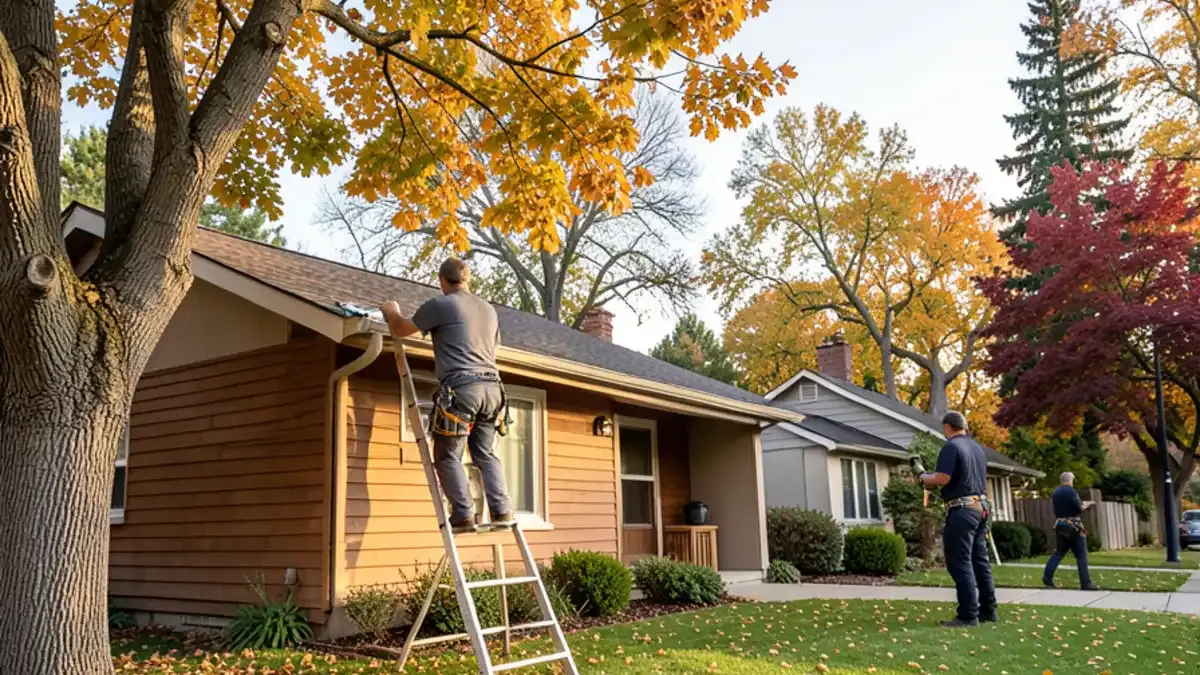
Two local conditions make that worse. First, the street trees. Oaks, sycamores, liquidambars, pines and redwoods over Campbell, Los Gatos and Saratoga fill troughs with leaves in fall and needles all year. Second, the soil. Much of the valley floor is expansive clay that swells when wet and shrinks when dry, so water left beside a slab or crawlspace wall works against the foundation season after season.
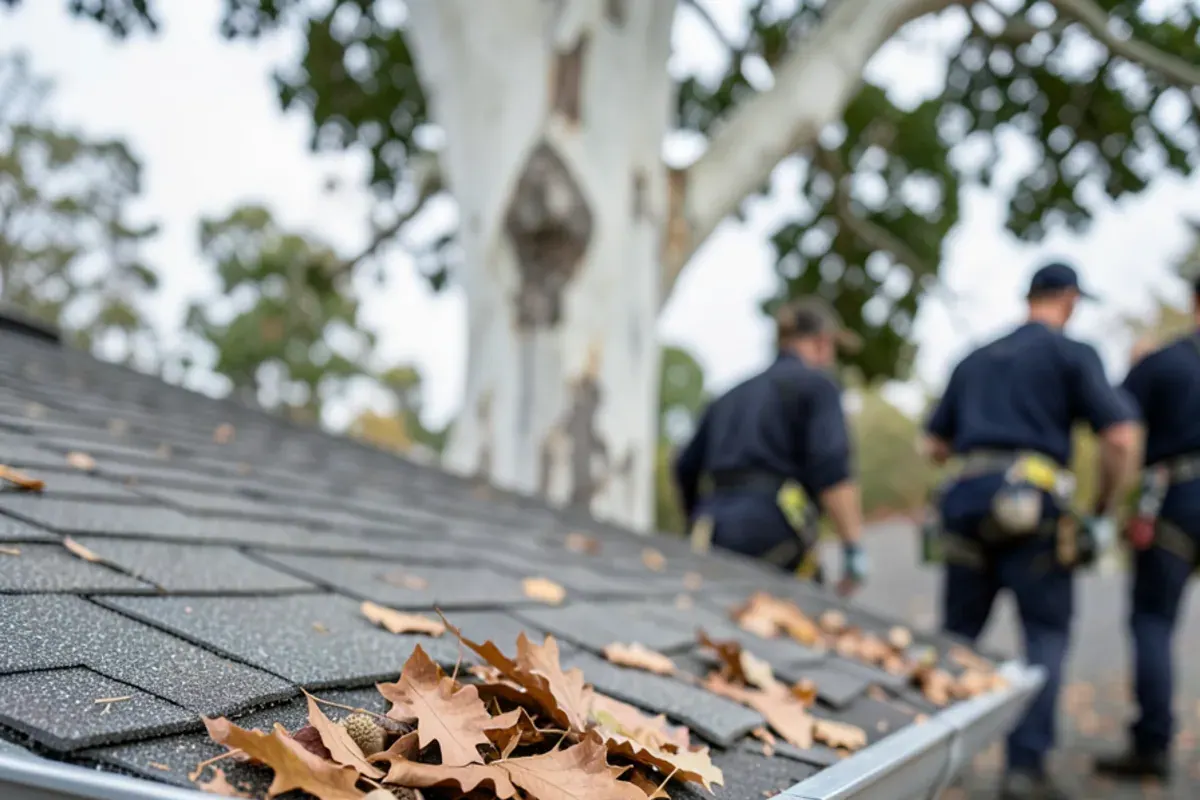
The houses matter too. Campbell's 1950s–70s ranch homes have long, low eaves, often with exposed rafter tails and original fascia boards that are now 50 to 70 years old. Gutters on those homes are only as solid as the wood they hang from, which is why we treat the gutter and the board behind it as one system.
Which gutter service fits the problem you are seeing?
Most calls start with a symptom rather than a service name. This table matches what homeowners notice to the work that usually fixes it.
| What you notice | Likely cause | Where to start |
|---|---|---|
| Water sheeting over the front edge in heavy rain | Debris, too few outlets, or a run with no fall | Gutter repair or a cleaning |
| Drips at corners and joints | Failed sealant or separated miters | Gutter repair |
| Leaves and needles back within weeks | Heavy tree cover over the roof edge | Gutter guards |
| Overflow after the first big storm of the season | A full summer and fall of debris | Gutter cleaning |
| Rusted, split or undersized runs throughout | End of service life | Gutter installation |
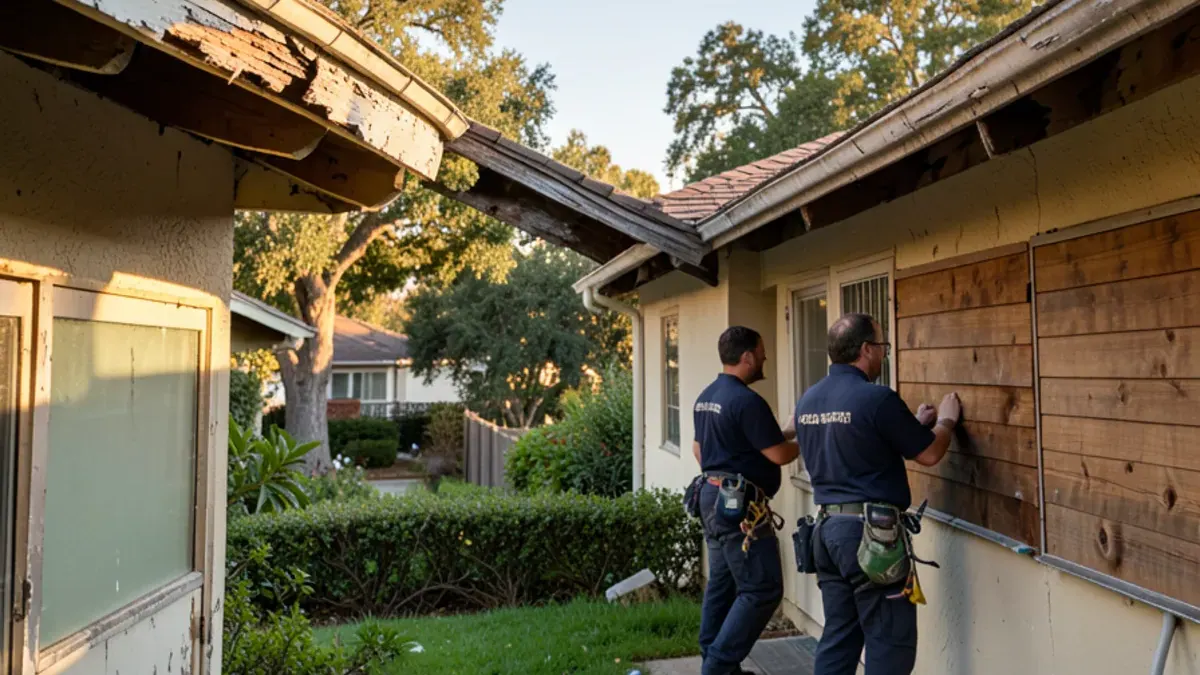
| Peeling paint, soft wood or gaps behind the gutter | Dry rot from years of overflow | Fascia and soffit repair |
Often a visit turns up two of these at once, such as a clogged run that has been overflowing long enough to rot the fascia. When that happens, the estimate lists each item separately so you can decide what to do now and what can wait.
Questions about gutters & downspouts?
Call first for the quickest answer, or request a free written estimate below.
Request a free written estimate
Fastest answer: call (725) 745-8803. Or send the details below and we will call you back.
Seamless gutters, downspouts and the parts in between
A rain gutter system on a Campbell house is more than the trough you see from the street. Each part has its own job, and a weak link anywhere sends water where it should not go.
- Seamless gutters: aluminum rolled from coil to the exact length of each wall, so the only joints are at corners and end caps. Fewer joints means fewer places to leak.
- Hangers: hidden brackets screwed through the fascia into the rafter tails, spaced closer together where trees drop limbs or where a run carries water from a valley.
- Outlets and downspouts: the drains of the system. Undersized or too few outlets cause more overflow complaints than any other single fault we see.
- Splash blocks, extensions and drain lines: the last few feet, which decide whether water ends up in the yard or against the foundation.
- Drip edge and roof-edge flashing: the metal that steers water off the shingles and into the gutter instead of behind it.
When a system is past saving, seamless gutter installation replaces the whole run, outlets and downspouts included, sized to the roof area each wall drains.
Where should downspouts drain on Campbell's clay soil?
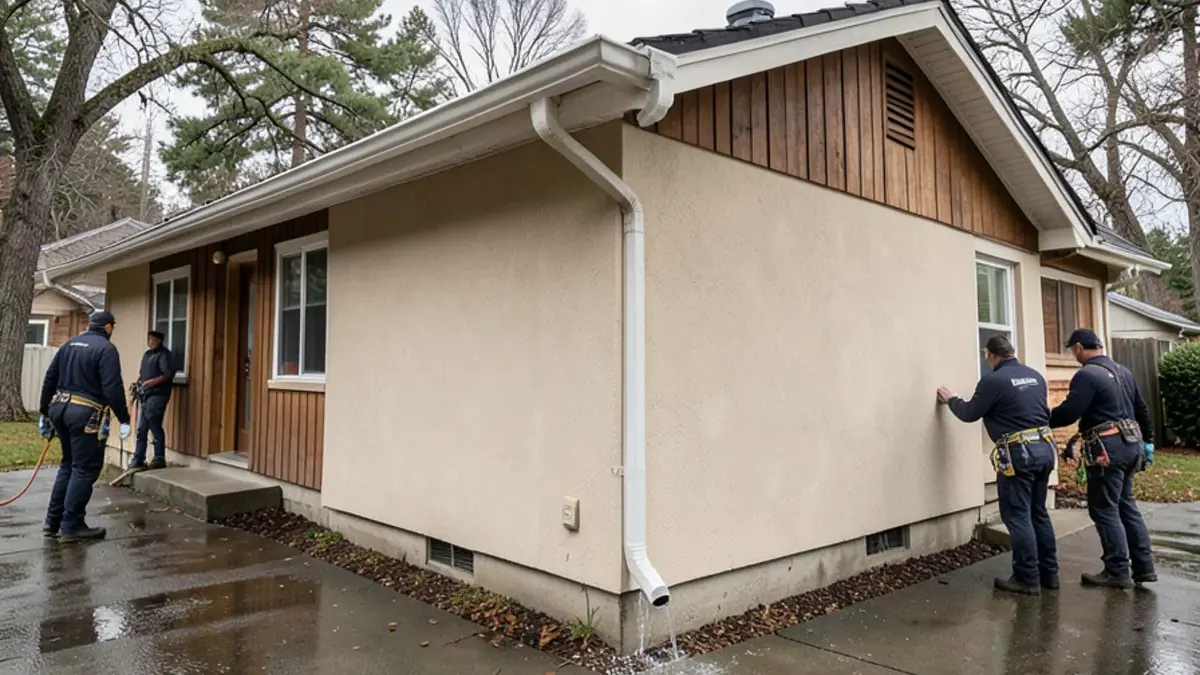
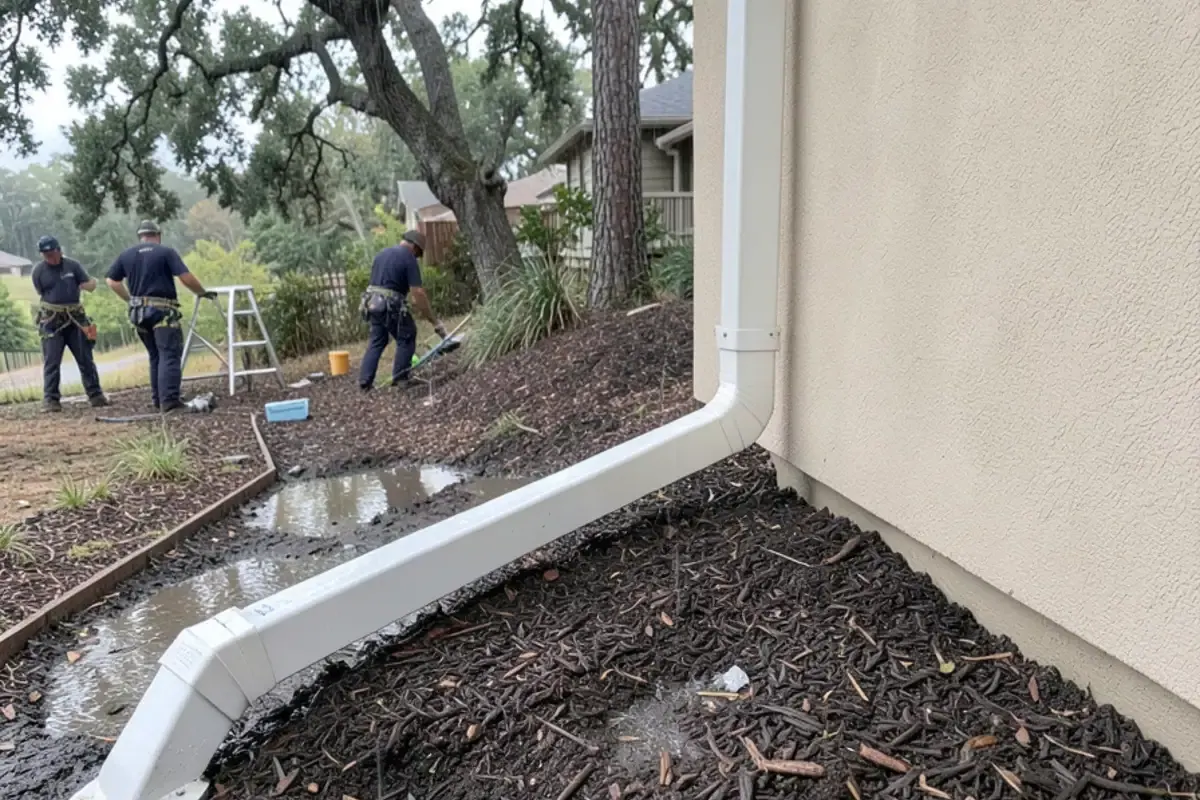
Downspouts should discharge well away from the house, onto ground that slopes away from the foundation, and never toward a neighbor's lot. On expansive clay, a downspout that empties onto a 12-inch splash block beside the wall keeps that soil soaked all winter, which can show up as cracked stucco, sticking doors or a wet crawlspace.
- Extend each downspout several feet out with a solid extension or a buried drain line to a landscaped area.
- Avoid sending roof water into a crawlspace vent well, a sunken patio or the side yard between two houses.
- Keep underground lines clear with a cleanout where they leave the downspout, since roots and silt block them over time.
- Before connecting to a curb outlet or a storm drain, check with the City of Campbell's Public Works Department, or the County for unincorporated addresses.
Trees, fire zones and roof style change the plan
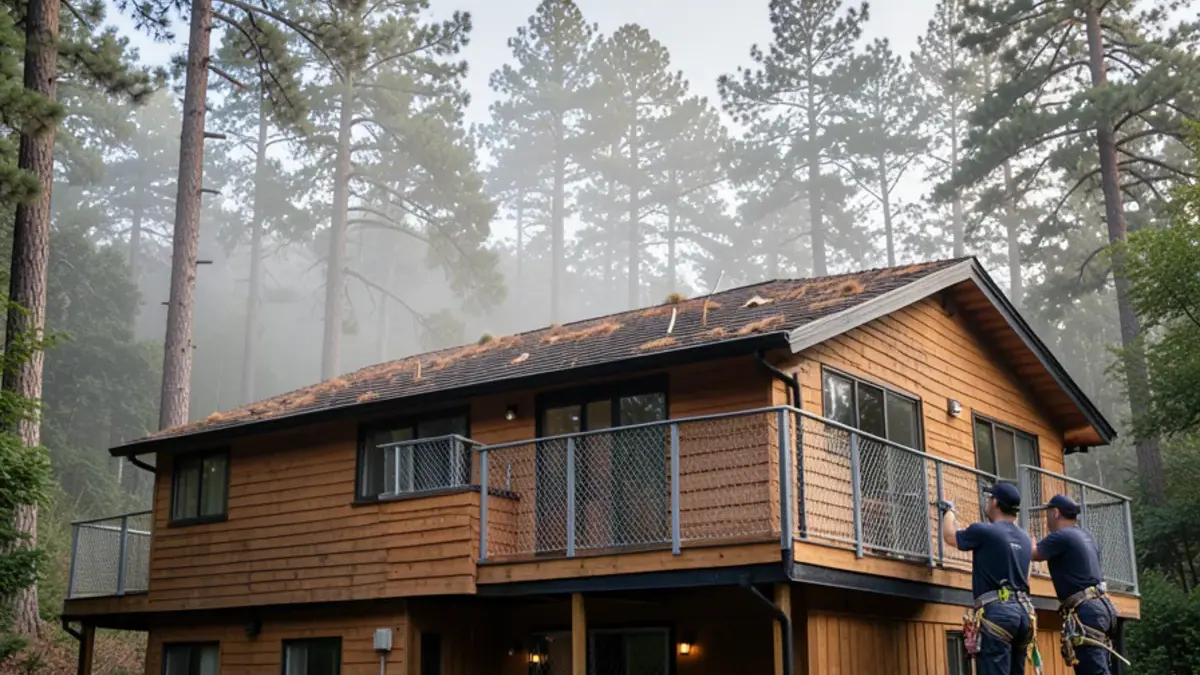
Two houses on the same Campbell block can need very different gutter setups. A home under a valley oak sheds broad leaves in a few heavy weeks; a home under a redwood or a pine collects fine needles that slip through ordinary screens. That difference decides whether a basic screen, a micro-mesh guard or a cleaning plan makes more sense.
In the foothills of Los Gatos, Saratoga and Monte Sereno, part of the land sits in CAL FIRE Fire Hazard Severity Zones. There, dry leaves in a gutter are fuel sitting right at the roof edge. Tile and flat roofs bring their own details: tile edges need guards that do not lift the tile, and low-slope roofs on Eichlers and additions often drain through scuppers rather than standard outlets.
Gutter replacement cost: the factors behind your estimate
We do not post gutter prices, because two houses with the same footprint can land far apart. Here is what goes into the number on your written estimate.
- Linear footage and the number of corners: every inside and outside miter adds labor and a potential joint.
- Height and access: a single-story ranch with a clear yard is quicker than a two-story house over a hillside or a pool.
- Size and material: 6-inch troughs and 3x4 downspouts cost more than 5-inch and 2x3; copper costs far more than aluminum.
- Fascia condition: rotted boards must be replaced before new gutters can hang from them.
- Guards and drain lines: micro-mesh guards and buried downspout lines are separate items you can add or leave off.
For background on how contractors price this work around the valley, see our post on gutter installation cost in Santa Clara County.
How our gutter company handles a Campbell job
We are a family-run roofing team, and gutters are part of the roof to us, not an add-on. Each free estimate is itemized in writing, repairs listed apart from upgrades.
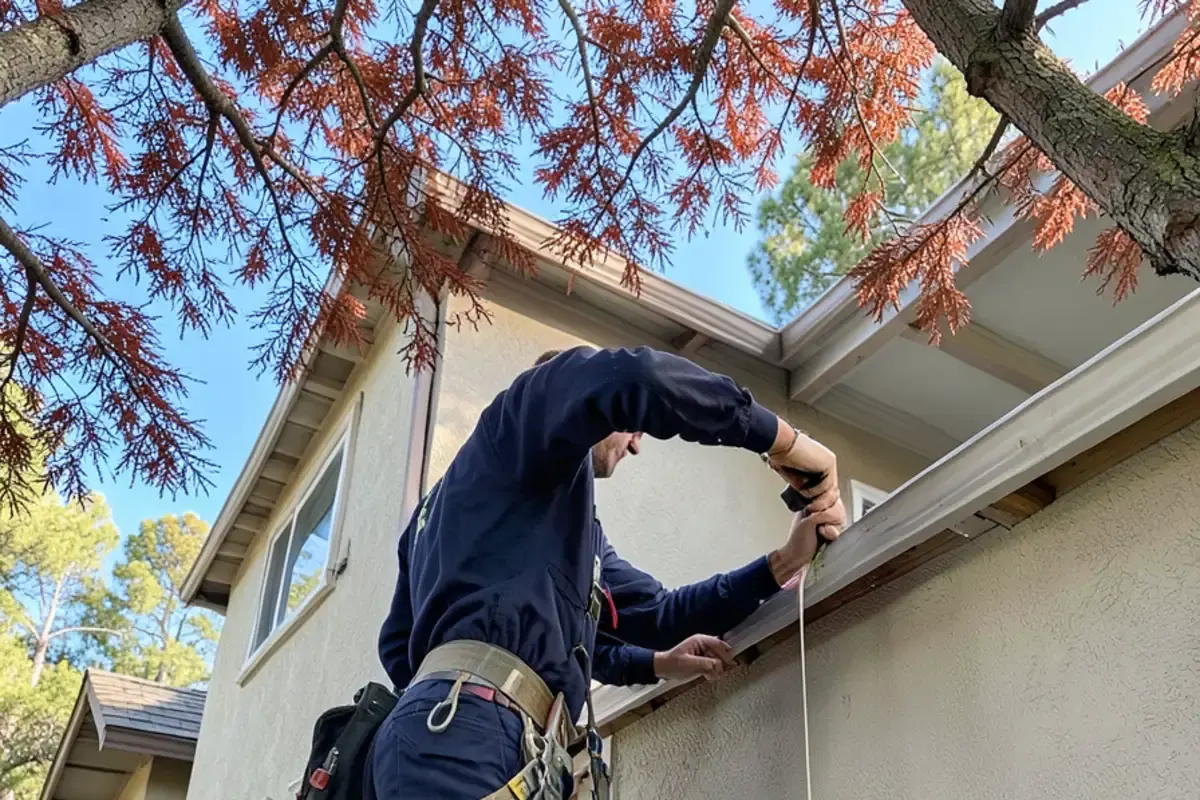
- Walk the edge. Check every run, probe the fascia for soft wood and note where each downspout empties.
- Photograph and price. The photos come with your written estimate.
- Protect the ground. Plantings below the eaves get covered before the old runs come down.
- Fix the wood, then hang. Soft fascia is replaced so hangers bite sound lumber, and new runs are set with fall toward each outlet.
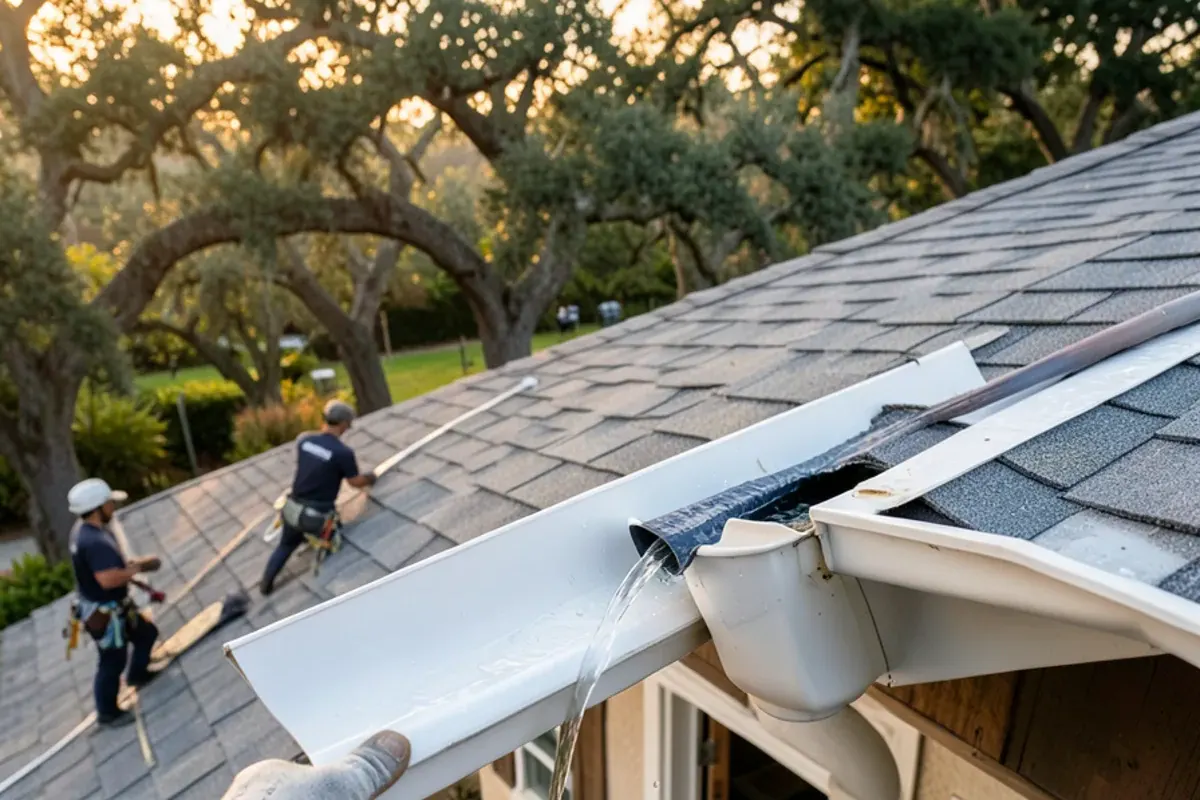
- Water-test. A hose on the roof shows whether every outlet and downspout flows before the ladders come down.
- Clean up and report. Old metal is hauled away; cracked shingles seen from the ladder become separate roof repair lines, and blocked soffit vents get flagged for attic ventilation.
Permits and licensing for gutter work
Ask the City of Campbell Building Division whether your gutter job needs a permit, or County Planning and Development for an unincorporated address. Under CSLB rules, a job of $1,000 or more, labor plus materials, needs a licensed contractor; check the number at cslb.ca.gov. For homes inside a mapped Fire Hazard Severity Zone, the state's wildland-urban interface code (Building Code Chapter 7A) says gutters must have a means of keeping leaves and debris from collecting.
Water spilling over the gutters this season? Call (725) 745-8803 and we'll set up a free look at your roof edge.
Call (725) 745-8803