Wind damage roof repair starts with what you can see from the yard
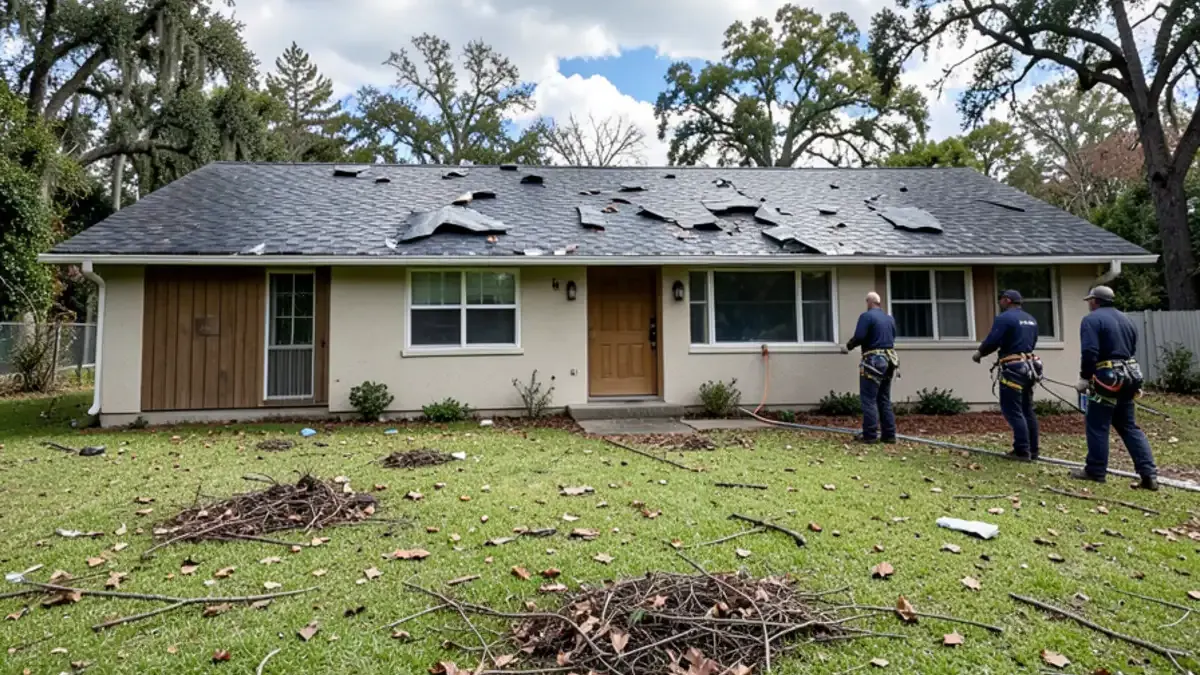
Most wind damage can be spotted without a ladder. Walk the yard and the street side with binoculars, or a phone camera zoomed in, and look for:
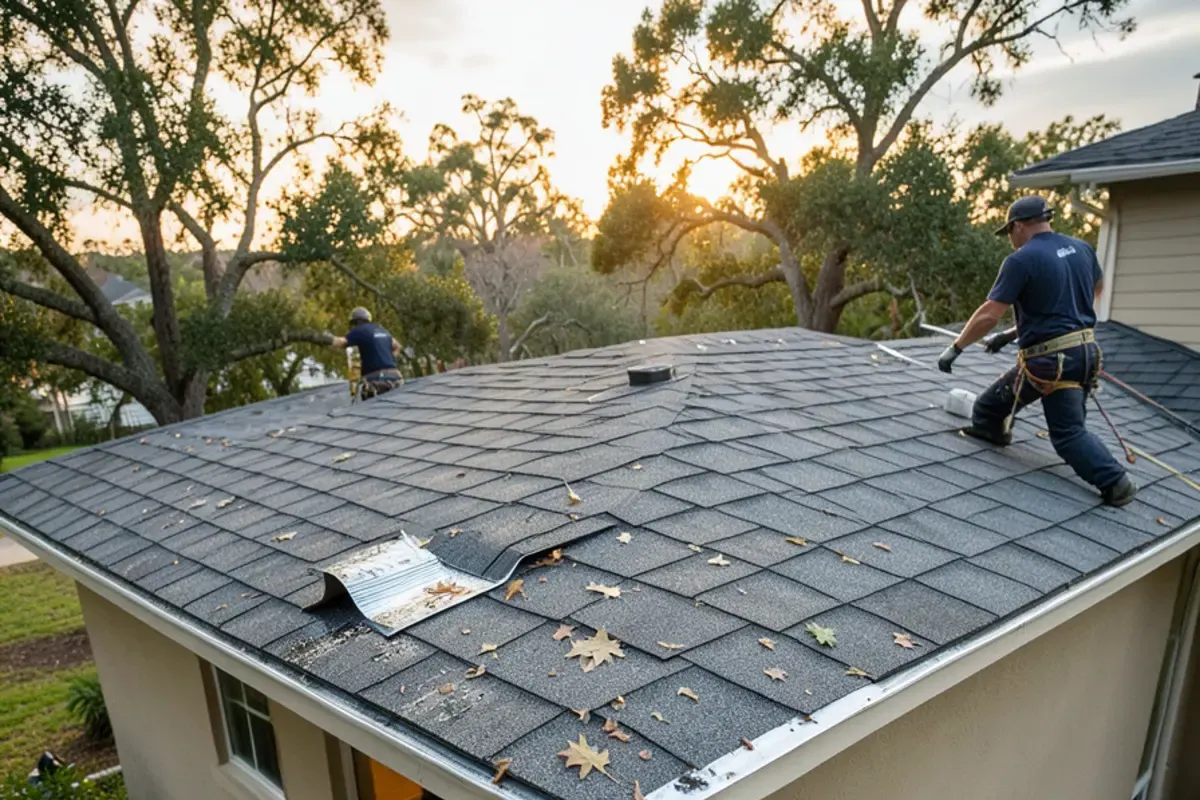
- Missing or creased shingles, often along the ridge, rakes and eaves, where wind gets under first.
- Shingles or tile pieces in the yard, gutters or driveway.
- Ridge caps out of line or lifted at the ends.
- Tiles slipped down the slope or with broken corners.
- Bent or peeled flashing at chimneys and walls, and gutters pulled away from the fascia.
- New ceiling stains after the storm, even small ones.
Damaging hail is rare in the Santa Clara Valley. If someone knocks on your door after a storm pointing to hail damage, ask to see photos and check their license at cslb.ca.gov before you sign anything.
Atmospheric river roof damage: why long storms find weak spots
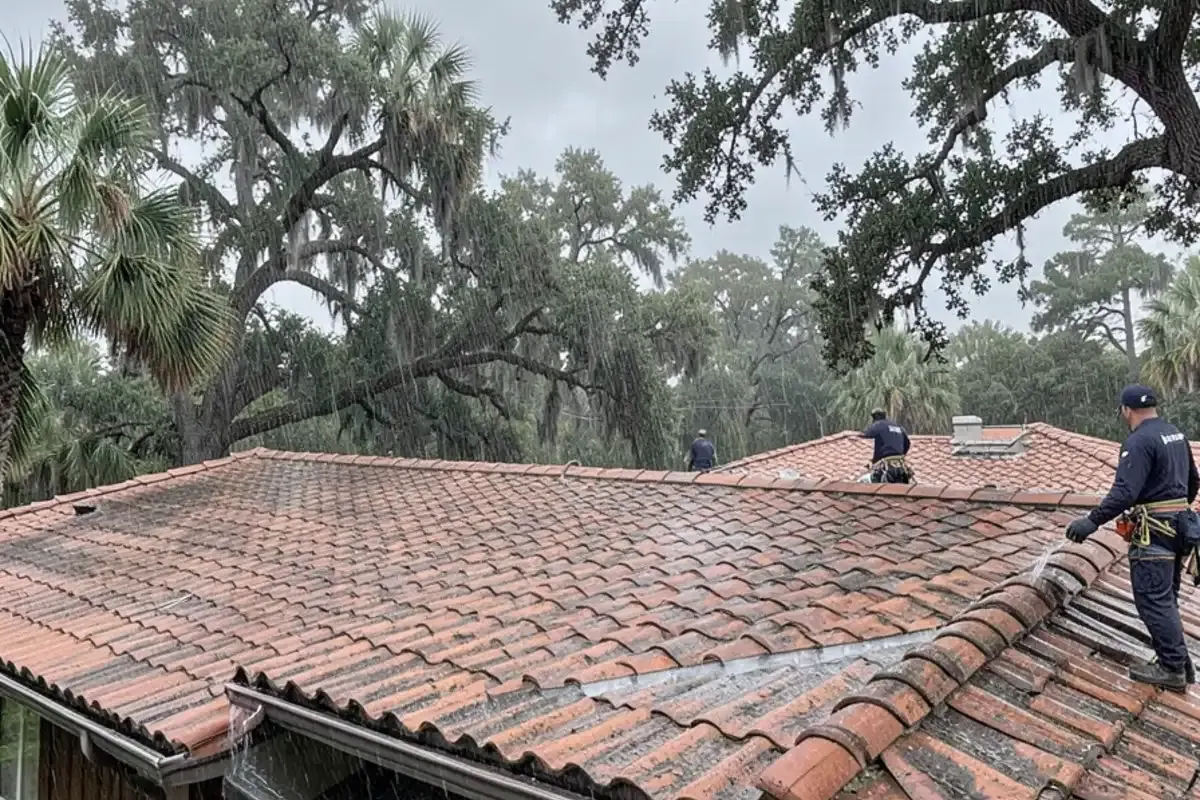
Atmospheric rivers bring hours, sometimes days, of wind-driven rain. Water is pushed sideways under shingle edges and up behind flashing laps that shed ordinary rain without trouble. Tile roofs rely on the underlayment beneath them, and decades-old underlayment, dried out by South Bay summers, can let water through once the tiles have been soaked long enough.
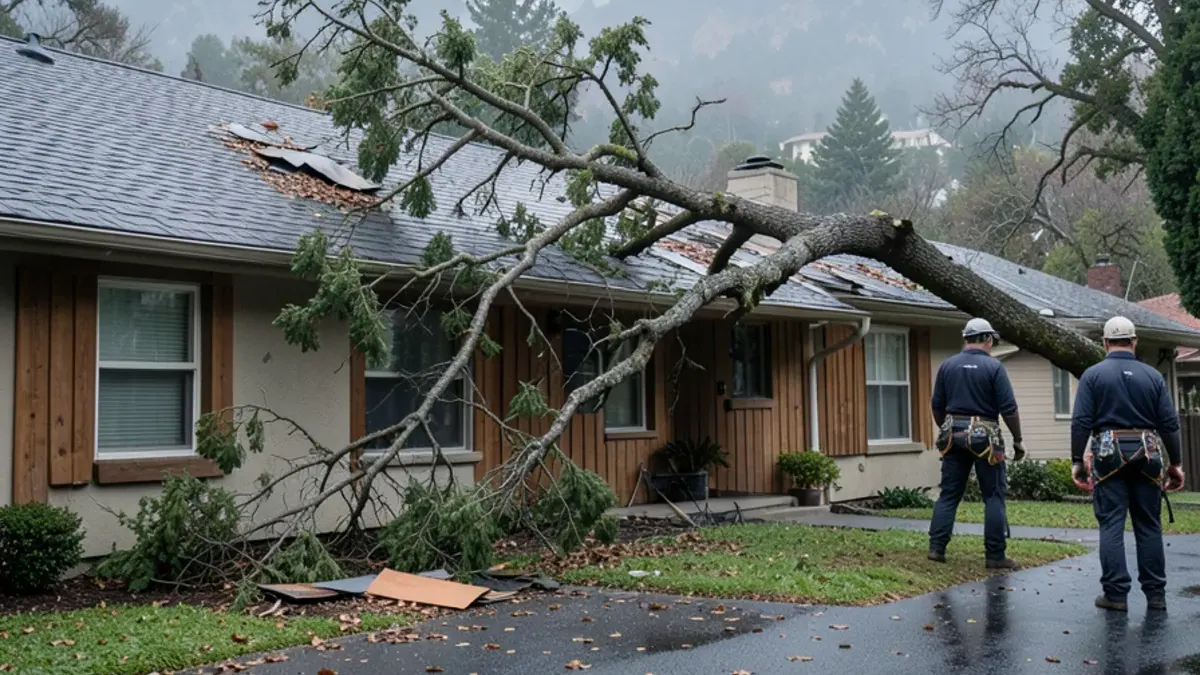
The storm series from late December 2022 through January 2023 is the one most locals remember: trees down across Santa Clara and Santa Cruz counties, flooded roads, and roofs leaking that had been dry for years. Storms like that don't need to tear a roof apart to do harm. They find the places that were already tired.
Questions about storm & wind damage roof repair?
Call first for the quickest answer, or request a free written estimate below.
Request a free written estimate
Fastest answer: call (725) 745-8803. Or send the details below and we will call you back.
The scope of a storm repair job
Storm repair puts back what one event broke, and it reaches past the spot you can see from the street. Wind that lifts a row of shingles has usually tested the ridge, the rakes and the flashing too, so the job is scoped from the whole roof.
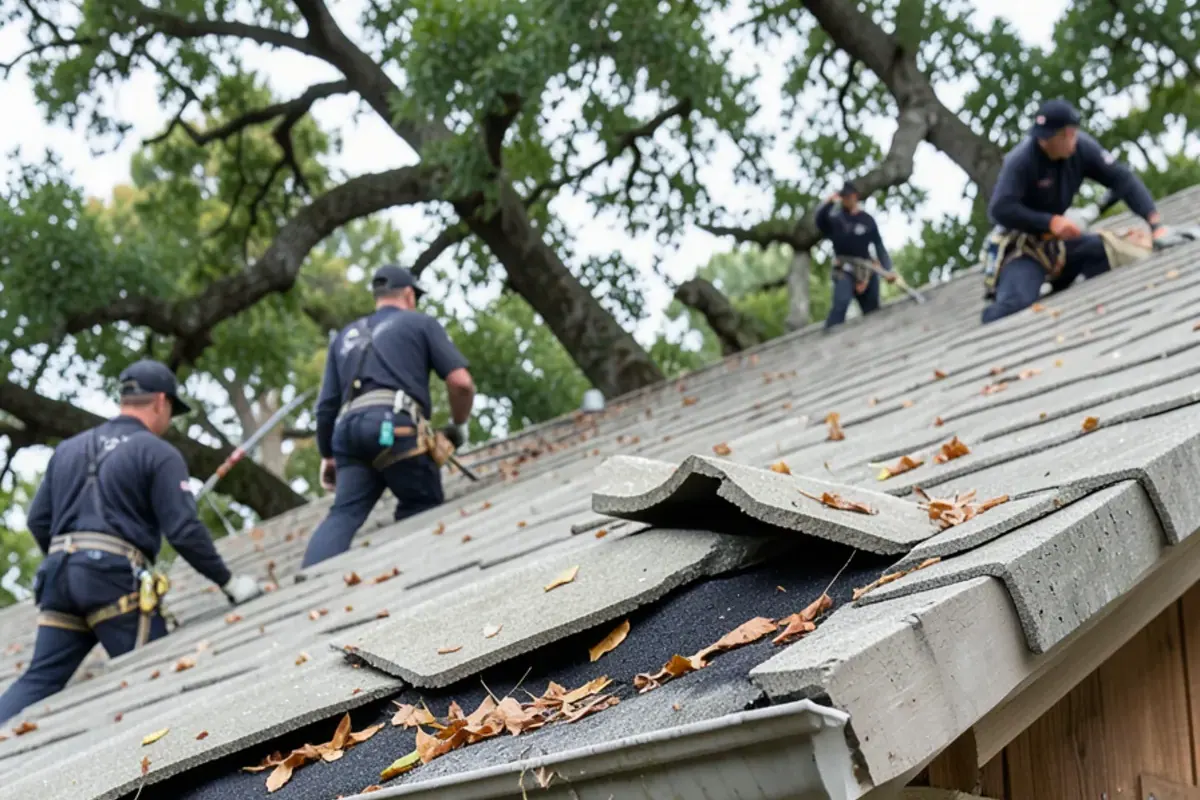
- Field repairs: creased, missing or blown-off shingles replaced; slipped tile refastened and broken tile swapped.
- Edges and ridge: ridge caps reset, rake and eave edges resealed or re-nailed.
- Flashing: bent or peeled metal at chimneys, walls and skylights refitted or replaced.
- Underneath: wet underlayment and soft decking found during the repair replaced.
- Water paths: gutters re-hung on the fascia and downspouts cleared so the next storm drains.
Once the wind drops: a short homeowner checklist
- Check inside for drips, stains and wet insulation near the attic hatch.
- Photograph the roof from the ground, and any debris that came off it, before cleanup.
- Pick up loose shingles or tile pieces and keep a few; they help with color matching and with a claim.
- Clear what you can reach from the ground, such as downspout outlets and yard drains, so the next storm can run off.
- Book a storm inspection with us, and call your insurer if the damage looks significant.
Storm damage roof repair in Campbell, CA: the roof storm inspection
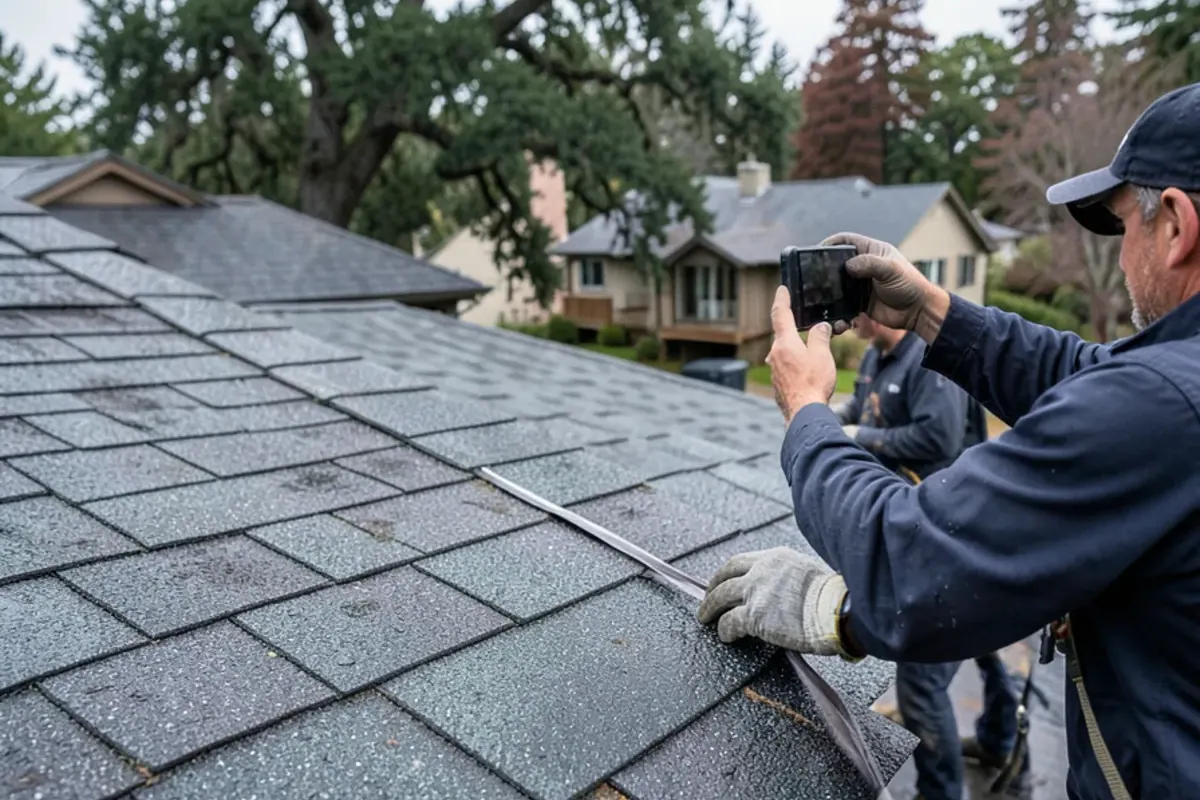
The inspection covers the whole roof, not only the obvious spot. The estimator walks the roof where it is safe, checks the attic for wet decking, and records the findings in photos and sometimes video, which you receive. You then get a written, itemized estimate that separates storm damage from existing wear, because your insurer will want that line drawn too.
- Ground walk of every elevation, noting debris and visible damage.
- Roof walk where safe, slope by slope, with photos at each damaged spot.
- Attic check for wet decking, daylight at nail holes and stained rafters.
- Temporary cover for anything that will leak before the repair date.
- Itemized estimate that separates storm damage from existing wear.
- Repair in dry weather, then a final walk and cleanup of nails and debris.
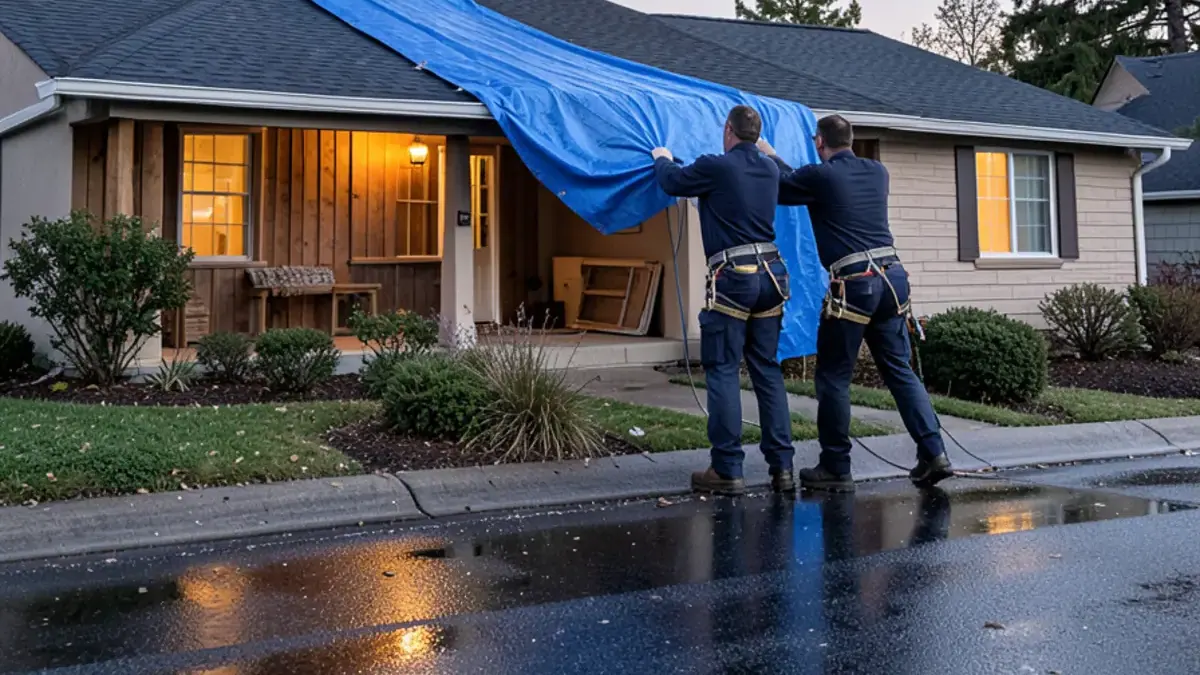
If water is getting in when we arrive, it gets covered first. A small lifted section may be sealed on that visit; a large opening gets a tarp. If you plan to claim, the photos and estimate become your roof claim documentation.
Can storm damaged roof tiles and wind lifted shingles be repaired?
Usually, if the damage is limited and the rest of the roof is sound. Common repairs by roof type:
| Roof type | Common storm damage | Usual repair |
|---|---|---|
| Asphalt shingle | Lifted or creased tabs, missing shingles, loose ridge caps | Reseal uncreased tabs; replace creased or missing shingles; reset the ridge |
| Clay or concrete tile | Slipped, cracked or blown-off tiles | Replace broken tiles, refasten slipped ones, check the underlayment below |
| Wood shake | Split or missing shakes | Replace shakes; judge whether the shake roof is close to worn out |
| Flat or low-slope | Peeled edges, torn seams, punctures from debris | Patch the membrane, re-secure edge metal, clear drains |
| Metal | Loose panels or trim, backed-out fasteners | Refasten or replace trim and panels, reseal fasteners |
Matching matters. Shingle colors get discontinued and older tile profiles can be hard to find. When a repair can't match well, or the damage covers much of a worn roof, the estimate says so and lays out the options plainly.
Who gets a crew first after a big storm?
After a regional storm, many roofs are damaged at once and materials can run short. Calls are sorted by risk: open roofs and active leaks into living space first, then damage likely to leak in the next rain, then minor and cosmetic items. Wind damage roof calls from Campbell and the surrounding cities go into that order as they come in.
We'd rather tell you honestly that the permanent repair is weeks out, and keep the house dry in the meantime, than promise a date we can't keep. You'll get updates as material deliveries and dates firm up. If a fallen limb is part of the damage, see fallen tree roof damage for the extra steps.
What stays the same in a busy week: a family-run crew, a free written estimate with photos of every damaged spot, help documenting the storm for your insurer, and a site cleaned up each day. Small storm repairs, a few shingles or one torn flashing piece, are welcome too.
Is a permit needed to fix storm damage?
For replacing a few shingles, usually not; the City of Campbell Building Division can confirm. When storm damage leads to reroofing, the City issues that permit to a C-39 roofing contractor or the owner-builder, followed by inspections of the sheathing nailing and the finished roof. Switching to a heavier roof, such as tile over old shingles, may need an engineer's review. In the foothills, CAL FIRE hazard maps decide whether wildland-urban interface rules call for a Class A roof assembly on the rebuild.
Paying for storm repairs
Estimates are free and written. If the visit includes emergency work, any trip or tarp charge is explained before it starts. The cost of the repair depends on the roof material, how many areas are damaged, pitch and access, and whether hidden decking damage turns up once shingles come off.
- Number of damaged areas: three scattered spots take more setup than one large patch.
- Matching material: discontinued shingle colors or older tile profiles can mean special orders or salvaged pieces.
- Wind-rated product: replacement shingles carry wind-resistance classes from ASTM D3161 or D7158 testing, and the estimate names the product used.
- Demand after a regional storm: material shortages can move the repair date, which we tell you up front.
Insurance may cover sudden storm damage depending on your policy; gradual wear generally falls outside it. We document the damage and can meet the adjuster, and the coverage decision rests with your insurer.
Storm passed and the roof looks wrong? Call (725) 745-8803 to book a roof storm inspection.
Call (725) 745-8803