
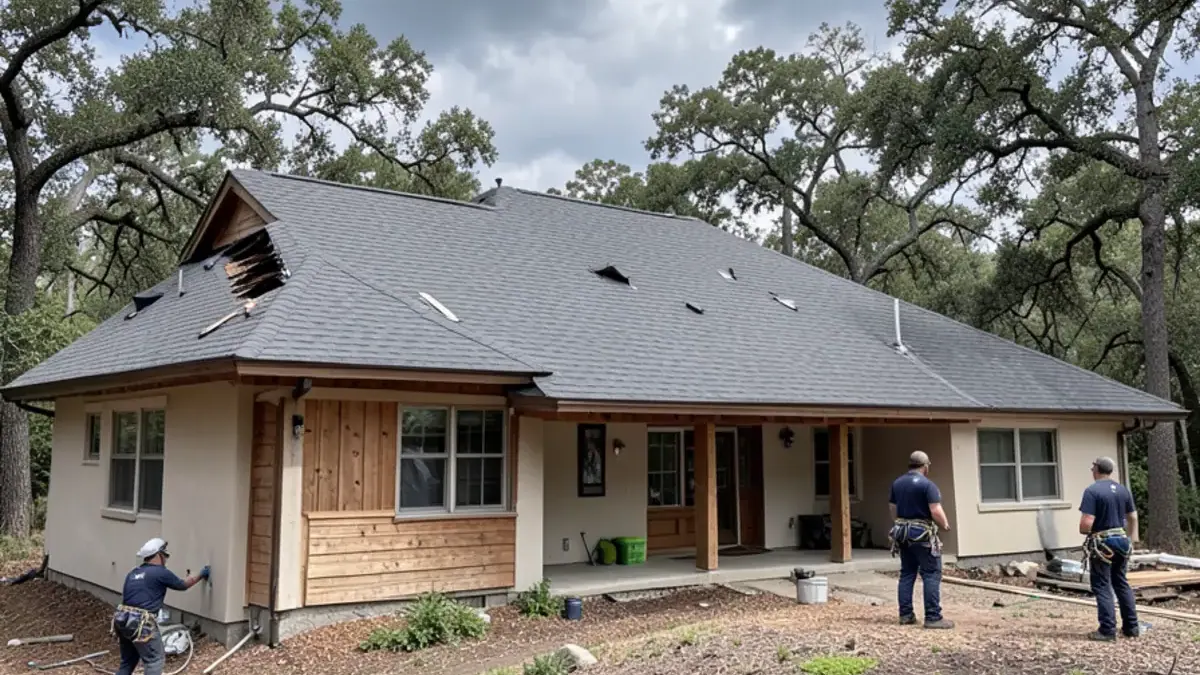
Wind damage vs normal wear on a roof: the side-by-side view
| What you see | Points to wind | Points to wear |
|---|---|---|
| Shingle condition | Creased line across the tab, torn edges | Brittle, cracked or curled across many shingles |
| Distribution | Concentrated on one or two slopes, often windward | Even across all slopes, worse on the sunniest |
| Missing pieces | Clean tears, ridge caps gone, debris in yard | Pieces lost over time, exposed nails rusted |
| Granules | Scuffed areas where debris dragged | Uniform thinning, bald patches, heavy gutter buildup |
| Exposed surfaces | Bright, unweathered asphalt at tears | Dark, weathered edges at old breaks |
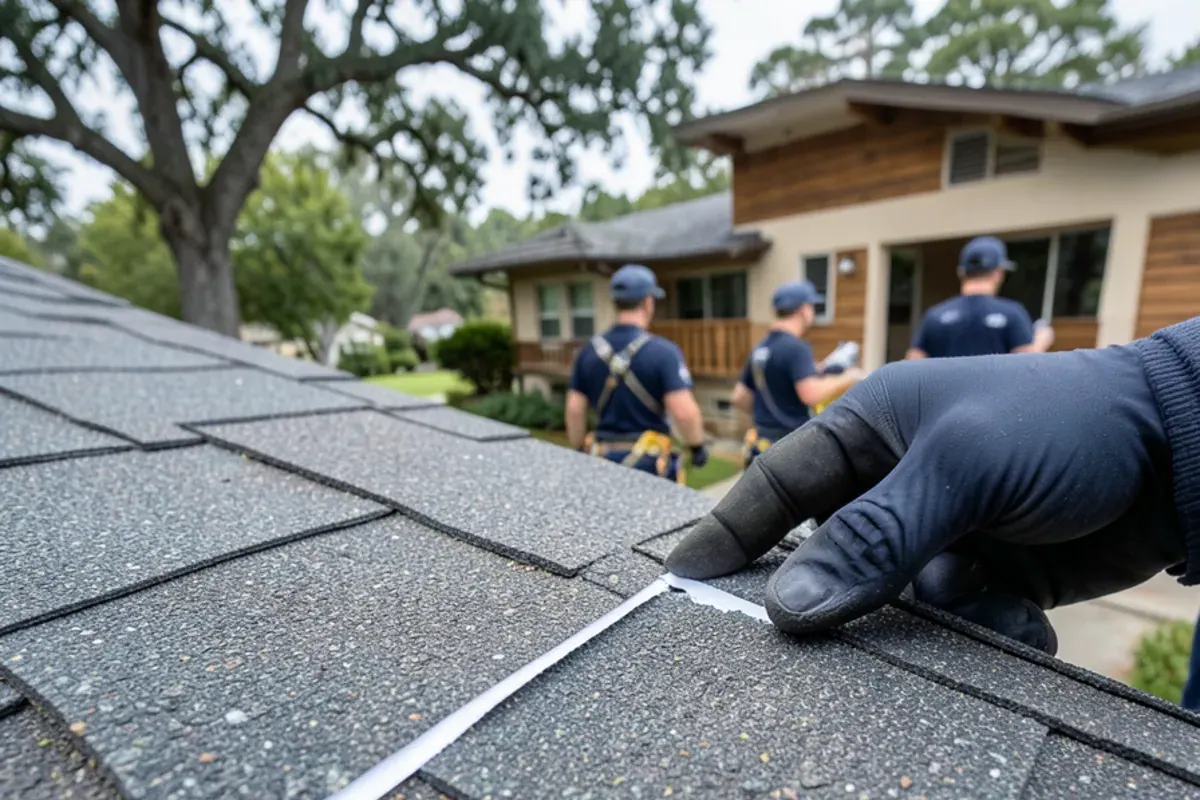
| Sealant strips | Recently broken, clean adhesive | Never stuck down, or dried out across the roof |
Not sure which one you are looking at? Call (725) 745-8803 for an inspection with photos of every slope.
Call (725) 745-8803What do wind-damaged shingles look like up close?
Creased shingles
When a gust lifts a tab and slams it back down, the shingle often bends along a straight line near the nail strip. The crease may look minor, but it breaks the mat and the shingle will eventually tear there. Creases are among the clearest signs of a wind event.
Lifted or unsealed tabs
Each shingle bonds to the one below with an adhesive strip. A strong gust can break that bond. Fresh breaks show clean adhesive with little dirt; old failures look dusty and weathered.
Missing ridge caps and edge pieces
Ridges, hips and rakes take the strongest uplift. Missing caps with bright, clean tear lines and pieces found in the yard point to a recent storm.
Shingle wind ratings, and why a rated roof can still lift
Shingle wrappers carry a wind classification from one of two ASTM test methods. The ratings describe a new, properly sealed shingle in a lab, which is why the number on the bundle is a starting point rather than a promise about your roof.
| Test standard | Class | Wind speed the class is tested or rated for |
|---|---|---|
| ASTM D3161 (fan-induced wind) | Class A / D / F | 60 / 90 / 110 mph |
| ASTM D7158 (uplift resistance) | Class D / G / H | 90 / 120 / 150 mph |
In the field, the seal strip does most of the work. It needs warmth and sun to bond, so shingles installed in cold weather can sit unsealed for weeks, and sealant bonds can weaken as roofs age. A rated shingle that never sealed, or lost its seal, can lift in gusts well short of its class. When we document wind damage, broken seal strips with clean adhesive matter more than the rating printed on the wrapper.
What does age-related roof wear look like?
Wear is gradual and broad. In the South Bay, long dry summers and strong sun do most of the aging, so south- and west-facing slopes usually look older first.
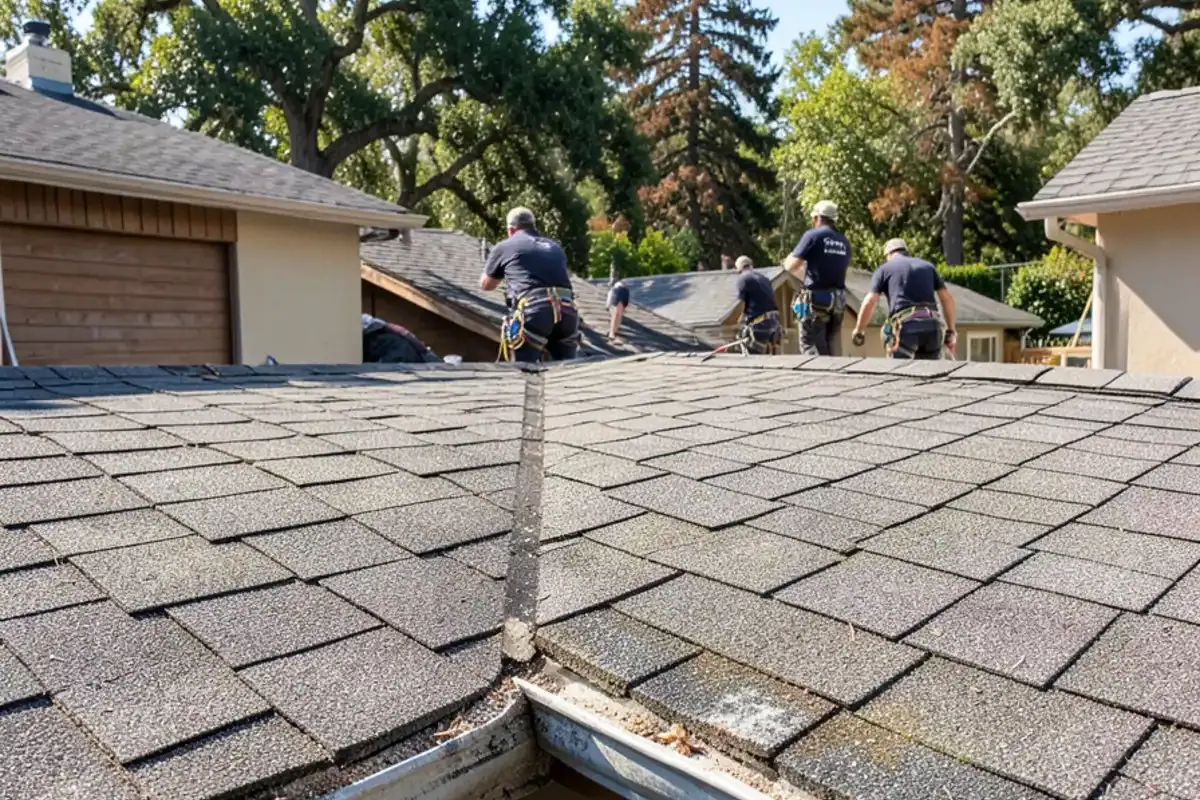
- Granule loss spread evenly, with heavy granule buildup in gutters and at downspout outlets
- Curling or cupping at shingle edges as the asphalt shrinks
- Thermal cracking in a random pattern across many shingles
- Blisters or small pits where trapped moisture escaped
- Exposed or backed-out nails that rusted over several seasons
Wear also explains many leaks that start after a storm. A roof that has been losing granules and sealant for years may finally let water through in heavy rain without any wind damage at all. In that case the fix is still needed, but it is usually a maintenance or replacement decision rather than a claim.
A third answer adjusters sometimes give: installation
Some roof damage is neither a storm nor old age. Shingles that were installed wrong can blow off in an ordinary winter wind, and many policies exclude faulty workmanship. Signs of an installation problem include:
- High nailing: nails driven above the manufacturer's nailing zone miss the shingle below and leave the tab held by one layer instead of two.
- Too few nails: manufacturers specify a nail count per shingle, with more required in high-wind applications.
- No starter strip at eaves and rakes: without a sealed starter course, the first row of shingles has nothing to bond to at the edge where uplift starts.
- Shingles that never sealed: a whole slope that lifts easily by hand, with clean, unweathered adhesive, can point to cold-weather installation without hand sealing.
If installation is the cause, the conversation shifts from the insurer to whoever installed the roof and the workmanship terms in that contract. Our shingle roof repair work corrects nailing and sealing on the slopes that need it.
How do adjusters weigh the evidence?
Each insurer has its own procedures, but most adjusters work through similar questions:
- Was there a weather event on the reported date, and how strong were the winds?
- Does the damage line up with the storm direction, or is it evenly spread?
- Are the breaks and tears fresh, or weathered and dirty?
- How old is the roof, and what is its overall condition?
- Is there related damage: debris in the yard, broken branches, damaged fences or neighbors' roofs?
Our roof insurance claim help documents those details with photos so the adjuster has a complete record. The coverage decision remains the insurer's.
Finding the wind record for your date of loss
The National Weather Service's NOWData tool and NOAA's climate data archive publish daily peak wind gusts for stations such as San Jose's airport. Nationally, the Weather Service generally issues a wind advisory for sustained winds of 31 to 39 mph or gusts of 46 to 57 mph, and a high wind warning above that. A printout of the peak gust on your date of loss, and of any advisory in effect, is simple evidence to add to the file.
From our roof visits: most roofs show both
It is rare to inspect a storm-damaged roof that has no wear at all. A fifteen-year-old shingle roof will have some granule loss everywhere and fresh creases on the windward slope. An honest report separates the two, slope by slope, instead of calling everything storm damage or everything age.
Exposure matters too. Homes on wooded hillsides in Monte Sereno and the foothills catch gusts that valley-floor homes in Campbell do not, and they also collect more branch debris. We note the slope direction and surroundings in our photos for that reason.
The uncomfortable trade-offs of an honest report
Separating wind from wear sometimes means the report supports less of a claim than a homeowner hoped. We would rather write it accurately than have an adjuster find the gap. There is also a practical catch on older roofs: brittle shingles crack when they are lifted for a repair, so fixing a few wind-damaged pieces on a worn slope can damage the neighbors. In that case we explain the options, from a careful sectional repair to replacing the slope, and note which parts relate to the storm and which do not.
When the adjuster calls it wear and you disagree
- Ask for the adjuster's findings and photos in writing.
- Compare them slope by slope with your own dated photos and your roofer's report.
- Point to specific evidence: creases, fresh tears, debris and weather records for the date.
- Request a re-inspection if you believe damage was missed, ideally with your roofer present.
- Contact the California Department of Insurance if you need help understanding your options.
If part of the roof is covered and part is not, our storm damage roof repair estimates separate the storm-related items from upgrades or age-related work, so you can see each cost on its own line.
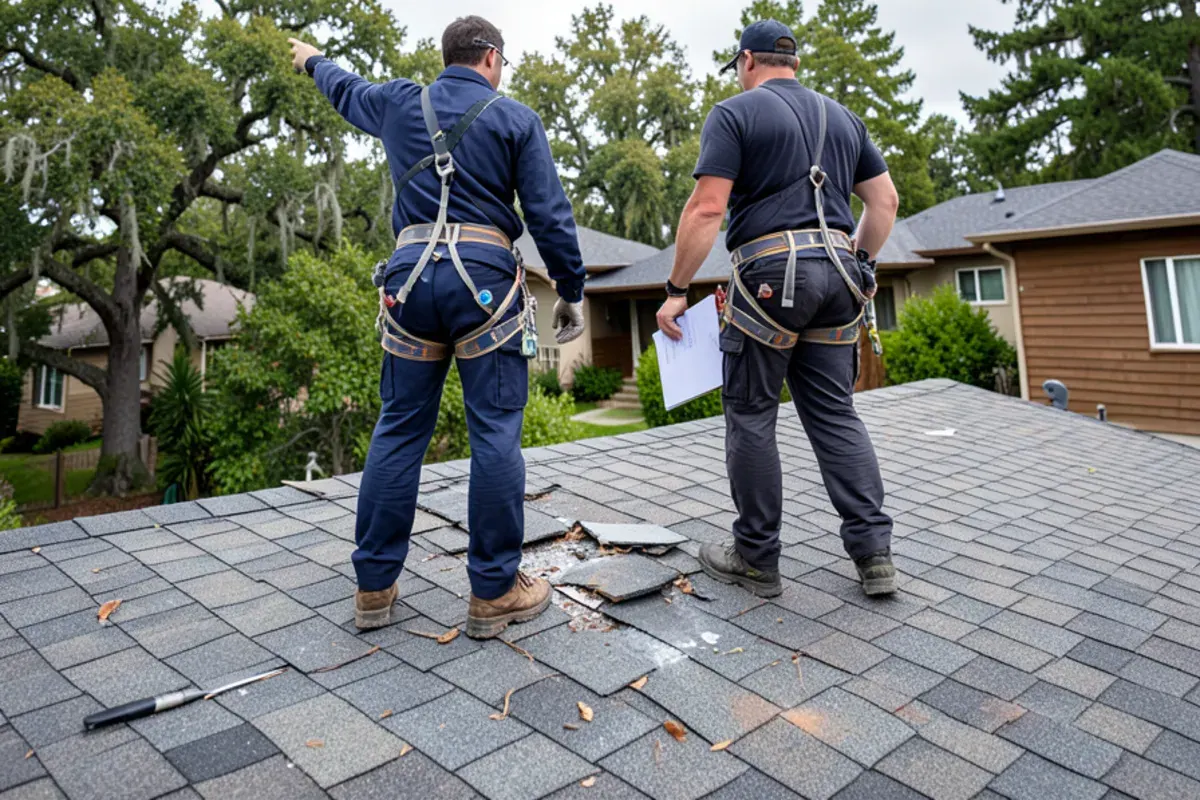
The goal is a record that holds up to a second look: dated photos, the wind data for the day, slope-by-slope notes and an estimate that keeps storm items apart from everything else.
Want a slope-by-slope report on wind versus wear? Call (725) 745-8803 to book the inspection.
Call (725) 745-8803