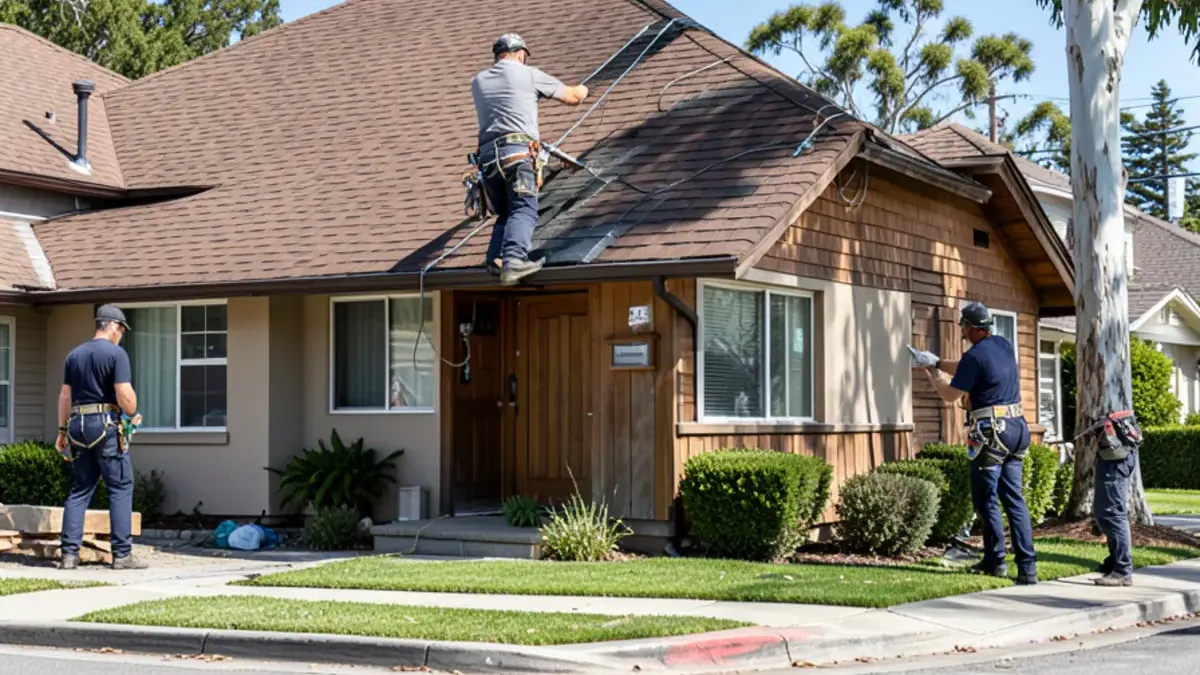
Shingle roof repair in Campbell, CA: symptoms, causes and fixes
Composition roof repair in Campbell mostly comes down to six problems. Here is what each usually means and what fixing it involves:
| Symptom | Usual cause | What the repair involves |
|---|---|---|
| Missing shingles after a storm | Wind broke the seal strip, often on an aging roof | Slide in new shingles, nail under the course above, hand-seal |
| Creased or lifted tabs | Gusts flexed the tab until it creased along the nail line | Replace the piece; a creased tab never lies flat again |
| Curling or cupping | Heat aging, a hot attic, or plain age | Replace isolated pieces; curling everywhere points to a new roof |
| Bald spots, granules in gutters | UV wear, foot traffic or rubbing branches | Assess the whole slope; spot repair only if the wear is local |
| Nail pops | Nails driven crooked or into a gap; decking movement | Pull or reset the nail, replace the shingle above if punctured |
| Cracked hip or ridge caps | Most sun exposure on the roof | Replace the cap run and nail into solid wood |
The work goes fast when the shingles around the damage are still flexible, and slowly when they snap as soon as we lift them. How they behave under a flat bar tells us a lot about the roof's remaining years.
Wind-blown shingles: how they come loose and how we refasten them
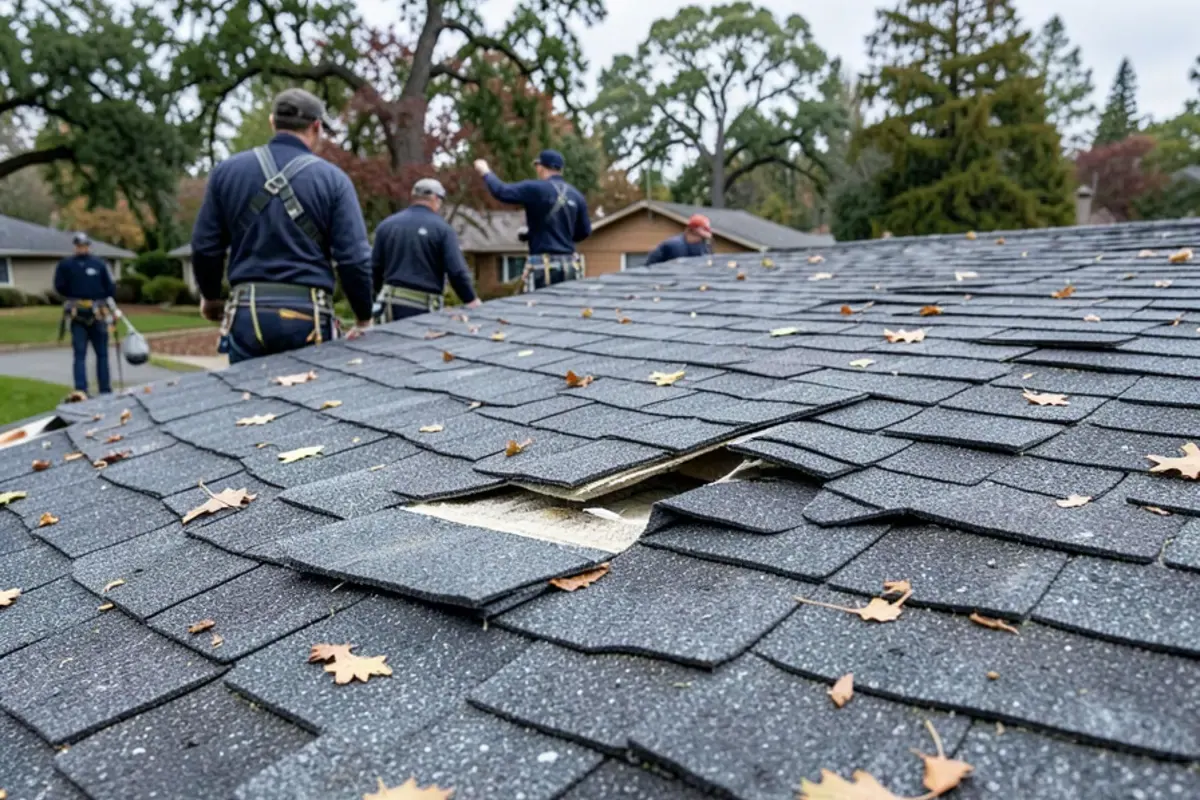
Each shingle is held twice: by nails, and by a strip of factory sealant that bonds it to the course below. Summer heat activates that strip, and many summers eventually wear it out. Winter storms moving through the South Bay pry at the loose lower edges, and once one tab lifts, the next gust gets a better grip on its neighbors.
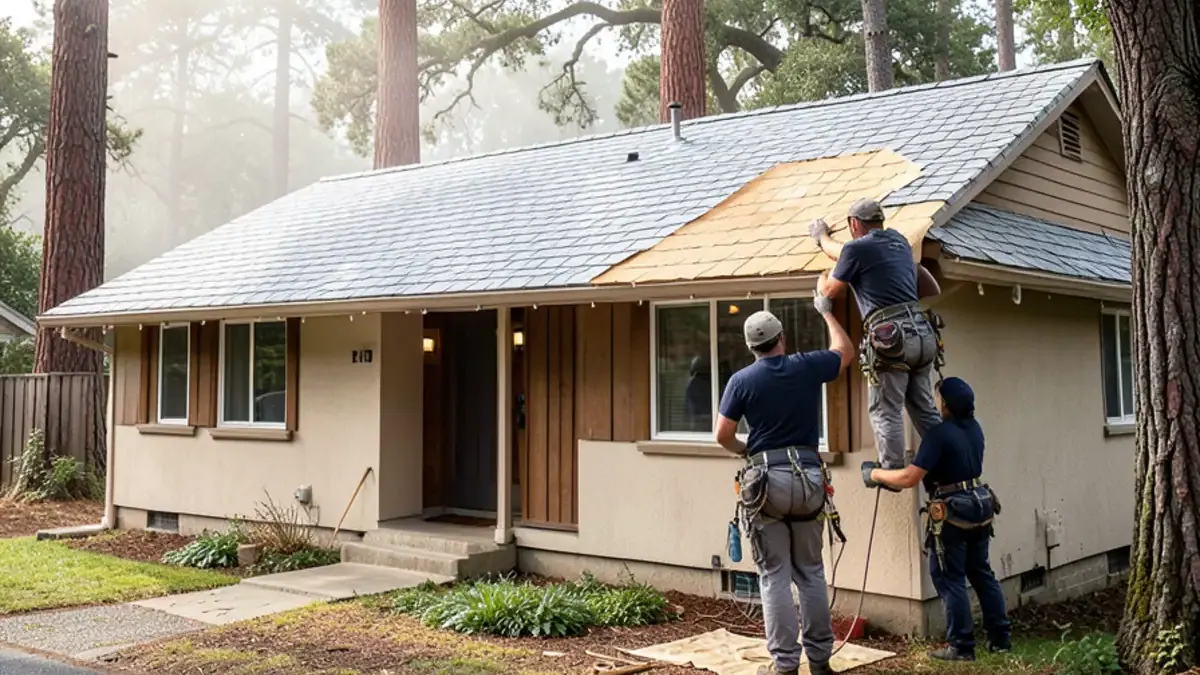
To replace missing shingles we break the seal on the courses above, pull the damaged nails, slide new pieces in, nail them beneath the overlapping course and hand-seal each tab with roofing adhesive. Hand-sealing matters on repairs made between November and March, because cool weather keeps the factory strip from bonding on its own for months.
Questions about shingle roof repair?
Call first for the quickest answer, or request a free written estimate below.
Request a free written estimate
Fastest answer: call (725) 745-8803. Or send the details below and we will call you back.
Our shingle repair process, one course at a time
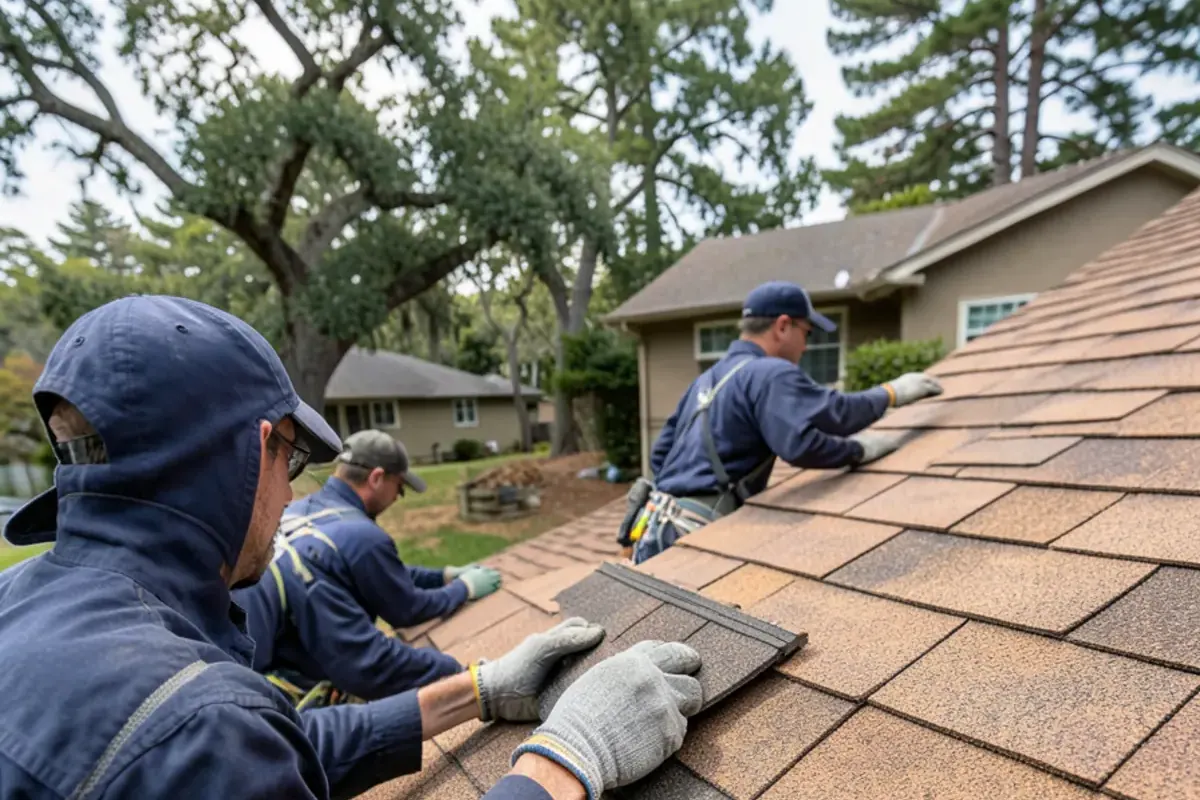
- Photograph and test-lift. We photograph the damage and lift neighboring tabs to see whether they flex or snap.
- Identify the shingle. Brand, line and exposure are noted so replacements lie in the same pattern.
- Release the courses above. A flat bar breaks the seal strips so old nails come out cleanly.
- Check the deck. Soft or wet sheathing is cut out and replaced before new shingles go down.
- Install and fasten. New pieces are nailed in the maker's nailing zone, hidden under the course above.
- Hand-seal and clean up. Lifted tabs are sealed, nails and granules swept up, and you get after photos.
How much granule loss is too much?
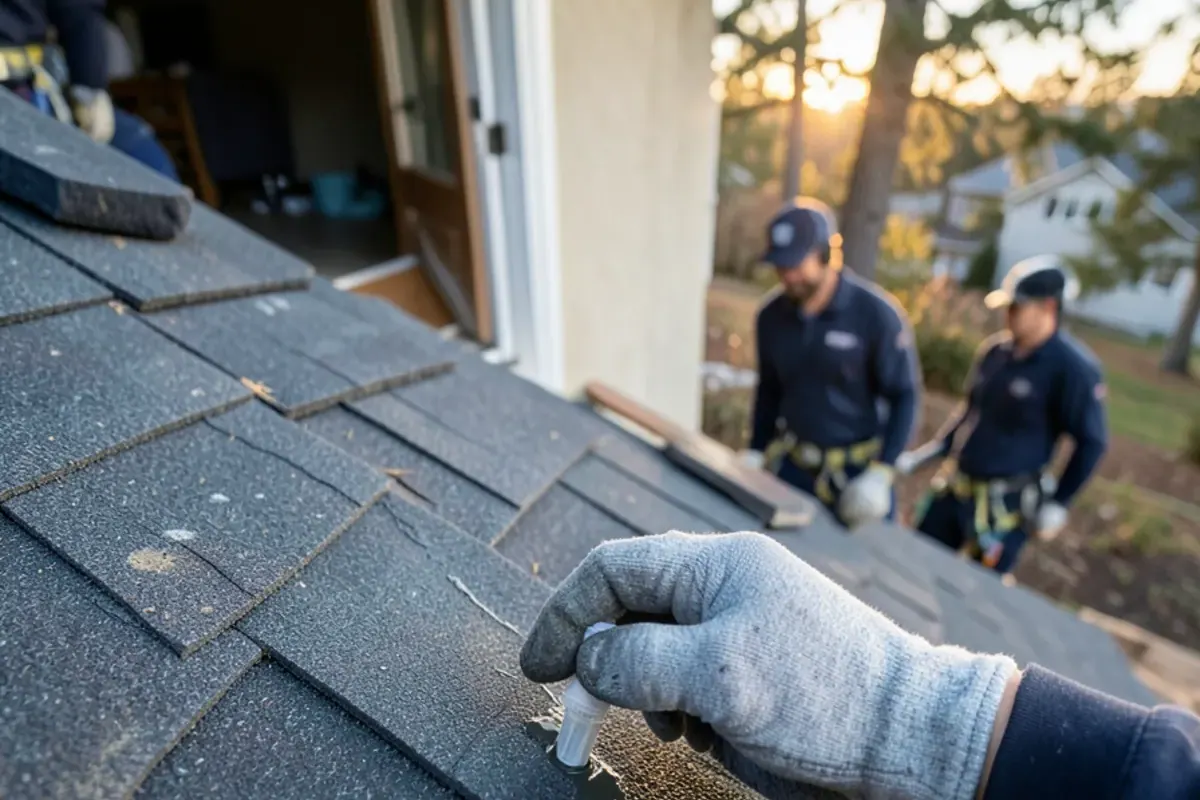
Some granules in the gutter are normal, especially on a new roof and after a hard rain. What matters is where they are coming from. Granules shield the asphalt from UV; once an area goes bald, the sun dries it out and it begins to crack.
- A sprinkle at the downspout: ordinary shedding, nothing to act on.
- Dark, smooth areas on one slope: usually the south or west face, which takes the afternoon sun and ages fastest.
- Bald strips in a line: foot traffic from a satellite or solar install, or a branch rubbing in the wind.
- Bare shingles on every slope: the roof is near the end of its service life, and repairs only buy time.
Ridge cap repair on hip-roofed ranch homes
Ridge and hip caps are bent over the peak, catch more sun than any other shingle, and are usually the first to crack. The hip-roofed ranch houses found all over Campbell have long runs of hip caps running down four corners, so that is often where we see the first splits.
We remove the damaged run, check the nails and the ridge board or vent underneath, and install new caps fastened into solid wood. If the roof has a ridge vent, we look at its baffles and end plugs while the caps are off; open ends let in wind-driven rain and give wasps a home.
Curling shingles repair and the attic underneath
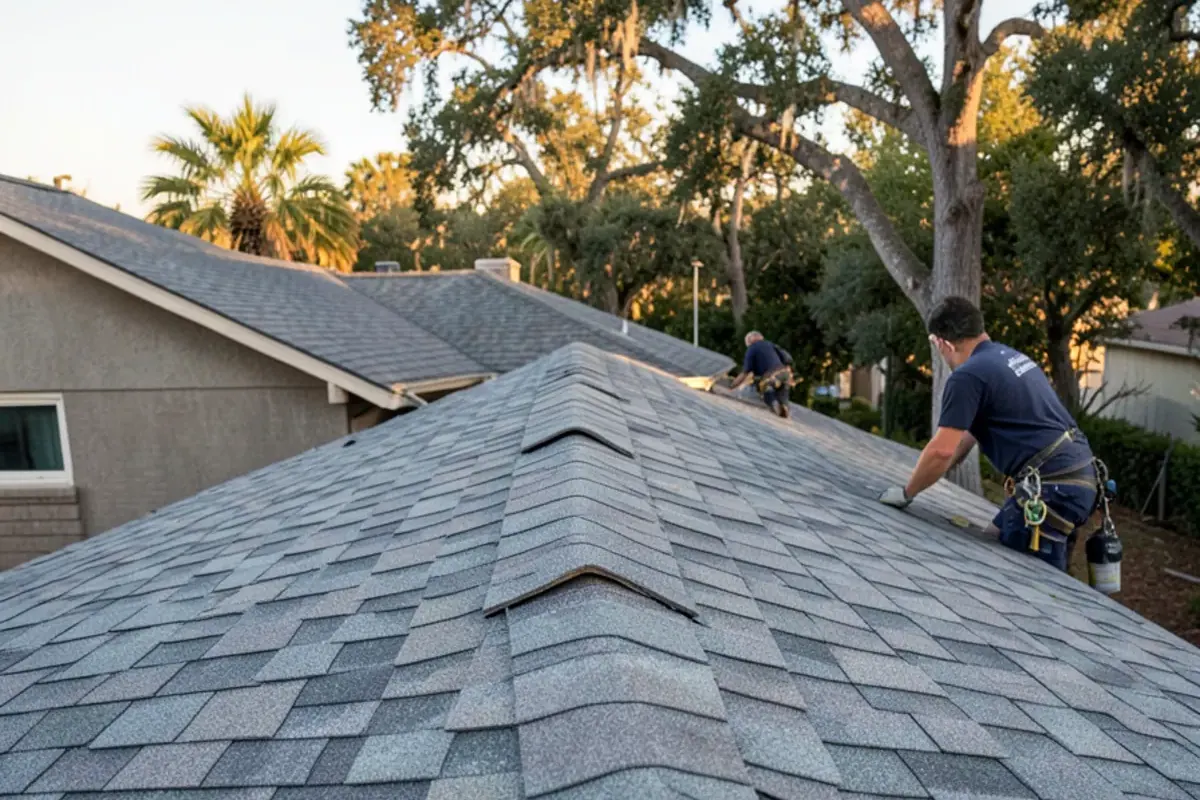
Shingles that curl at the edges or cup in the middle are often telling you about the attic. Many older ranch homes have a few small eave vents and nothing at the ridge, so August heat builds up and cooks the shingles from below. Replacing curled pieces removes the leak risk; it does not cool the attic.
When curling is concentrated over a poorly vented space, we note it on the estimate with photos so you can decide whether to deal with the ventilation now or plan for it with the next roof.
Matching color on an older composition roof
Exact matches are rare on roofs more than a few years old. Shingle lines get discontinued or recolored, and the same product weathers differently after ten summers of Santa Clara County sun. Our approach:
- Identify the brand and line from markings on the shingle back or from old roofing paperwork. Many local roofs carry current Owens Corning or similar lines, which makes a close match likely.
- Where the color is gone, borrow sound shingles from a spot nobody sees, such as behind a chimney or on the back of a garage, and put the new ones there instead.
- On slopes not visible from the street, use the nearest current color and let it weather in.
You see a sample against your roof before we install anything on the front slope.
What changes the price of a shingle repair in Campbell?
The same three missing tabs can be a quick fix or the start of a bigger job, so we price after seeing the roof. The variables:
- How many slopes are involved: one wind-damaged area goes faster than scattered damage on four hips.
- Condition of the neighbors: brittle shingles break as they are lifted and add pieces.
- Matching: a discontinued color may mean borrowing shingles from a hidden slope.
- Pitch and stories: a steep two-story roof needs more safety setup than a low ranch.
- Decking found: soft sheathing under the damage is listed as its own line item.
Shingle repair rules: code, permits and contractor checks
California's residential code, based on the model IRC, sets the floor for shingle work: asphalt shingles need a slope of at least 2:12, slopes from 2:12 up to 4:12 need a double layer of underlayment, and no new layer may go over a roof that already has two. Small repairs usually need no permit; once work becomes reroofing, Campbell issues the permit through MyGovernmentOnline, and the County does on unincorporated parcels. For any shingle job reaching $1,000, check the roofer's CSLB license first.
When does shingle repair stop making sense?
We suggest putting repair money toward a new roof when we see more than one of these:
- Shingles crack when lifted on several slopes, not just one.
- Leaks have appeared in different areas over the past two winters.
- Granule loss and curling are general rather than local.
- The roof has already been patched in many places with mismatched material.
- Soft decking shows up at more than one repair.
Not sure whether the problem is the shingles or the metal around them? Our roof leak detection service traces it. If your roof is clay or concrete rather than composition, see tile roof repair; for cedar, see wood shake roof repair.
Why Campbell owners call us for shingle fixes
We are a family-run local crew, and the estimator who lifts your shingles shows you the photos. Estimates are free and written, the yard is cleaned before we leave, and a handful of blown-off tabs is a job we are glad to take.
Shingles in the yard after last night's wind? Call (725) 745-8803 for a free repair estimate.
Call (725) 745-8803