
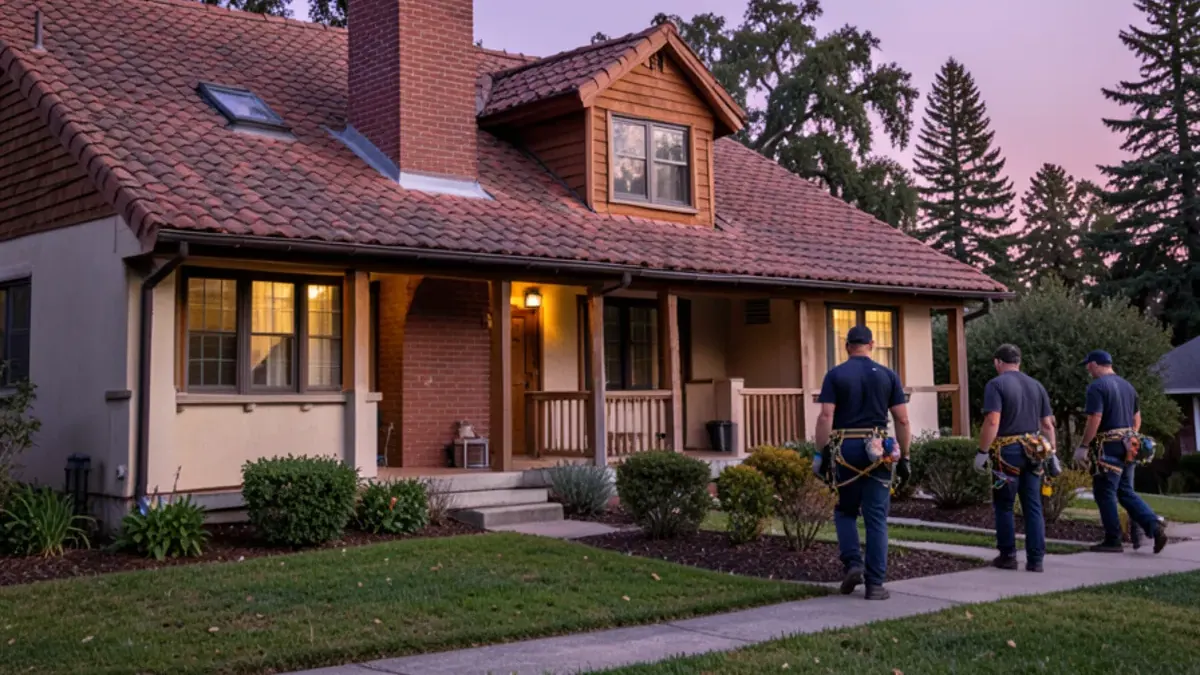
Why chimneys are the weak point in a quake
Brick chimneys on older Bay Area homes were often built without steel reinforcement or ties to the framing. They are tall, heavy and stiff, and they sit on top of a house that flexes. In a strong quake the chimney and the house move differently, and the brick above the roofline can crack at the mortar joints or topple. The 1989 Loma Prieta earthquake, centered in the Santa Cruz Mountains, damaged many unreinforced chimneys across the region.
The USGS records Loma Prieta as a magnitude 6.9 earthquake that struck at 5:04 p.m. on October 17, 1989, with its epicenter in the Forest of Nisene Marks near Aptos. It killed 63 people. On houses, much of the visible damage was at the top: chimneys snapped at the roofline and fell through roofs or onto driveways and porches.
A cracked chimney is also a roofing problem. Cracks open the joint where the flashing meets the brick, and water runs down inside the chase into the attic. Old movement in the masonry is a common starting point for slow chimney leaks.
Planning a reroof on a home with an old brick chimney? Call (725) 745-8803; the free estimate includes a close look at the chimney and its flashing.
Call (725) 745-8803Should you keep, rebuild or cap off an old chimney during a reroof?
When the roof is open, you have three practical choices. The right one depends on whether you still use the fireplace and what shape the masonry is in.
| Option | When it fits | What the roofing work involves |
|---|---|---|
| Keep and reflash | Masonry is sound and the fireplace is in use | New step flashing, counterflashing cut into the mortar and a cricket on the uphill side if the chimney is wide |
| Rebuild above the roofline | Upper brick is cracked or loose, fireplace still wanted | A mason rebuilds the top section; we flash it into the new roof |
| Remove below the roofline | Fireplace unused or converted to another heat source | Chimney taken down below the roof, the opening framed and decked, and the area roofed over |
Removing a chimney below the roofline eliminates a leak point and a quake hazard in one step. Check with your building department, since chimney work can need its own permit, and talk with a mason or structural engineer if the chimney carries any load or the fireplace stays in use below.
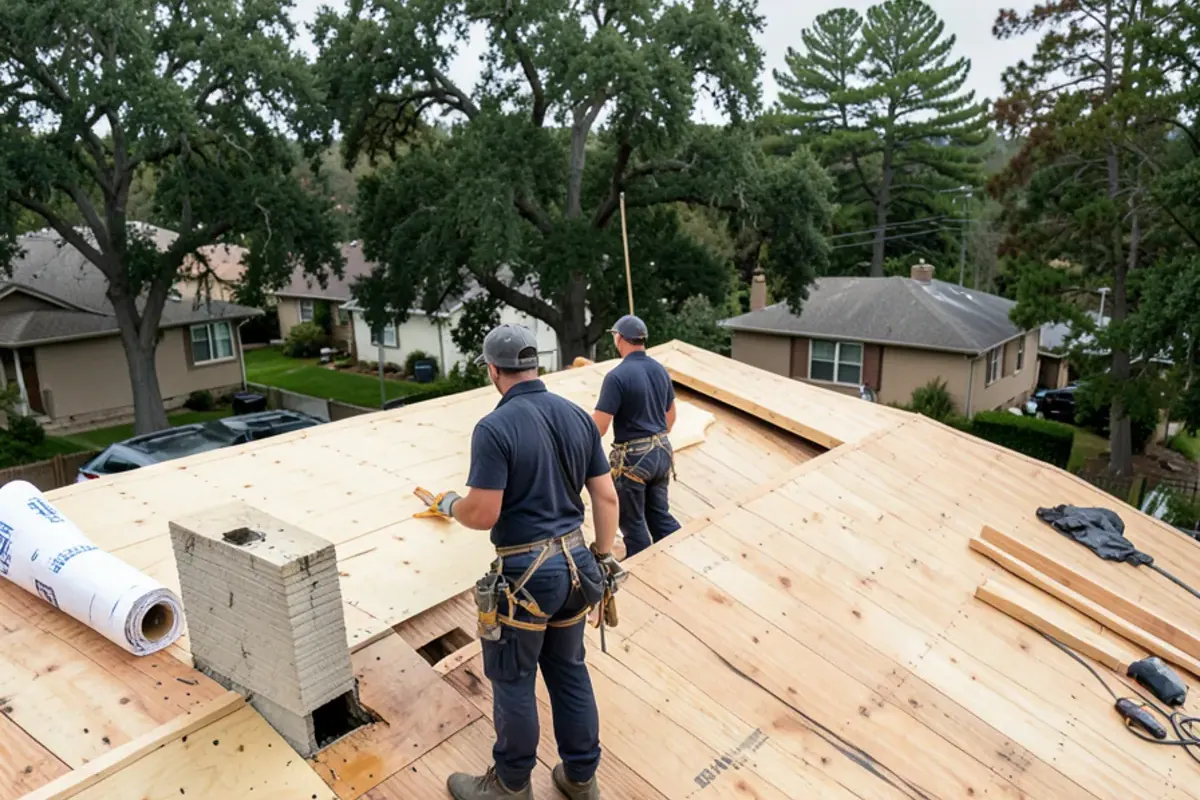
How much does tile weight matter in earthquake roofing?
In an earthquake, the forces on a building rise with its mass, and much of a house's upper mass is the roof. Concrete and clay tile weigh several times more per square than asphalt shingles or metal. A home framed for tile handles that load as designed. A home framed for a light roof may not.
That is why switching from shingles to tile is more than a style decision. In Campbell, a change to a heavier covering can trigger a structural engineer's check, and other South Bay building departments take a similar approach. When a tile roof is staying, the reroof is a chance to check fastening, since tiles that are only resting in place are more likely to slide in shaking. Our tile roofing work follows the manufacturer's fastening method for the slope.
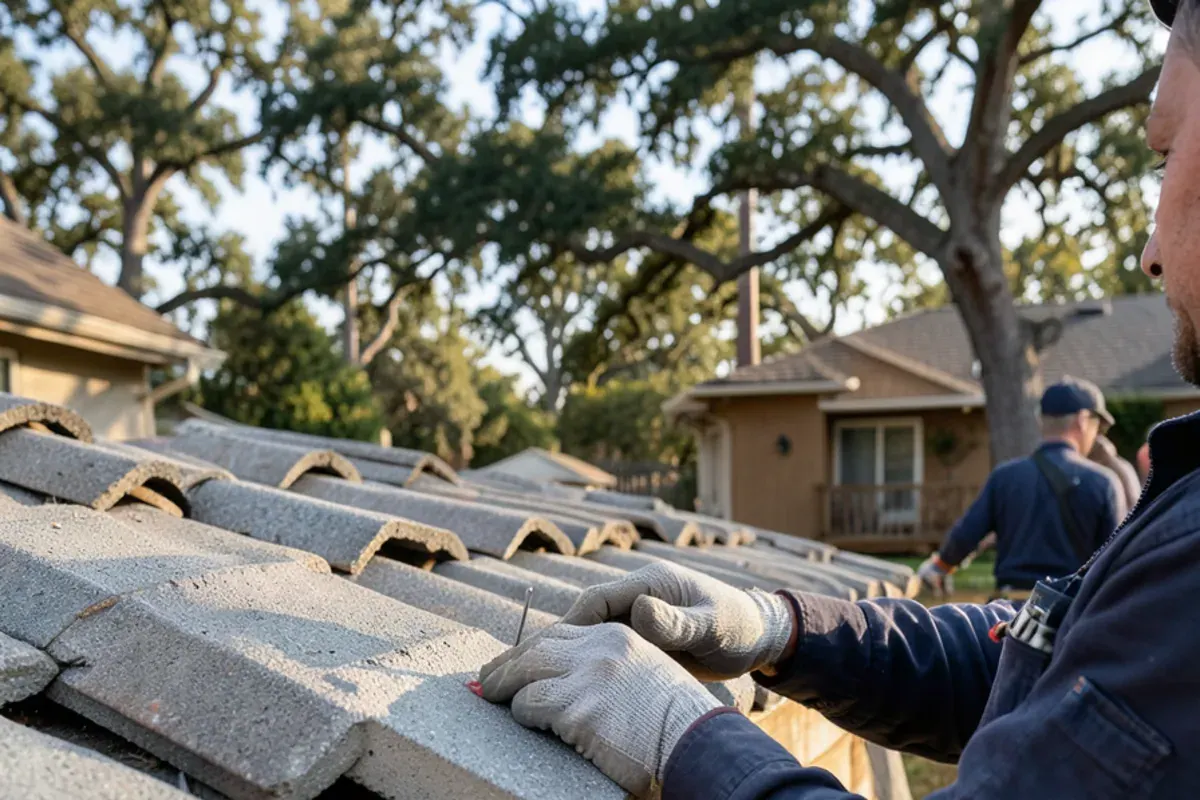
What else can a reroof do for seismic performance?
A roof is more than a covering in an earthquake. The sheathing nailed to the rafters forms a horizontal diaphragm that collects sideways forces and passes them to the walls. Reroof work can strengthen that path in a few practical ways.
Solid sheathing and the nailing inspection
Many older homes that once wore wood shakes still have spaced boards, called skip sheathing, under later roofs. Covering them with structural plywood or OSB, nailed on the required schedule, gives a stiffer, continuous deck. The City of Campbell already requires a sheathing nailing inspection on reroofs, so the inspector sees that work before it is covered.
A lighter chimney top
Owners who want to keep a gas fireplace often have the brick taken down below the roofline and replaced above it with a framed chase around a listed metal flue. The chase weighs a fraction of the masonry it replaces and flashes like a wall. The fireplace insert and flue must suit each other, so that design belongs to a fireplace specialist or mason, with our flashing tied in.
A lighter covering
Moving from heavy tile to a lighter roof such as metal roofing reduces the mass the framing has to restrain. It also changes the look of the house, which matters on Spanish-style homes and on historic properties that need Planning review first.
A worked example
Consider a 1960s house with a brick chimney, an unused fireplace and a shingle roof over old skip sheathing. A reroof scope could take the chimney down below the roofline, frame and deck the opening, add plywood over the boards for the nailing inspection and finish with new shingles. The quake hazard, the leak point and the weak deck are handled in one permitted job.
Where roof meets wall: flashing that has to flex
Buildings move a little in every quake, and the joints between the roof and walls, chimneys and dormers move the most. Rigid seals at those joints crack. Properly layered step flashing and counterflashing let the parts shift without opening a path for water.
- Step flashing woven into each course of roofing along a sidewall
- Counterflashing set into a mortar joint or reglet, not just glued to the face of brick
- A cricket behind wide chimneys so water does not pool against the masonry
- Fresh flashing at plumbing vents and skylights rather than reusing old metal
Our roof flashing repair service handles these details on their own when a full reroof is not due.
From our roof visits: signs of old quake movement
Thirty-plus years after Loma Prieta, the evidence on older roofs is usually quiet. These are the clues that make us look closer:
- Stair-step cracks in chimney mortar, especially just above the roofline.
- A chimney that leans away from the house or has a gap opening at the siding.
- Counterflashing that has pulled out of the brick and been patched with caulk.
- Cracked or shifted ridge and hip tiles with mortar missing.
- Patched brick at the top of a chimney that does not match the original.
And the trade-offs we talk through when those clues appear:
- Removing a chimney ends a leak point and a hazard, but the fireplace goes with it, and some buyers value a working hearth.
- Rebuilding with a framed chase means coordinating a mason or fireplace specialist alongside the roofers, which adds a step to the schedule.
- New counterflashing needs sound mortar to grip. Crumbling joints have to be repointed first, or the new metal fails as quickly as the old.
- An engineer's review for a heavier roof adds time and a fee, but it is cheaper than discovering undersized rafters after the tile is delivered.
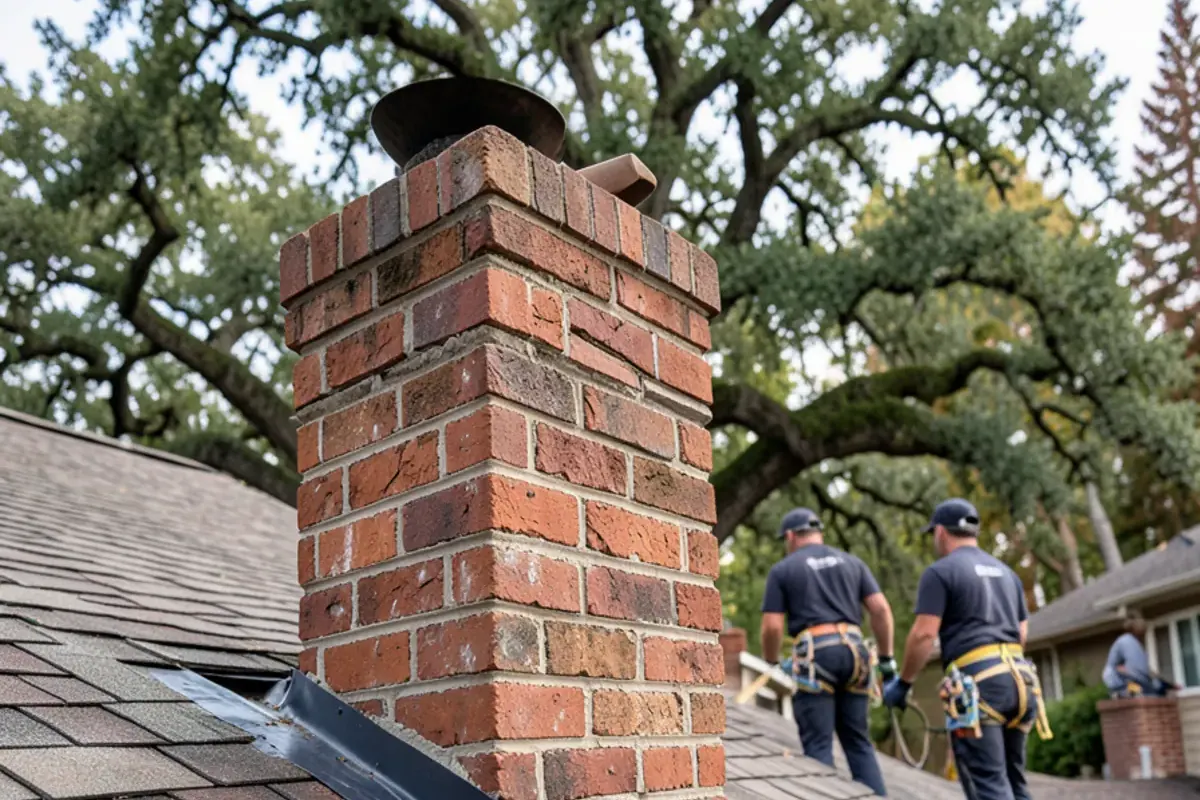
Seismic roofing checklist for older homes
Use this before any reroof on a home from before the 1990s. Owners in hilly Los Gatos and coastal Santa Cruz see more brick chimneys and tile on older homes than many valley tracts do.
- Have the chimney looked at above and below the roofline.
- Decide whether the fireplace stays in use.
- Confirm the framing can carry the roof you want.
- Ask how tiles or panels will be fastened.
- Make sure flashing is new, layered and not caulk-dependent.
- Confirm permit requirements with the local building department.
Put simply, the best time to fix earthquake weak points on a roof is when the old roof is already off. Decide the chimney's future, match the covering to the framing, insist on layered flashing and let the nailing inspection confirm a solid deck. Foundation bolting and wall bracing are separate projects worth asking a retrofit contractor about.
Thinking about a reroof on a home with an old chimney or tile? Book a free written estimate and we'll photograph the chimney, flashing and deck for you.
Call (725) 745-8803