
What does roof repair cost in the South Bay depend on?
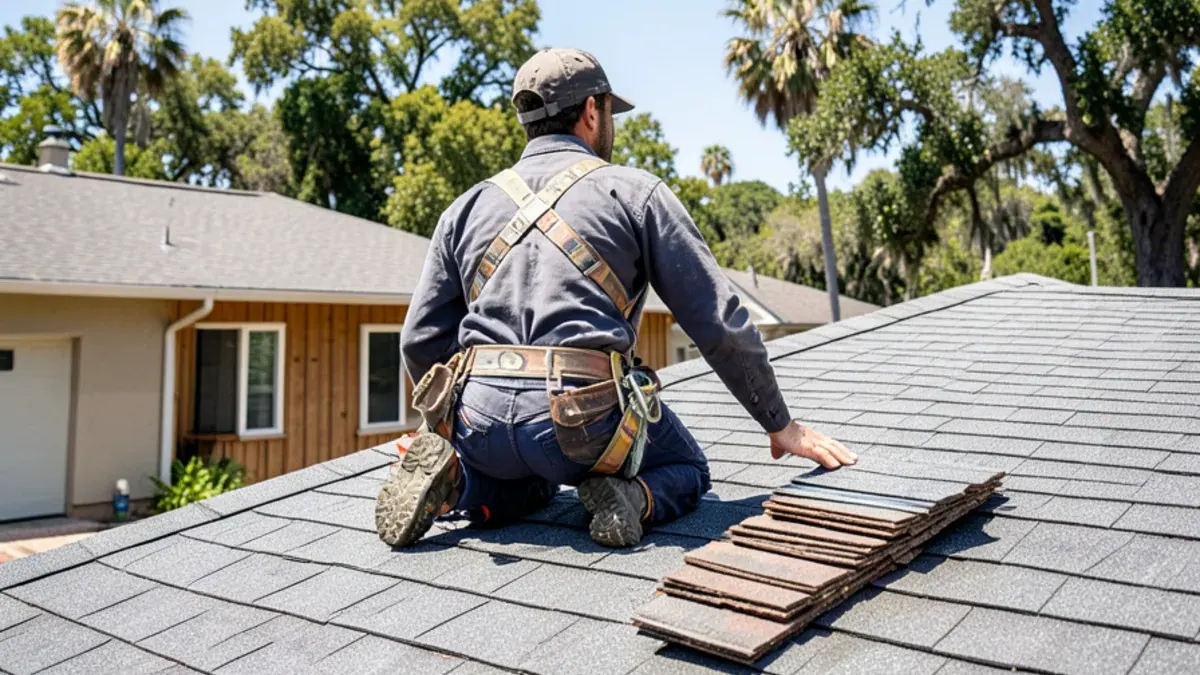
- Access. A single-story roof with an open driveway takes far less setup than a steep two-story roof over a narrow side yard. Staging, ladders and fall protection are labor before any repair starts.
- Material. Asphalt shingles are quick to match and replace. Clay and concrete tile, wood shake and older discontinued shingles take longer to handle and source.
- Hidden damage. If the decking under a leak is soft, the repair grows from replacing surface material to cutting out and replacing sheathing.
- Trips. A repair finished in one visit costs less than one that needs a tarp now, a return visit to trace the leak, and another to finish.
Have a leak or damaged area you want priced? Call (725) 745-8803 for a free inspection with photos of what we find.
Call (725) 745-8803Common repair scopes compared, smallest to largest
We have not found dated, sourced repair figures for the South Bay that are solid enough to print, so this table compares scope rather than dollars. It runs from fixes that usually wrap up in one short visit to the ones that open the roof deck. Nothing in it is a quote; the written estimate for your roof is the number that counts.
| Repair scope | Relative size | What raises the price | What to ask for in the estimate |
|---|---|---|---|
| Pipe boot or vent flashing | Smallest; often one visit | Steep pitch, brittle shingles that crack when lifted | Boot type, and whether surrounding shingles are replaced |
| Replace a few missing shingles | Small | A discontinued color or profile that is hard to match | Product named, shingle count, and how tabs are sealed |
| Chimney or wall flashing | Moderate | Mortar, stucco or siding that must be cut and patched | Step and counter flashing listed, and who patches the wall |
| Valley repair | Moderate to large | Shingles removed on both sides; soft wood under the valley | Valley lining type and how wide the tear-out runs |
| Tile section repair | Large for the area covered | Broken or discontinued tiles; slow, padded foot traffic | Number of tiles lifted and where replacements come from |
| Leak repair with decking | Largest of these | Rot that has spread past the visible stain | A per-sheet decking price and how many sheets are included |
Why do tile and shake repairs cost more per fix?
On a shingle roof, a crew can remove and replace a damaged area quickly, and matching products are usually available. Our shingle roof repair work often finishes in one visit for that reason.
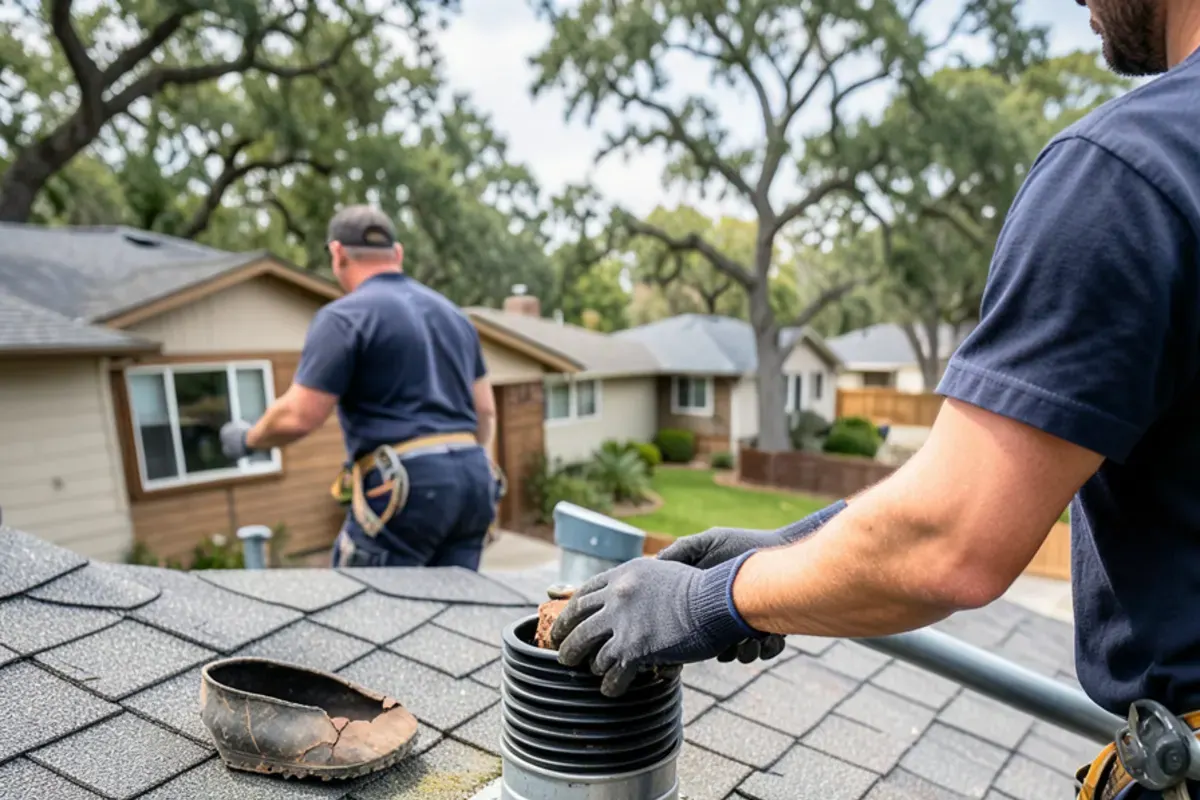
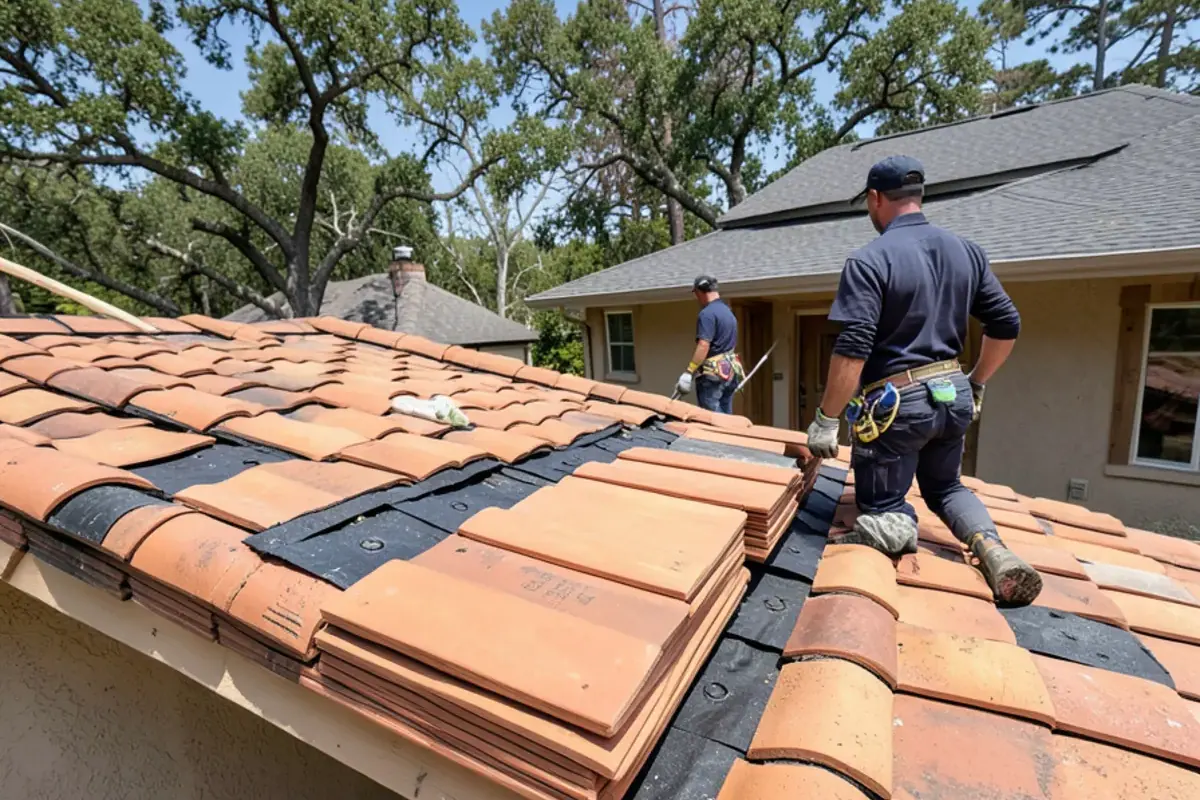
Tile is different. Walking on it breaks tiles, so crews move slowly and use pads. The leak is almost always in the underlayment beneath the tiles, which means lifting and stacking a section, patching or replacing the membrane, then resetting every piece. Discontinued tile profiles may need salvaged pieces from a less visible slope. Wood shake has a similar problem: old shakes split when disturbed, so a small repair can spread.
If your home has concrete or clay tile, our tile roof repair page explains how we lift, store and reset tile so the repair does not create new breakage.
How hidden rot and extra trips change the bill
Most surprises come from what is under the surface. A leak that has run for several winters may have softened a patch of decking, rotted a fascia board, or wet the top of a wall. Those are found only when the surface comes off.
- Ask the estimate to state what happens if decking is rotten: a price per sheet or per square foot.
- Ask whether the repair includes any return visit to confirm the leak is stopped after the next rain.
- If a tarp is needed first, ask that it be itemized separately from the permanent repair.
- Bundle small items such as a loose gutter or a cracked vent cap into the same visit to avoid paying for setup twice.
What a decking allowance means on a real leak
Roof sheathing comes in 4 by 8 foot sheets, 32 square feet each, and every replacement piece has to land its edges on rafters so it can be nailed solidly. That is why a stain a foot or two across rarely means a foot or two of new wood. The crew cuts back to sound sheathing and then out to the nearest rafters on each side, which on 24-inch rafter spacing can turn a small soft spot into most of a sheet. A long-running leak that has spread along a valley can mean two or three sheets. A per-sheet price written in the estimate turns that uncertainty into a known number before work starts.
Repair now or put the money toward a new roof?
Every repair estimate should come with a view of the whole roof, because the right spend depends on what the rest of it looks like. These are the questions we work through with homeowners before recommending either path.
| Question | Points toward repair | Points toward pricing a replacement |
|---|---|---|
| How old is the roof compared with its expected life? | Well short of it | Close to or past it |
| How much of the roof is affected? | One spot or one detail | Several slopes, or problems at every penetration |
| How many leaks in the last two rainy seasons? | This is the first | This is the third or fourth |
| Can the material be matched? | Current product or salvageable tile | Discontinued shingle or tile with no salvage |
| Is the deck sound away from the leak? | Firm everywhere else | Soft in several places |
Scope also has a code side. A repair that grows large enough starts to look like a reroof to the permit office, and California's Title 24 cool-roof rules for reroofs depend partly on the share of the roof being replaced. If a repair keeps expanding, ask whether it has crossed into permit territory.
From our roof visits: when a repair stops making sense
A repair is the right call when the rest of the roof has years of life left and the damage is local. It stops making sense when the shingles are brittle across every slope, when granules are washing into the gutters from the whole roof, or when each repair uncovers another weak spot nearby.
We take photos of the full roof, not just the leak area, so you can see the overall condition and decide whether to repair now and plan a replacement later. We also take on small jobs, like cutting a custom flashing piece, so a modest fix does not have to wait for a bigger project.
Trade-offs we lay out with every repair quote
A repair costs less today, but on a worn roof it buys time rather than years, and it is fair to say so plainly. New shingles patched into an older slope will not match exactly; tile salvaged from a hidden slope matches better but leaves that slope to be filled with a close substitute. A return visit to confirm the leak is stopped adds a little cost, and it is worth it on intermittent leaks where the first rain is the real test. When the decision is close, we price both paths in writing and let you weigh them.
Getting a fair repair price in Campbell and San Jose
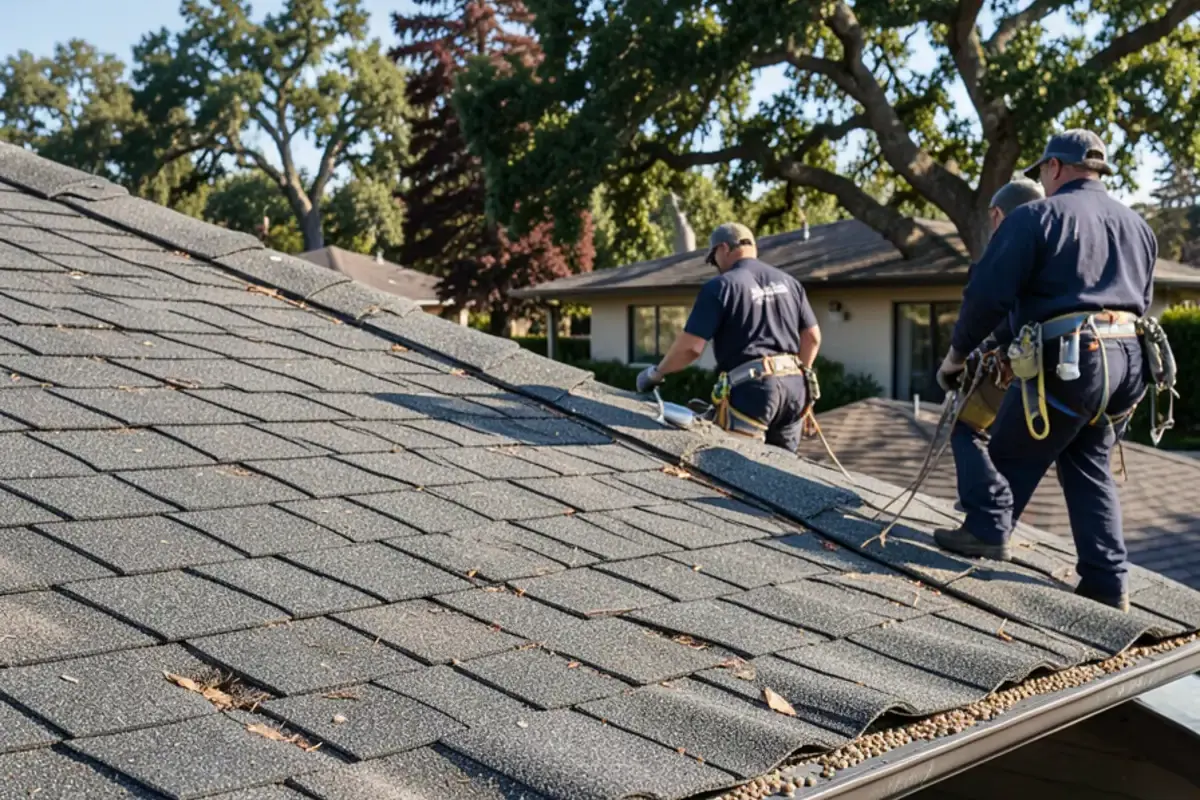
- Get it in writing. A written, itemized estimate lists the materials, the area and the method, which makes bids comparable.
- Ask for photos. You should see the damage before agreeing to fix it.
- Check the contractor. California requires a license for jobs of $1,000 or more in labor and materials, or any job needing a permit; look up any contractor at the CSLB website.
- Avoid pressure. A storm leak needs prompt attention, but a permanent repair rarely needs a same-hour decision.
Our main roof repair page covers the full range of fixes we handle around Campbell and for homeowners in San Jose.
A fair repair price is one you can check: the scope is named, the materials are named and the photos show why the work is needed. If an estimate gives you none of those, ask for them before you agree to anything.
Leak, lifted flashing or a cracked boot to price? Call (725) 745-8803 and we'll inspect, photograph and write it up.
Call (725) 745-8803