
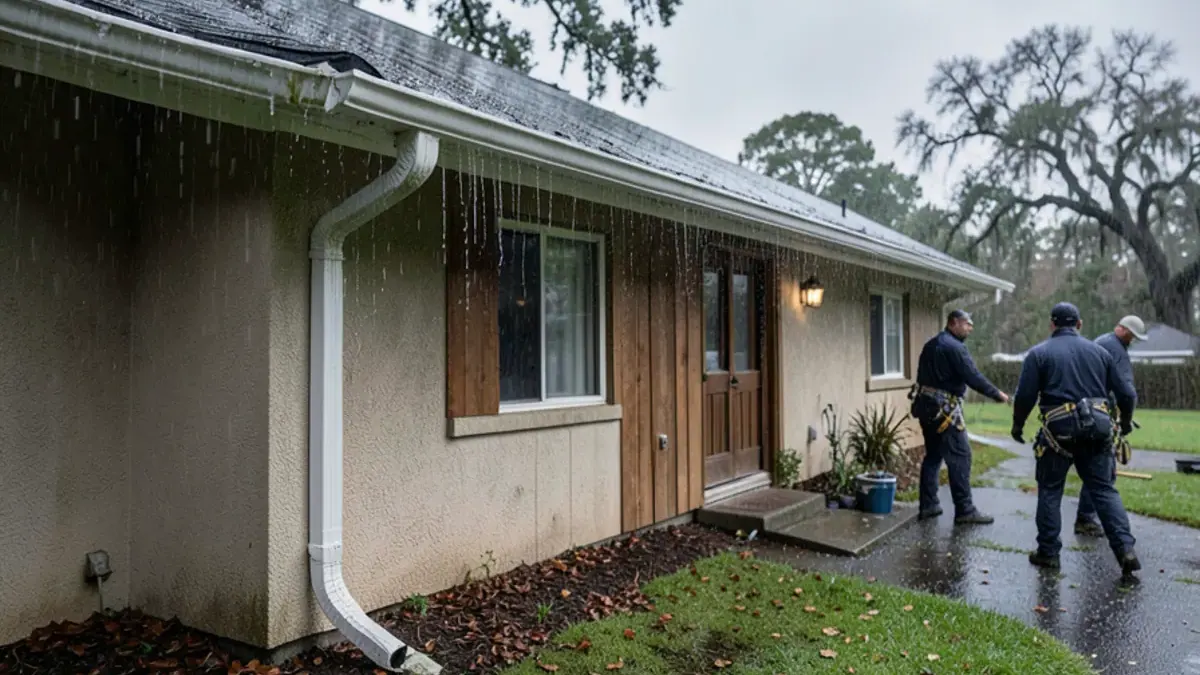
Where your gutter overflows tells you why
Go outside during a steady rain, or run a hose at the high end of the gutter on a dry day, and watch where the water goes over the edge.
| Where it spills | Likely cause | Usual fix |
|---|---|---|
| Right above a downspout | Clogged outlet, elbow or underground drain line | Clear the outlet and elbows; snake or replace the drain line |
| Middle of a long run | Sag from loose or failed hangers | Rehang with new hidden hangers at proper spacing |
| Far end, away from the downspout | Pitch running the wrong way | Re-pitch the gutter toward the outlet |
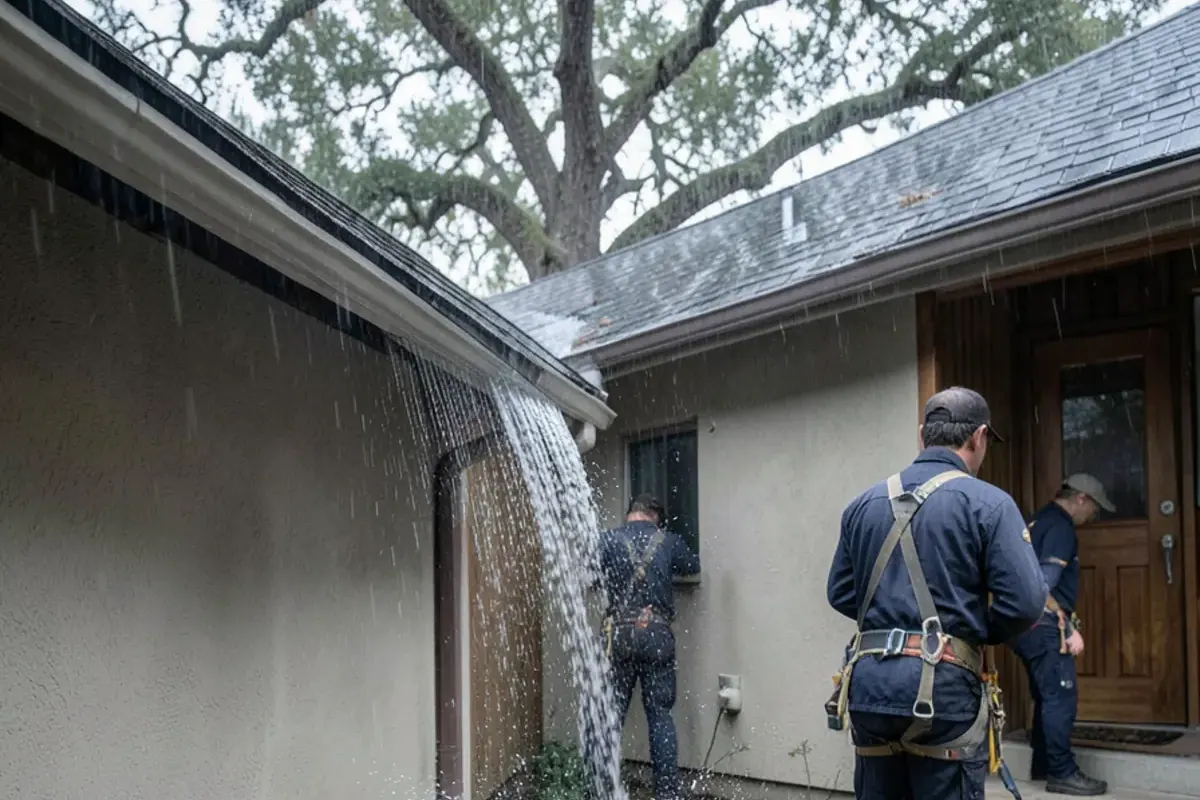
| Inside corner below a valley | Valley water shooting over the gutter | Valley splash guard, larger gutter or added downspout |
| Everywhere, only in heavy storms | Gutter or downspouts too small for the roof area | Upsize to 6-inch gutters or 3x4 downspouts; add drops |
| Behind the gutter, not over the front | Missing drip edge or gutter set too low | Add drip edge or gutter apron; reset gutter height |
Water sheeting over your gutters in every storm? We can find the cause and show you photos of the problem before quoting a fix.
Call (725) 745-8803Clogs and downspout blockages
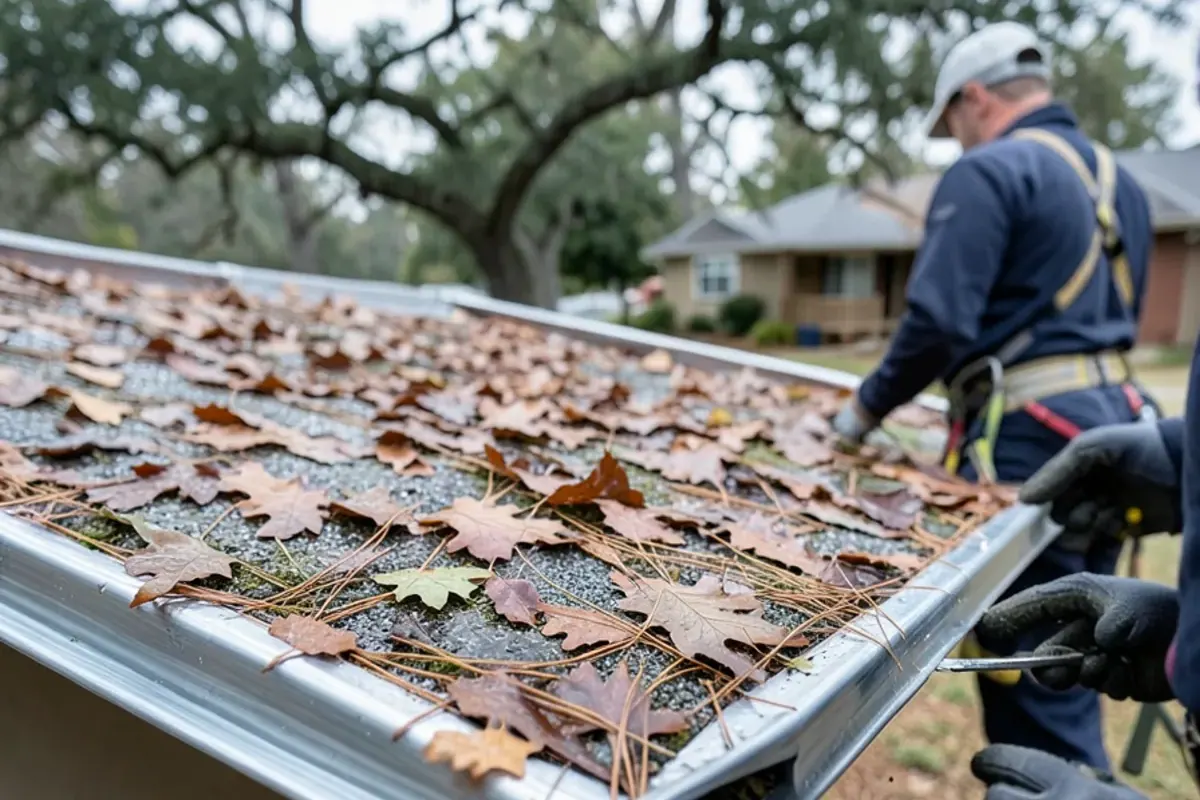
Most overflow starts with debris. Trees on South Bay streets drop something almost every month of the year, and each kind clogs differently.
- Oak leaves and tassels: mat into a dense layer that seals the outlet.
- Redwood and pine needles: knit together and bridge across screens.
- Sycamore leaves: large and leathery, they cover outlets like a lid.
- Roof grit: shingle granules settle into sludge that slows flow.
- Elbow and drain-line clogs: debris lodges at the bends and in buried pipes, so the gutter looks clean but cannot drain.
Tree-lined neighborhoods in Los Altos, Campbell and nearby cities may need cleaning more than once a year. A cleaning before the first big storm and another after the heaviest leaf drop prevents most clog-related overflow. Our gutter cleaning visits include flushing each downspout to confirm it runs free.
Is your gutter pitch wrong?
Gutters need a gentle fall toward each downspout. A common guideline is about a quarter inch of drop for every 10 feet of gutter. Too little and water sits; too much and the gutter looks crooked against the fascia. Over time, hangers loosen, fascia boards shift and spikes pull out, so a gutter that was pitched correctly can end up level or even backward.
Standing water in a gutter a day after rain, or a line of rust and silt in one section, points to a pitch problem. The fix is to rehang that section with new hangers at the right slope. Gutters that have pulled away entirely, or that leak at every seam, are a job for gutter repair or replacement.
Undersized gutters and too few downspouts
A gutter can be clean and level and still overflow when it simply cannot carry the water. This happens most where a large or steep roof plane drains into one run, or where a valley concentrates water into one corner. During winter atmospheric-river storms, rainfall rates jump, and small gutters that cope in a drizzle spill over.
Fixes include stepping up from 5-inch to 6-inch gutters, switching to larger 3x4 downspouts, adding a downspout to a long run, and installing a splash guard at the inside corner below a valley.
What gutter overflow does to fascia, soffits and foundations
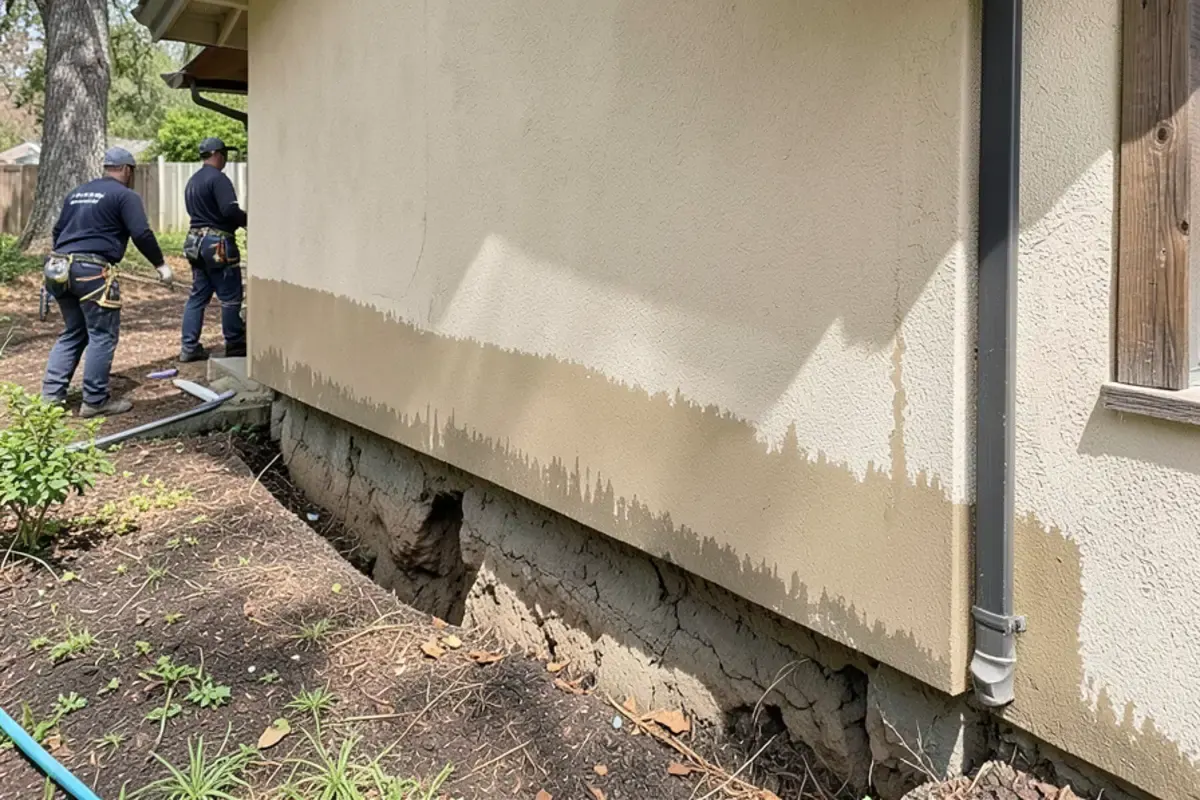
Water that spills behind the gutter soaks the fascia board and the roof deck edge. Paint peels first, then the wood softens and the gutter hangers lose their grip, which makes the overflow worse. Rot can spread into soffits and rafter tails, where it invites birds, bees and rodents.
Water that spills over the front lands in a line along the house. It splashes mud onto siding, erodes beds and pools against the foundation. Over years that can lead to damp crawl spaces and settling walkways. Replacing soft wood is part of fascia and soffit repair, and it should happen before new gutters are hung.
Water running behind the gutter: drip edge and gutter height
Not every overflow goes over the front lip. When water stains the fascia but the gutter looks clean, the problem is usually at the roof edge, where the roof, the drip edge and the gutter have to line up.
- Drip edge missing or tucked wrong: the metal should lap over the gutter's back flange so water drops into the trough instead of running down the board.
- Shingles cut short: shingle makers' instructions commonly call for the first course to overhang the drip edge slightly, often around a quarter to three-quarters of an inch.
- Gutter hung too low: on a rehung gutter the back edge can sit well below the roof line, leaving a gap water falls through.
- Gutter hung too high: a front lip set above the line of the roof slope catches leaves and can tear in a heavy load.
A simple field check: hold a straightedge along the roof slope and extend it past the eave. On most installs, that line should pass just above the gutter's front lip. If it lands well inside the gutter or misses it entirely, the height or the drip edge needs work, and more cleaning will not help.
Where should downspout water go?
Fixing the gutter only moves the problem if the downspout dumps water against the house. The building code is clear about the ground around a foundation: the California Residential Code calls for the soil to fall at least 6 inches within the first 10 feet away from the walls. Where expansive soils are present, as in parts of the Santa Clara Valley's clay flats, it also calls for roof water to be discharged at least 5 feet from the foundation or into an approved drain system.
Splash blocks, extensions and buried lines
A splash block or a hinged extension is the simplest way to carry water those few feet. Buried drain lines are tidier but hide their failures. Before tying new downspouts into an old line, run a hose into it for several minutes and confirm water comes out the far end at full flow. If it backs up, the line is cracked, crushed or full of roots.
Rain barrels and rain gardens
The U.S. EPA's Soak Up the Rain program encourages sending downspouts to lawns, rain gardens or barrels instead of paved surfaces that drain to the street. A barrel fills fast in a winter storm, so its overflow needs its own path away from the foundation. A rain garden works best set back from the house, where the soil can soak up water without wetting the footings.
From our roof visits: overflow clues people miss
A clean gutter that still overflows above the downspout almost always has a blockage below ground. Downspouts tied into old buried drain lines are a frequent culprit, because roots and silt fill those pipes without anyone seeing it.
Stripes of dirt on the siding below the gutter, or a trench worn in the bed along the house, are evidence of overflow even if you have never watched it happen. So is peeling paint on the back of the fascia, visible from a ladder.
Guards help with leaves but do not fix pitch or size problems, and fine debris can still collect on top. We match the fix to the actual cause rather than adding a product to every job.
Every fix trades something. Larger 3x4 downspouts carry more water but often need new outlets and an adapter to join an existing buried line. Adding a downspout to a long run solves the overflow but puts a new stream of water somewhere, sometimes onto a walkway that needs its own drain. Re-pitching a long gutter fixes the flow yet leaves one end visibly lower against the fascia. We show you where each option sends the water before you pick one.
Rain-day checklist for overflowing gutters
- Walk the house during a steady rain and note each spot where water spills.
- Check that every downspout is flowing at the bottom, not just dripping.
- Look for water running behind the gutter onto the fascia.
- After the storm, look for standing water and sagging sections from a ladder.
- Write down what you found; it makes an inspection faster and the estimate more precise.
Most overflow is cheap to fix once the cause is known, and expensive to ignore once it reaches the fascia, the rafter tails or the soil against the foundation.
Seen water spill over or behind your gutters this season? Book a gutter check and we'll photograph the cause and quote the fix that matches it.
Call (725) 745-8803