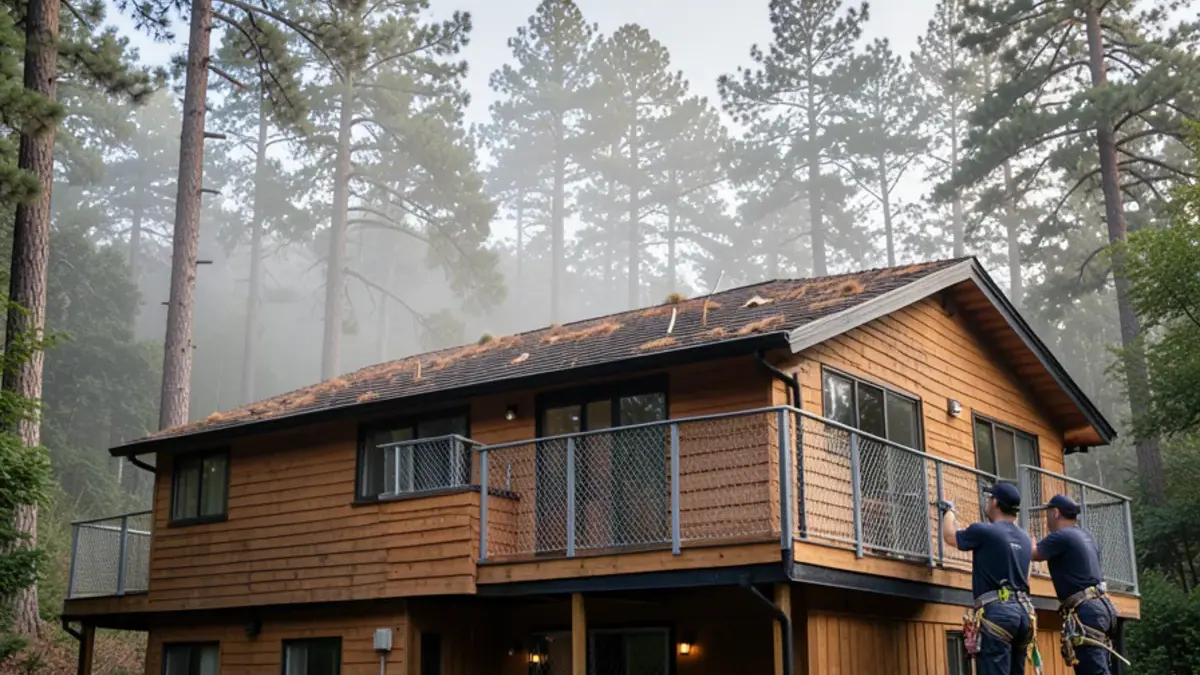
Gutter guards in Campbell, CA start with the tree overhead
Walk any older street in Campbell, Los Gatos or Saratoga and you will pass four very different kinds of debris in one block. Each one behaves differently in a gutter and against a guard.
| Tree | What falls | When | What it does to an unguarded gutter |
|---|---|---|---|
| Valley and coast live oak | Leathery leaves, acorns, catkins | Live oaks shed heavily in spring; valley oaks in fall | Packs into a dense mat that blocks outlets |
| Sycamore and liquidambar | Large leaves, seed balls | Late fall into winter | Floats to the outlet and plugs it in the first storm |
| Coast redwood | Fine needles and small cones | Year-round, heavier in dry months | Builds a fibrous layer that holds water and grows moss |
| Pines | Long needles, cones, sap | Year-round | Needles lie across outlets and slip through coarse screens |
Most homes have a mix. The guard we recommend is the one that handles the finest debris on your roof, because that is what defeats weaker products.
Signs your gutters are ready for guards
- You clean more than twice a year and the gutters still overflow by January.
- Seedlings or moss are growing in the trough.
- Needles pack the downspout elbows and the outlet strainer.
- The eave is two stories up or over tile you would rather not climb every fall.
Micro mesh gutter guards, screens and covers compared
Micro-mesh guards
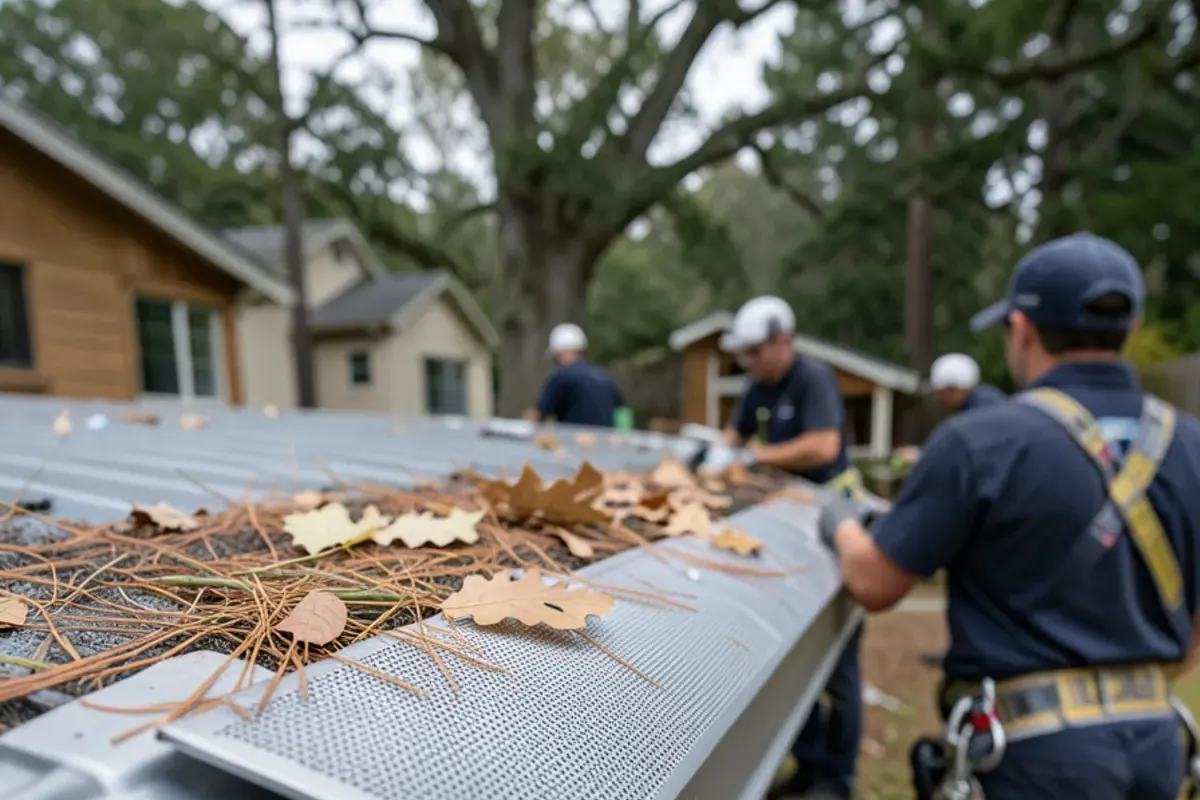
A fine stainless-steel mesh stretched over a rigid aluminum frame. Water passes through; needles, seeds and grit stay on top and blow or wash off. Micro mesh is our usual pick under redwoods and pines, and it is the most expensive of the common options.
Perforated and expanded-metal gutter screens
Aluminum panels with punched holes or diamond openings. They stop oak and sycamore leaves well and cost less than micro mesh, but needles can poke through and lodge in the holes. A good fit for homes under broadleaf trees only.
Solid gutter covers (reverse curve)
A solid hood that lets water curl around a rounded nose into the gutter while leaves slide off the front. They shed big leaves, but in an atmospheric-river downpour water can overshoot the nose, and needles can stick along the edge.
Foam and brush inserts
Pushed into the trough to fill it. They are cheap and easy, but they trap fine debris, can sprout seedlings and break down in summer sun. We rarely recommend them.
Questions about gutter guards?
Call first for the quickest answer, or request a free written estimate below.
Request a free written estimate
Fastest answer: call (725) 745-8803. Or send the details below and we will call you back.
Which guard handles pine needles and oak leaves?
For a pine needle gutter guard, fine mesh is the answer. Needles are long and thin, so they slip end-first through anything with openings large enough to admit them. Mesh fine enough to stop them still drains quickly as long as it is supported by a stiff frame and installed with a slight forward tilt so debris slides off.
Gutter guards for oak leaves have an easier job. Live oak leaves are small and stiff, valley oak leaves are larger, and both sit on top of a perforated screen without passing through. Where oaks and redwoods overlap, as they do on many Los Gatos and Monte Sereno lots, we go with micro mesh for the whole house rather than mixing products.
Gutter guard installation on shingle, tile and low-slope roofs
How a guard attaches matters as much as what it is made of. Some products slide under the first course of shingles, which can lift the shingles or affect the manufacturer's terms on the roofing. We prefer guards that fasten to the gutter's front lip and rest on or just under the drip edge, without breaking the roof surface.
- Asphalt shingle roofs: gutter-mounted guards seated below the drip edge; no prying up shingles.
- Clay and concrete tile: tile noses overhang the gutter and break if stepped on or lifted, so guards must clip to the gutter alone and leave the bird stop and tile edge undisturbed.
- Wood shake: shakes shed large splinters and moss; a stiff screen with a debris-friendly pitch works better than flexible mesh.
- Low-slope roofs and Eichlers: many drain through scuppers or into flat-back gutters, so we screen the scupper or outlet instead of covering a full run.
Before guards go on, the gutters must be clean, sound and pitched correctly. A guard over a sagging or leaking trough just hides the problem. If the troughs are worn out, we can price new seamless gutters with guards in the same visit.

How gutter guard installation goes, step by step
- Look up first. We identify the trees over each wall and the finest debris they drop.
- Clean and flush. Troughs are emptied and downspouts flushed so nothing gets sealed under the guard.
- Fix what leaks or sags. Corners are resealed and hangers reset before anything covers them.
- Cut and fit. Panels are trimmed around corners, outlets and downspout heads.
- Fasten to the gutter. Guards attach at the front lip and tuck below the drip edge, with no shingles pried up.
- Hose-test. Water poured across the mesh shows it drains rather than overshoots, then the site is cleaned.
Do leaf guards help homes in wildfire zones?
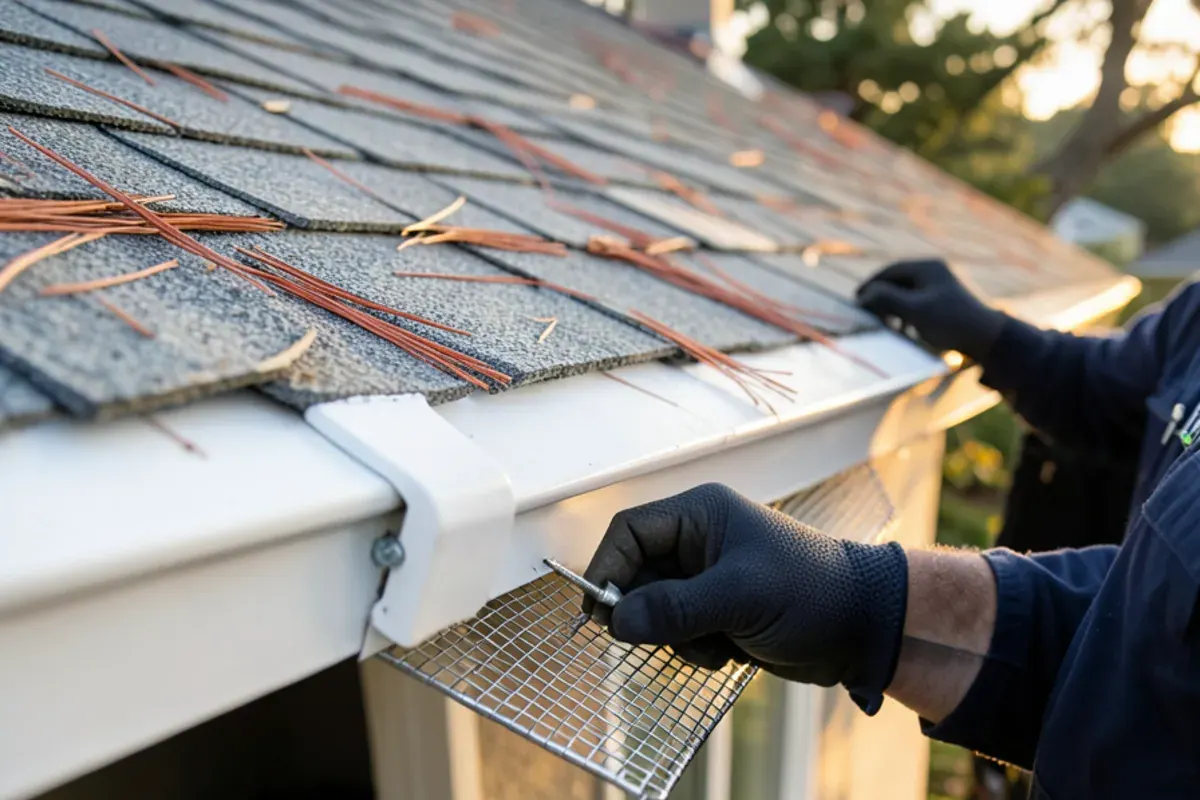
They can. In a wildfire, embers land on roofs and in gutters, and dry leaves sitting in a trough right below the roof edge can ignite and carry fire to the fascia and eaves. CAL FIRE maps Fire Hazard Severity Zones in the hills behind Monte Sereno, Saratoga and Los Gatos, continuing up into the Santa Cruz Mountains.
California's wildland-urban interface code includes a provision for gutters on covered buildings to have a means of keeping debris out. Whether it applies to your project depends on the zone and the work, so check with your local building department. For homeowners in those areas, we recommend all-metal guards; plastic screens can melt or burn, and foam inserts are fuel.
Two hiring checks apply anywhere. Guard jobs at or above $1,000 in labor and materials need a contractor holding a current CSLB license, searchable at cslb.ca.gov, and any permit question in town goes to the City of Campbell Building Division.
What guards do not do
No guard makes a gutter maintenance-free. Pollen, dust, shingle granules and fine redwood duff still collect on mesh and inside the trough over time. Plan on a look each fall and a rinse of the mesh surface every year or two, more often under heavy needle fall. Our gutter cleaning visits cover guarded gutters too; we lift sections where needed and flush the downspouts.
Guards also do not fix overflow caused by too few outlets or flat pitch, and they will not stop water that runs behind the gutter because the drip edge is short. Those need repairs first. Where years of overflow have already softened the boards behind the gutter, fascia repair comes before any guard.
How we price leaf guards in Campbell
Guard pricing on your estimate depends on the product, the linear footage, the number of corners and downspout outlets, the roof type and the height of the eaves. Tile roofs and two-story walls take more time. Cleaning and minor gutter repairs needed before installation are listed as separate lines. For a deeper look at each product type, read our gutter guards comparison.
The tree mix sets the product, and the product drives most of the number: micro mesh under redwoods runs more per foot than perforated screen under a single oak. Old gutters that need resealing, re-pitching or new hangers before a guard goes on add labor, and a run that drains through one distant outlet may need a second outlet cut first.
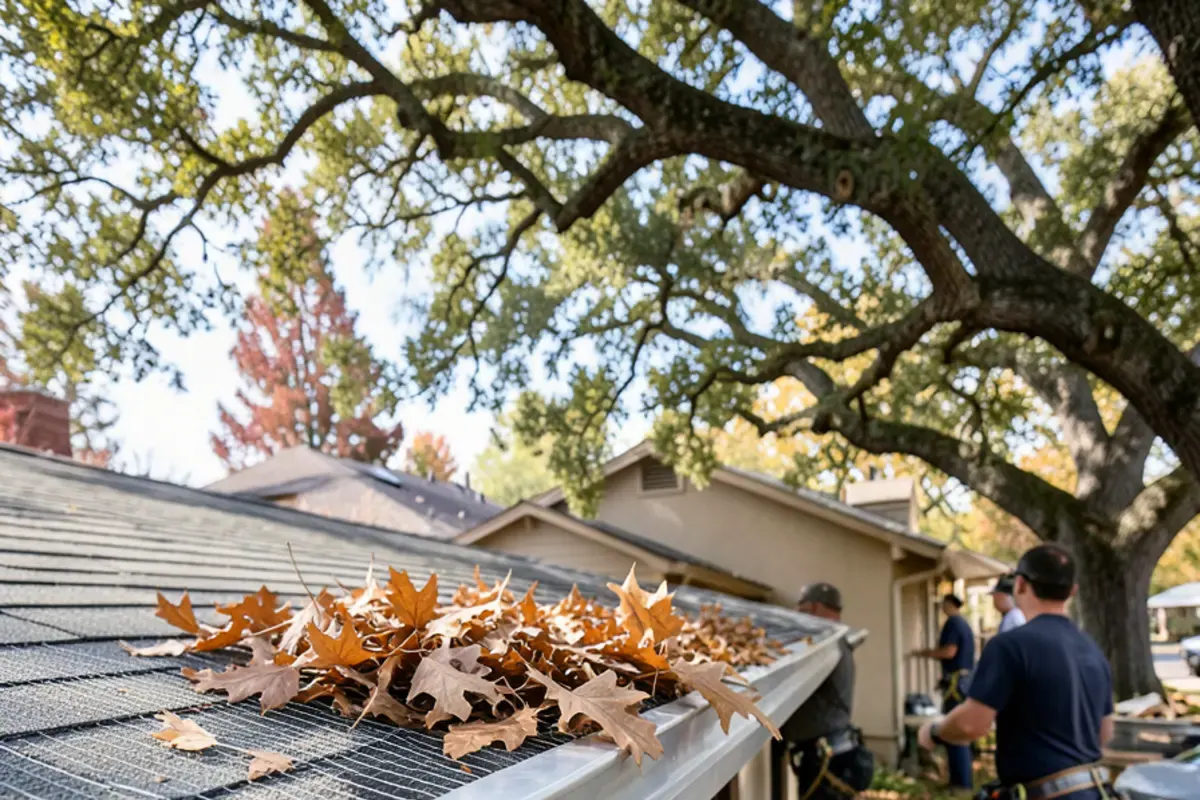
Tired of climbing a ladder every fall? Call (725) 745-8803 for a free gutter guard estimate.
Call (725) 745-8803Why South Bay homeowners book guards with a roofing crew
Guards sit at the roof edge, so we fit them as roofers: no shingles pried up, no tile noses cracked, and a look at the drip edge and valleys while we are up there. We are family-run, the estimate is free and written, and it comes with photos of your troughs and what is in them. If the trees over your house drop only big leaves that a yearly cleaning handles fine, we tell you that instead of selling mesh. Old screens and debris are hauled away at the end of each day.