When does a roof need a tarp instead of a patch?
A tarp is the right tool when the damaged area is too big or too wet to patch, or when the lasting repair has to wait for dry weather, materials or an adjuster's visit. The usual reasons:
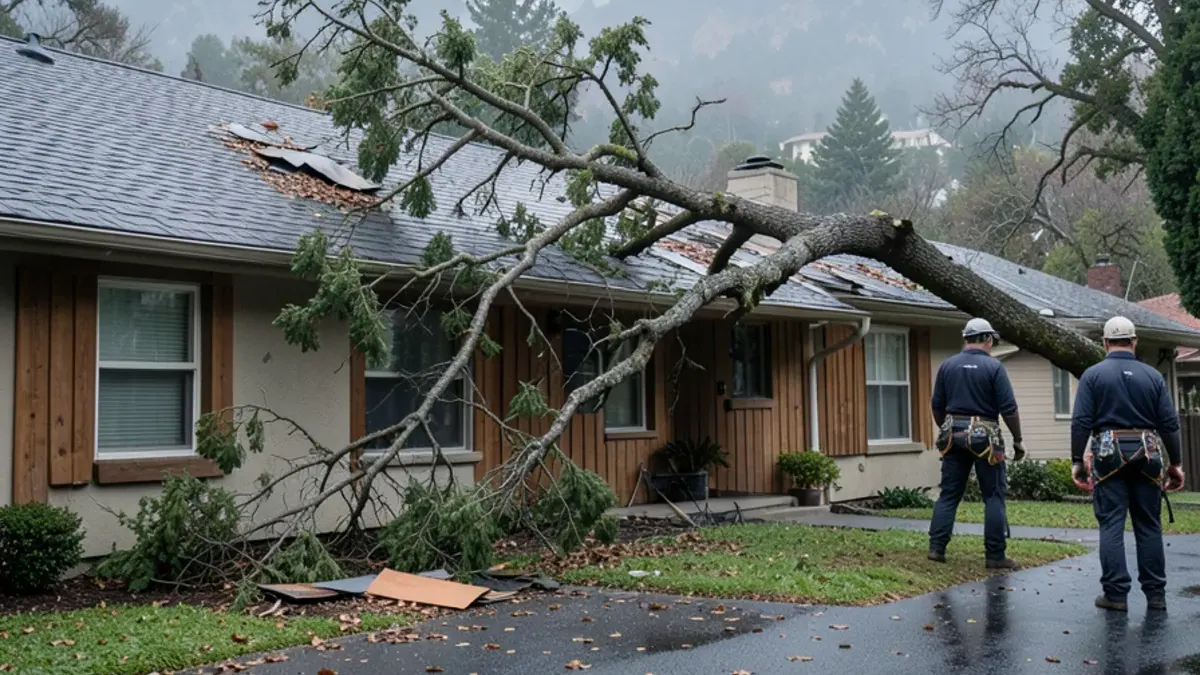
- A branch or limb has punched through the roof.
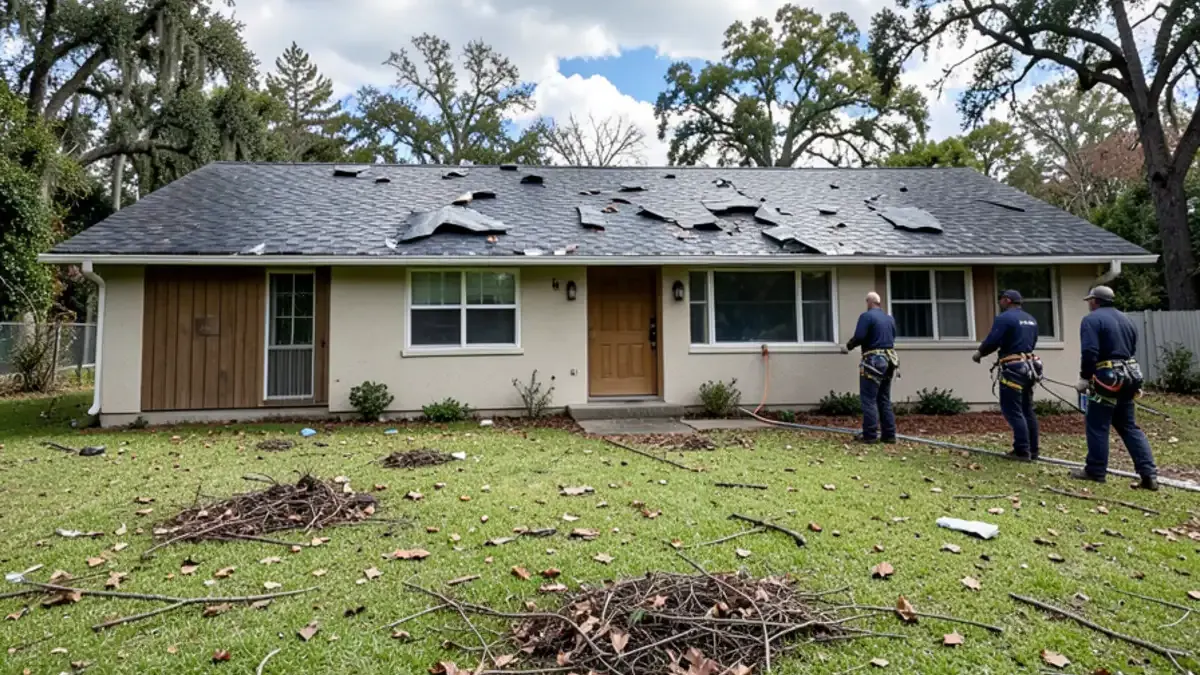
- Wind has stripped a section of shingles or tiles down to underlayment or bare wood.
- Fire, or the firefighting that followed, has opened part of the roof.
- A leak is active, more rain is forecast within days, and the source can't be reached safely mid-storm.
- An older roof has several leaks at once and a wider area needs cover until it is repaired or replaced.
A single lifted shingle or one cracked tile can often be sealed or swapped instead. Tarping a whole slope for a small problem adds cost and fasteners you don't need, and we'll tell you when that's the case.
Tarp roof after storm: what you can do safely from the ground
Homeowners can't tarp a roof safely in the rain, and we don't recommend trying. Ladders slide on soaked lawns, a tarp in a gust pulls like a sail, and shingles, tile and moss are slick. While you wait:
- Move people and valuables out of rooms below the damage.
- Catch drips, and switch off the breaker for any light or outlet getting wet.
- Photograph the roof from the yard or street, and the damage inside, before anything is covered.
- Open a clear path to the side yard and unlock the gate, so the crew can bring ladders straight to the damaged side.
- If a tree or limb is still on the house, read fallen tree roof damage first; the tree usually comes off before the tarp goes on.
Questions about emergency roof tarping?
Call first for the quickest answer, or request a free written estimate below.
Request a free written estimate
Fastest answer: call (725) 745-8803. Or send the details below and we will call you back.
Roof tarp installation on shingle, tile and flat roofs
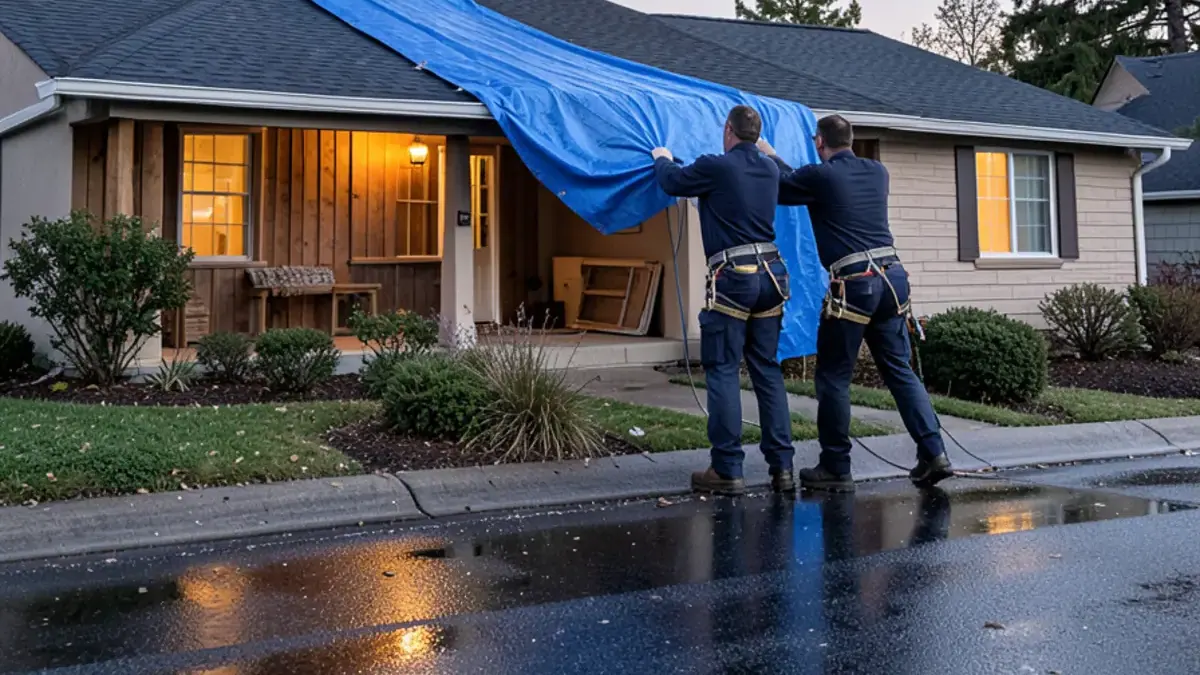
How a tarp is held down depends on what is underneath. The aim on every roof is the same: cover the damage with generous overlap, run the top edge over the ridge or tuck it uphill so water flows over the tarp rather than under it, and fasten it so wind can't get beneath.
Every tarping visit includes the same core work, whatever the roof:
- Heavy-duty poly tarp sized to reach well past the damage on every side.
- Battens or straps to hold the edges, chosen for the roof material.
- Debris cleared from the opening first, so nothing sharp punctures the tarp from below.
- Photos of the damage before cover and of the finished tarp after.
- An interior check for new drips before the crew leaves.
Asphalt shingle roofs
Tarp edges are rolled around wood boards, and the boards are fastened through to the decking. Fasteners go in sparingly and, where possible, in areas the permanent repair will replace anyway, so good shingles aren't left with new holes.
Clay and concrete tile roofs
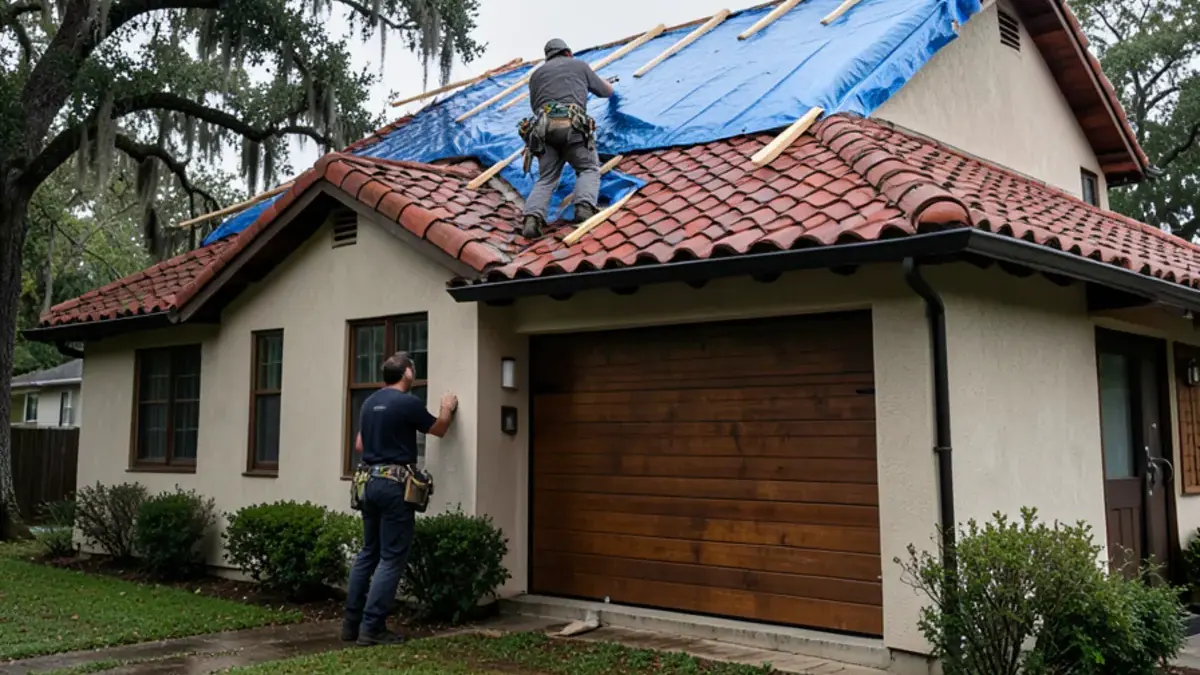
Tile cracks under careless footsteps, so the crew steps where tiles are supported and may lift a few to reach solid decking for fastening. On some tile roofs the tarp is weighted and strapped rather than screwed down. Expect a few tiles to be replaced at the permanent repair.
Flat and low-slope roofs
Water sits on a flat roof instead of running off, so the tarp is laid and weighted to drain toward the gutter or scupper, never to form a pond. Eichler-style roofs with exposed beams below need extra care with fastening.
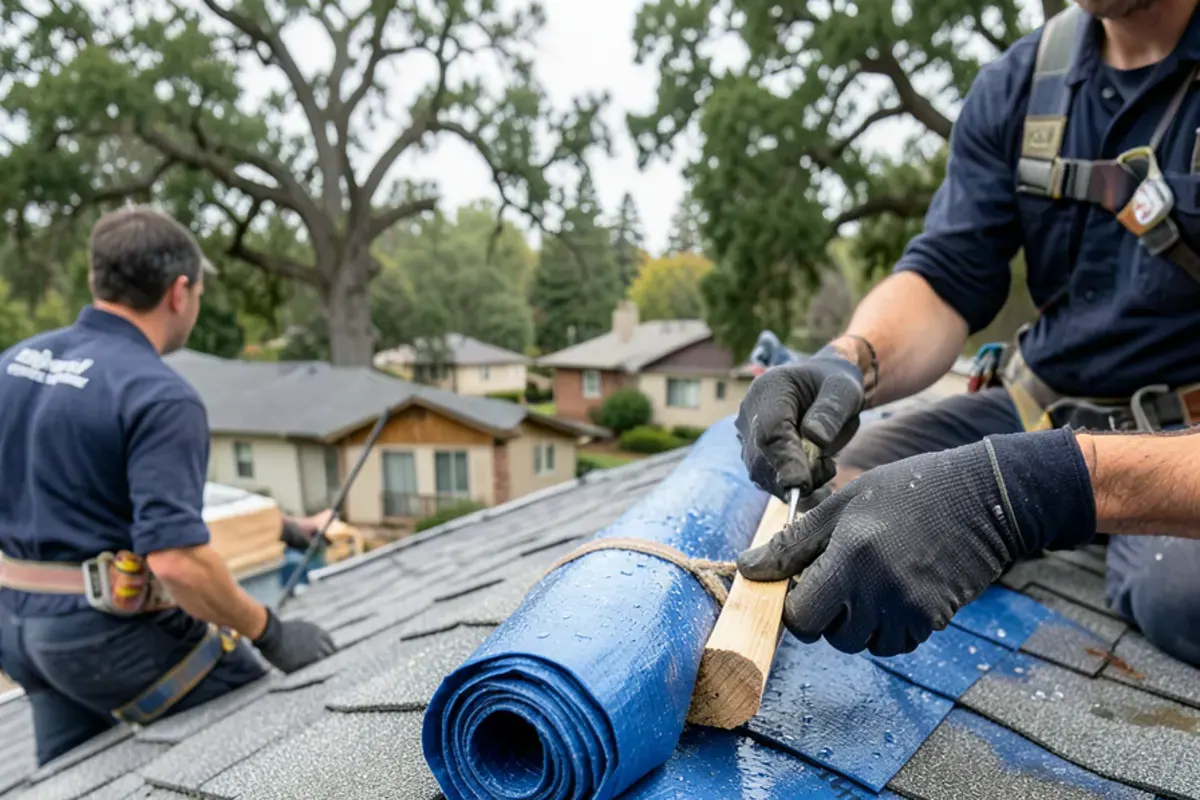
How a tarp goes on, step by step
- Read the roof from the ground: pitch, material, wind direction and where a ladder can stand on firm footing.
- Anchor fall protection before anyone walks the slope.
- Clear and photograph the opening, removing loose shingles, tile shards and small branches.
- Lay the tarp from the eave up, carrying the top edge over the ridge or tucking it under an uphill course.
- Secure the edges with battens, straps or weights, keeping new holes to areas the repair will replace.
- Check inside and photograph the result, then book the dry-weather inspection.
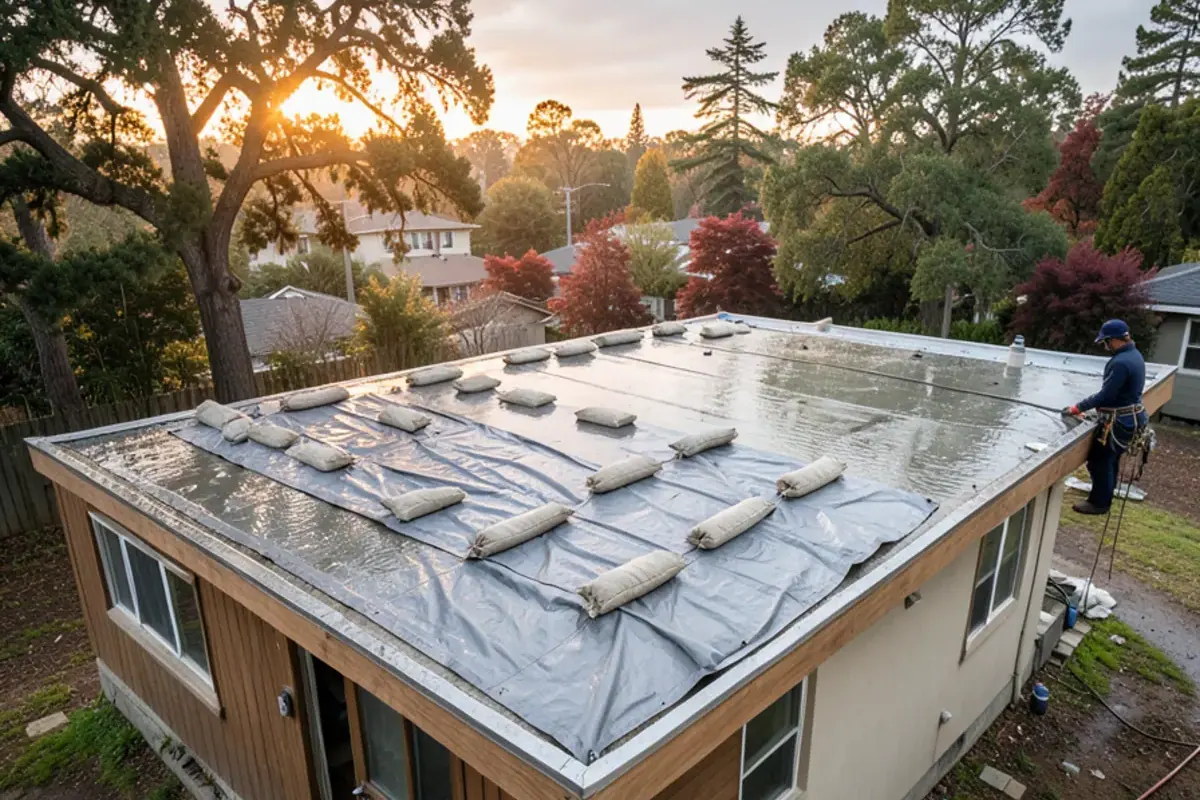
Emergency roof tarping in Campbell, CA: how a crew reaches you
We work from a Campbell base and cover Santa Clara County, the Santa Cruz Mountains and nearby parts of San Mateo and Alameda counties. Tarping calls are sorted by risk: open roofs over living space and active leaks come before damage that is still dry. There's no set response time. On the call you'll hear honestly when a crew can arrive, including when a wide storm has stacked up calls across the valley.
On arrival the crew looks over the house from the ground, photographs the damage before covering it, then installs the tarp. Before leaving, they check inside for new drips and share photos of the finished cover with you.
You deal with a family-run company from the first call to the final roof. The person who explains the tarp charge also writes the free, itemized estimate for the permanent repair, with photos of what sat under the tarp. Crews pick up shards and fasteners before leaving, and the photo set is ready to hand your insurer.
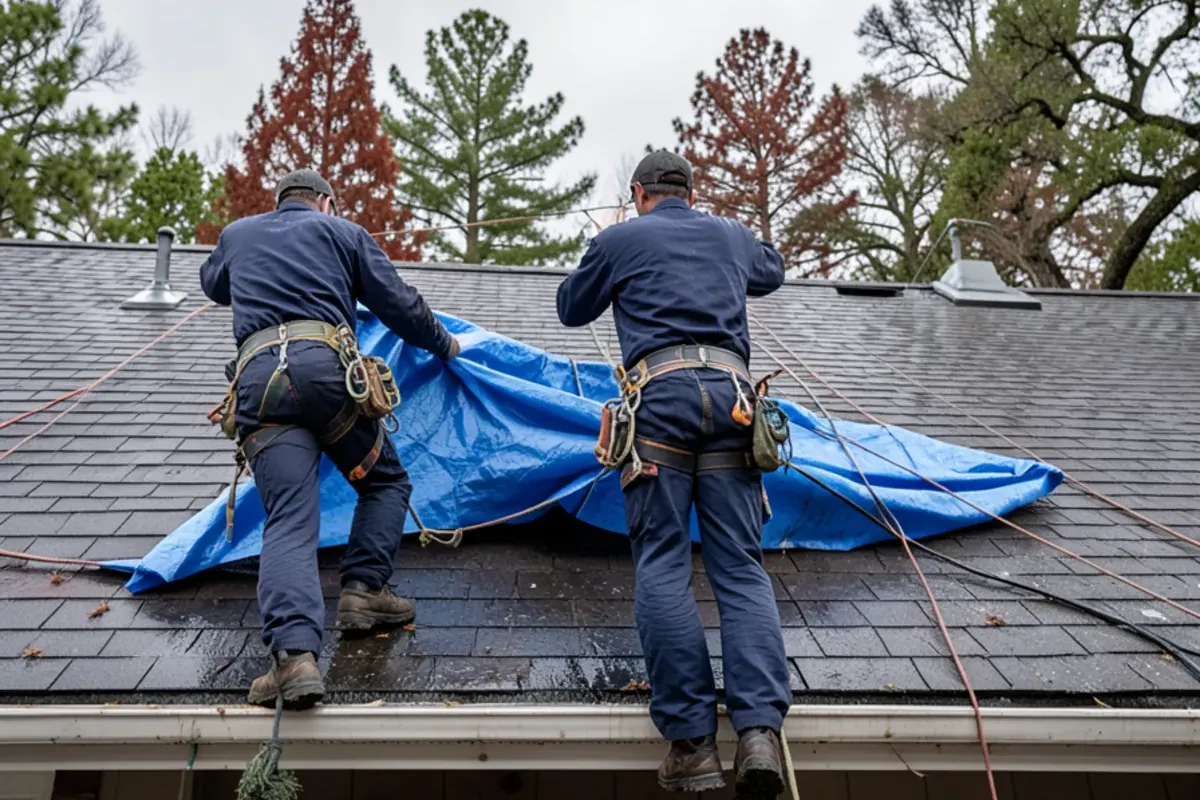
Is a tarp enough, or does the roof need shrink wrap?
For most houses, a well-secured tarp is enough. Roof shrink wrap is a heat-sealed plastic film stretched tight over a whole roof or a large section. It is mostly used on large openings, commercial buildings, or fire-damaged roofs that will stay exposed for months while a claim and a rebuild are worked out. It costs more and takes longer to put on. If your roof calls for something other than a tarp, we'll explain why, and what it involves, before anything is ordered.
Temporary roof cover to permanent roof: the handoff
A tarp buys time; it isn't a repair. Poly tarps break down in sun and wind, and the South Bay's dry season brings strong UV the moment the rains end. Plan on weeks, not seasons.
Once the roof dries, we come back to remove the tarp, inspect what's beneath it and write an itemized estimate for the permanent fix. If the damage came from wind across the whole roof, that estimate follows the full inspection described under storm damage roof repair.
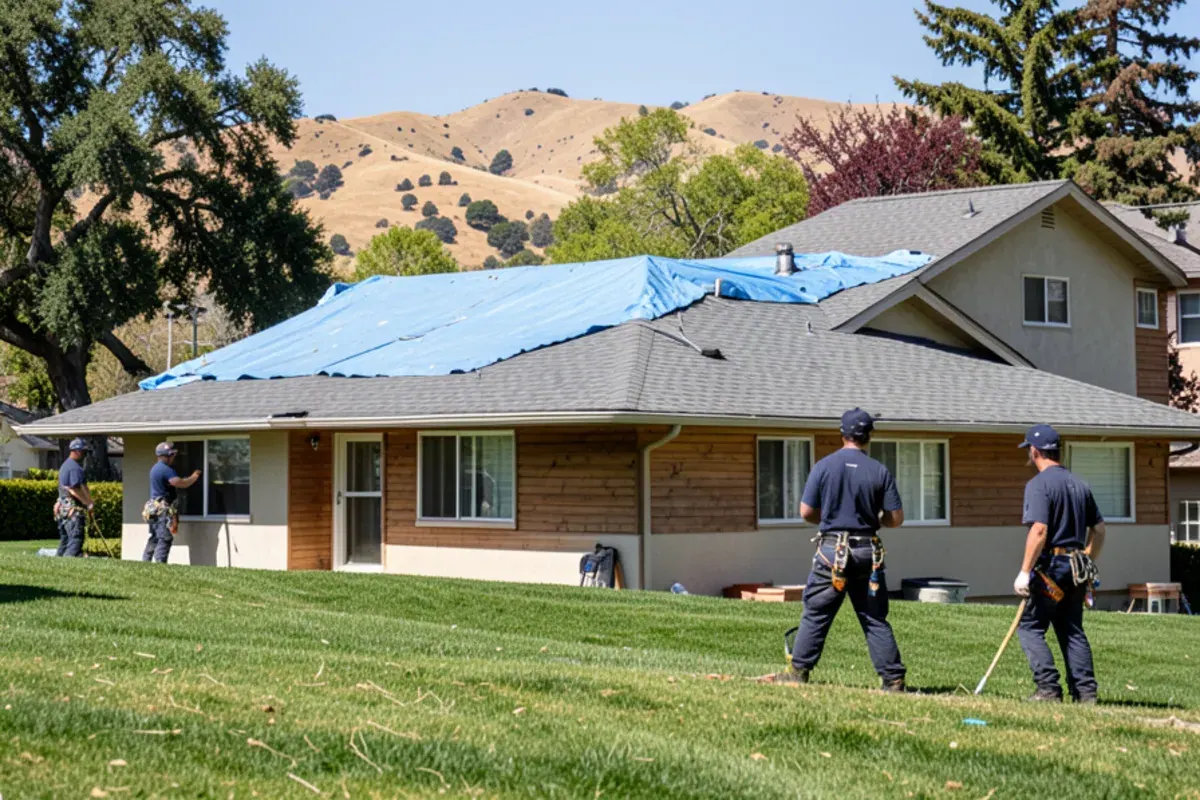
Tarps, permits and who you let on the roof
A tarp is temporary protection, while the repair that replaces it follows normal permit rules. Inside Campbell that means the City Building Division; in unincorporated Santa Clara County, the County Planning and Development Department. Mountain towns differ: Scotts Valley issues its own permits, while Boulder Creek, Felton and Ben Lomond go through the County of Santa Cruz Planning Department. If a fire opened the roof and the house sits in a CAL FIRE mapped hazard zone, the rebuild needs a Class A roof assembly. Before anyone climbs up, check their CSLB license at cslb.ca.gov.
Tarp charges, explained before the ladder goes up
A tarping visit has a cost, and you'll know what it is before any work starts. It depends on:
- Area to cover: a single opening or an entire slope.
- Roof type and pitch: steep tile takes more time and care than a low shingle roof.
- Access: two-story walls, tight side yards or a hillside lot in the mountains.
- Return trips: re-securing after wind, and removal when the permanent repair begins.
- Materials: a large slope or a two-story roof needs more tarp, battens and fasteners.
- Time on the roof: tile and slate need slower, careful footing than shingles.
Keep the invoice and the photos. Insurers commonly ask for proof of what was done to prevent further damage.
Roof open to the rain? Call (725) 745-8803 for emergency tarping.
Call (725) 745-8803