Signs a commercial reroof in Campbell is the better investment
Owners rarely replace a roof that is not leaking, and they should not have to guess when patching stops paying off. These conditions usually tip the decision:
- Repair spend climbing: several leak calls a season, each at a different spot.
- Wet insulation: core cuts or a moisture survey show saturated boards across large areas.
- Layer limit reached: the roof already has a recover layer, so the next system has to start from the deck.
- Membrane at end of life: brittle seams, widespread shrinkage at edges, or granule-bare cap sheets.
- Building events: a sale, refinance, new long-term tenant or rooftop solar plan that needs a fresh roof underneath.
On South Bay buildings the usual accelerants are long, UV-heavy summers that shrink single-ply at the edges, service traffic around HVAC units, and winter storms that sit on roofs whose drains were never cleared.
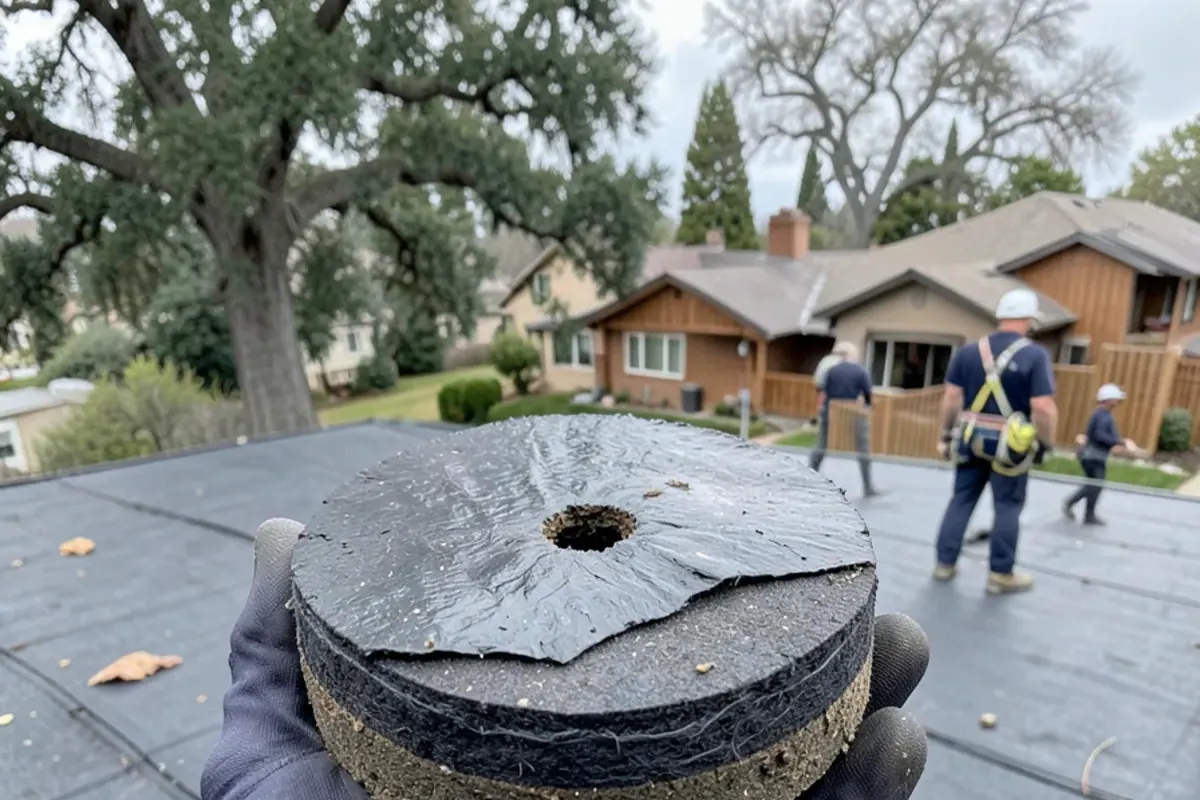
Is a coating or a full replacement right for my building?
| Option | What has to be true | Disruption | When it pays |
|---|---|---|---|
| Restoration coating | Roof is dry, attached and has some life left | Low; no tear-off | Extending a sound roof several years at lower cost |
| Recover (new membrane over old) | Existing roof is dry and within the code layer limit | Moderate; cover board and new membrane only | Large simple roofs where tear-off cost is high |
| Full tear-off and replacement | Any condition, required when insulation is wet | Highest; phased by section | Long hold periods, wet roofs, drainage that must be rebuilt |
We test for moisture before recommending a coating or recover. Trapping wet insulation under a new surface rots the deck, corrodes fasteners and wastes the investment.
Questions about commercial roof replacement?
Call first for the quickest answer, or request a free written estimate below.
Request a free written estimate
Fastest answer: call (725) 745-8803. Or send the details below and we will call you back.
TPO commercial roofs and other low slope commercial roof systems
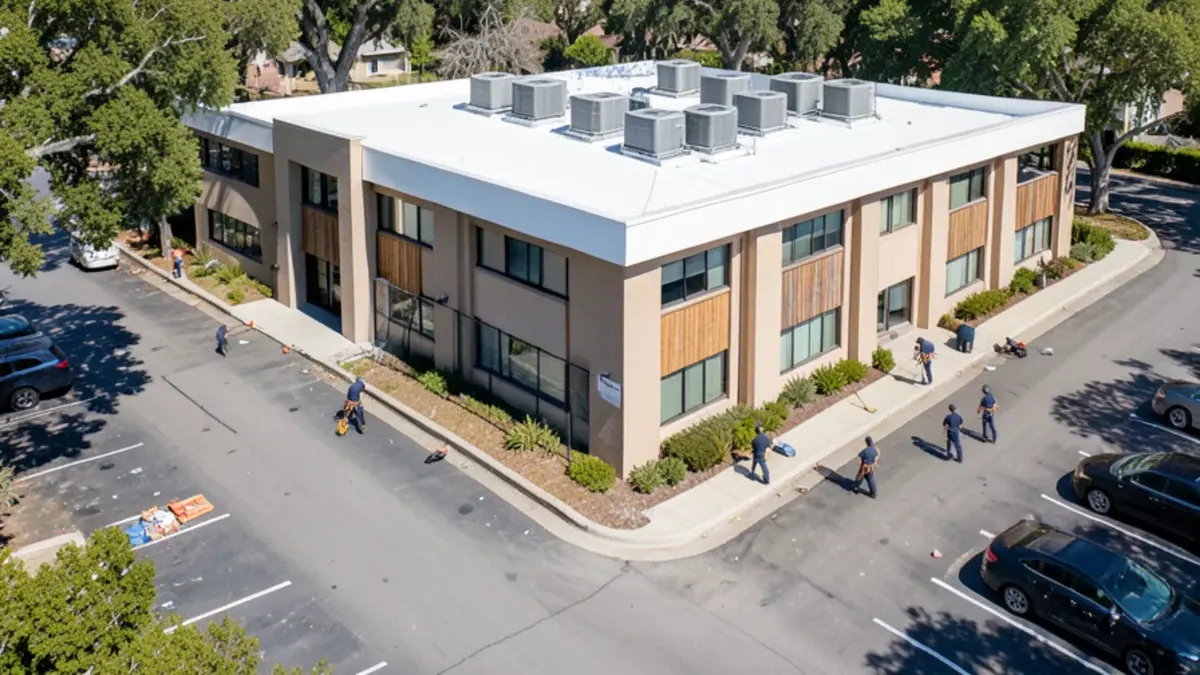
Most commercial reroofs we price in the South Bay land on a white TPO membrane: it reflects heat, helps meet energy code and welds into a continuous sheet. PVC replaces it where restaurant exhaust or chemicals reach the roof. Multi-ply modified bitumen still suits smaller buildings and roofs with heavy foot traffic around equipment.
Underneath, the assembly matters as much as the membrane. Tapered insulation fixes ponding at drains; a cover board protects the insulation from foot traffic, dropped tools and service carts; attachment, mechanically fastened or fully adhered, is set by the manufacturer's wind-uplift requirements for each roof zone.
A commercial reroof from us typically includes:
- Phased tear-off to the deck, or a recover where moisture tests allow it.
- Deck repair, including corroded metal deck sections or rotted wood.
- Tapered insulation, crickets and new drains or scuppers.
- Cover board and a TPO, PVC or modified bitumen membrane.
- Curb, parapet, coping and penetration flashings rebuilt to the new roof height.
- Edge metal, walkway pads and a closeout photo set.
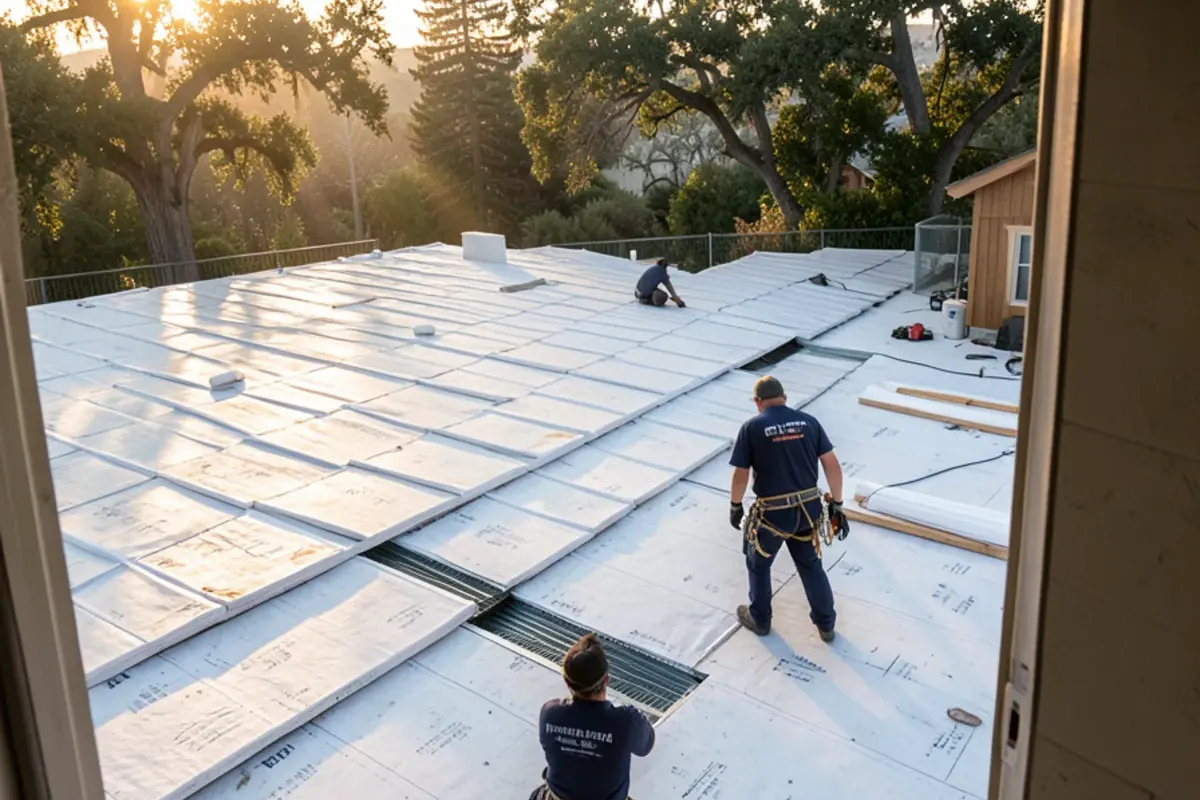
Can the building stay open while the roof is replaced?
Yes, and we plan for it from the first walk. A typical phasing plan looks like this:
- Divide the roof into sections that can be torn off and made watertight in one working day.
- Map tenants below each section and schedule loud or odorous work around their hours.
- Arrange shutdown of air intakes and rooftop units with the mechanical contractor section by section.
- Stage materials and the dumpster away from customer entrances and fire lanes.
- Send the property manager a short look-ahead each week so tenant notices go out on time.
- Close out with the final inspection, a walk of every section with the property manager and the photo set for the building file.
Condo and apartment buildings follow the same principle with resident notices in place of tenant memos; our HOA and multifamily roofing page covers how boards and residents are kept informed.
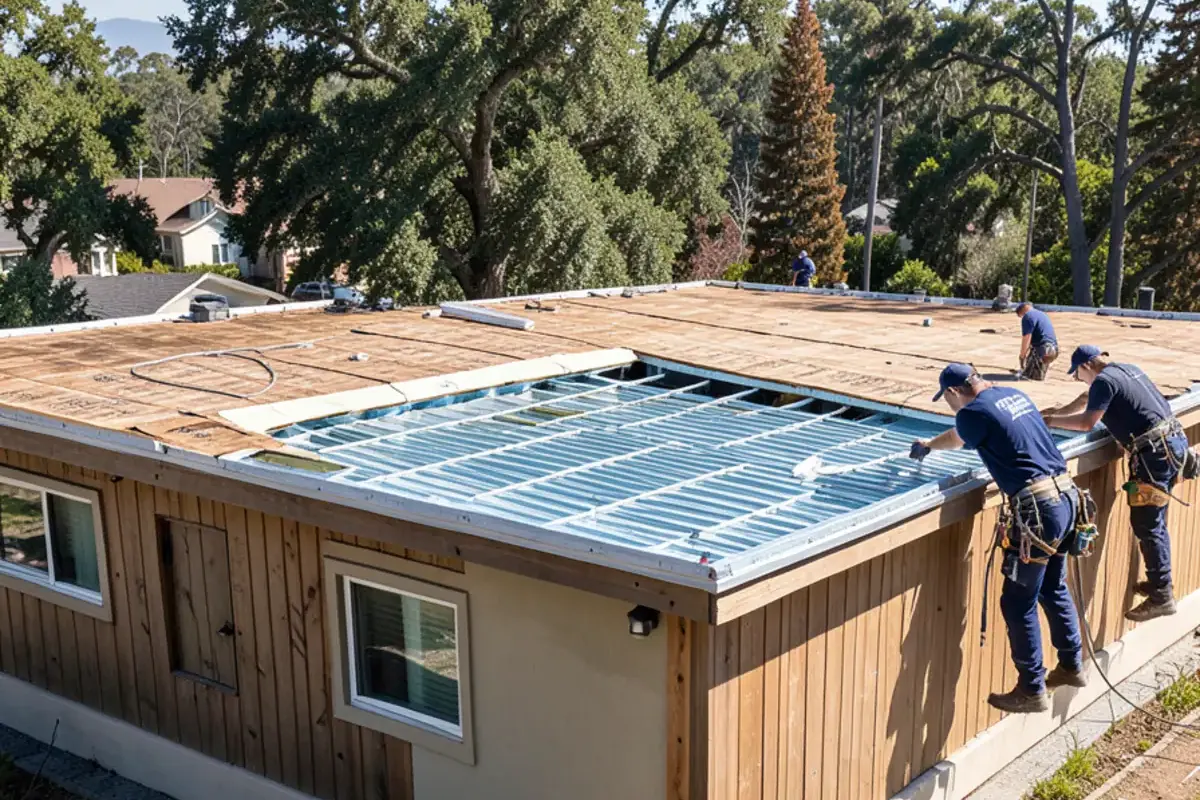
Office roof replacement versus warehouse roof replacement
Offices and medical buildings
Smaller roofs, more equipment. An office roof replacement spends much of its labor on curbs, screen walls, parapets and penetrations. Abandoned equipment and old antenna mounts are good to remove during the reroof, when deck patches are easy.
Warehouses and light industrial
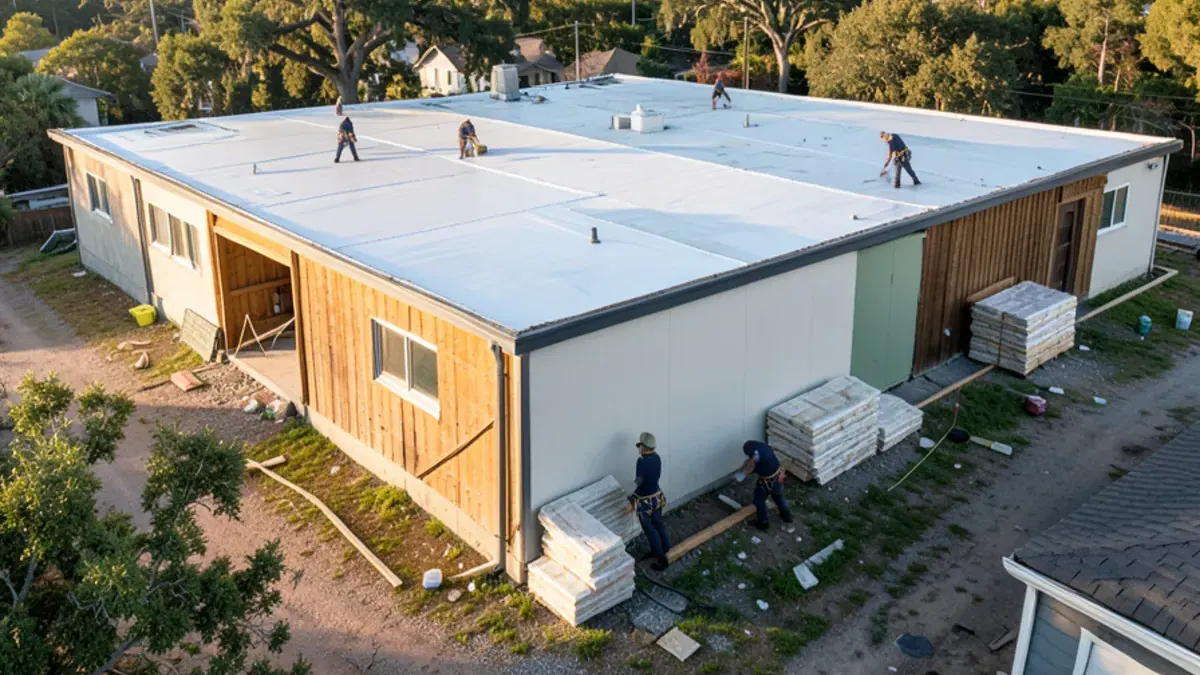
Larger, plainer roofs with long drainage runs. Warehouse roof replacement often turns on drainage design and whether a recover is allowed, because tear-off volume drives cost. Skylights and smoke vents need their curbs rebuilt to match the new roof height.
Commercial roof replacement in Campbell, CA: permits and energy code
In the City of Campbell, reroof permits are filed online through MyGovernmentOnline, and damaged decking has to be addressed before the work is covered. Properties sitting on unincorporated county land go to the County of Santa Clara's Planning and Development Department instead. Neighboring cities run their own building departments.
Title 24, Part 6 of California's building standards contains cool-roof requirements, and in some cases insulation requirements, that often apply when a low-slope nonresidential roof is replaced. The exact rule depends on climate zone, roof slope and scope; Campbell is in Climate Zone 4. We confirm requirements with the plan reviewer and specify products rated by the Cool Roof Rating Council where the code calls for them.
The California Building Code also bars a recover over a roof that is water-soaked or already carries two or more coverings, which is why our moisture survey comes before any recover price. For the cool-roof piece, the baseline for an altered nonresidential low-slope roof is 0.63 aged reflectance with 0.75 emittance; added insulation can offset a lower number. Ask every bidder which C-39 license they hold, then confirm it with the CSLB.
Commercial roof cost: what drives the number
We quote commercial reroofs from a measured roof, moisture data and a written scope, not a square-foot rule of thumb. Expect these line items to move the total:
- Roof area and the number of layers to remove
- Wet insulation found in core samples or a moisture survey
- Tapered insulation and new drains needed to stop ponding
- Membrane type, thickness and attachment method
- Curbs, penetrations, parapet and coping work
- Crane or lift days, phasing and work-hour limits set by the building
- Permit fees and any energy-code upgrades
For owners planning ahead, an itemized estimate also helps build a capital reserve line rather than reacting to the next leak.
Why owners and managers choose us for commercial reroofs
We are a family-run roofing company, and the people who price your reroof stay with it to closeout. The estimate is free, written and itemized, with core-cut and moisture findings photographed so ownership can see why tear-off or recover is recommended. If a coating or targeted repair is the smarter spend, we say so. Crews clean up each day on occupied sites, and if storm damage forced the project, we document it for the building's insurer.
What you receive when the roof is finished
- Progress and completion photos of each roof section, including flashings and drains.
- Manufacturer material warranty paperwork, issued by the maker under its own terms.
- Workmanship terms in writing, as stated on your estimate.
- Notes on equipment curbs and penetrations for future tenant work.
- A recommended inspection schedule to keep the new roof in service.
Building an addition or new structure at the same time? Our new construction roofing work ties new roofs into existing ones cleanly.
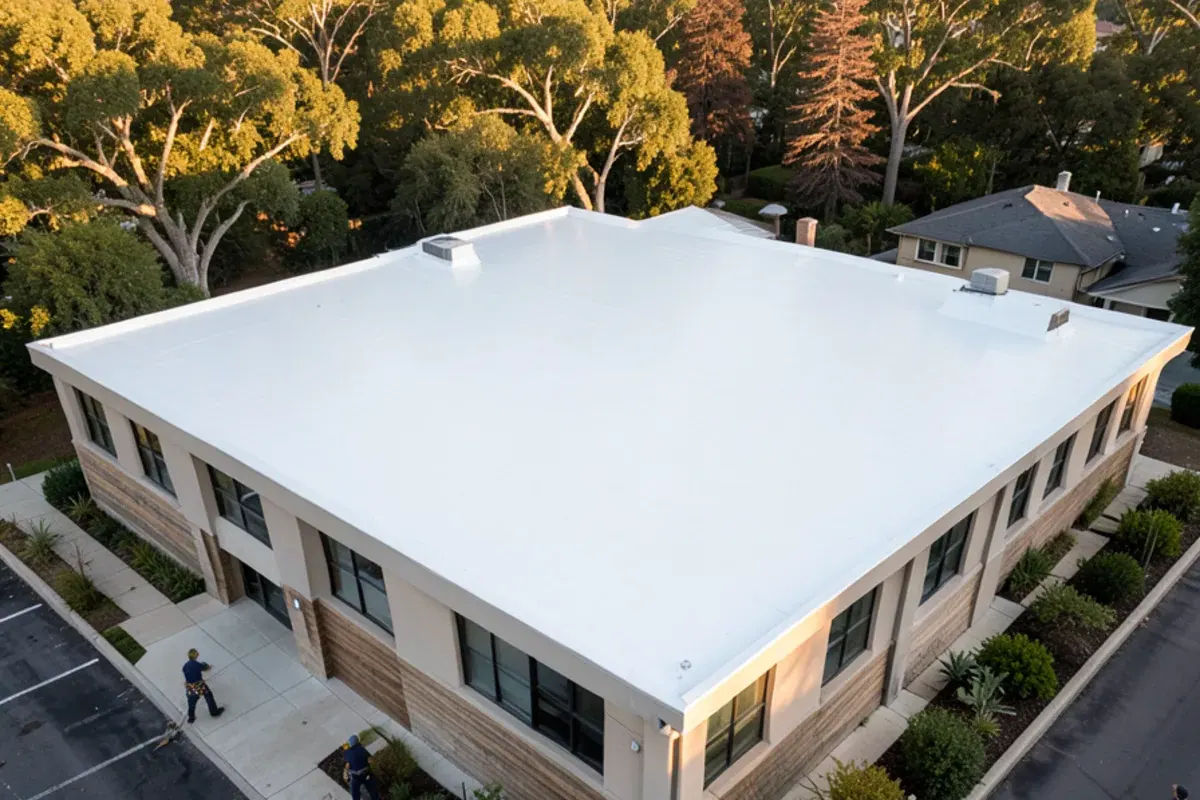
Budgeting a reroof for next year? Call (725) 745-8803 and we'll assess the roof and price the options.
Call (725) 745-8803