
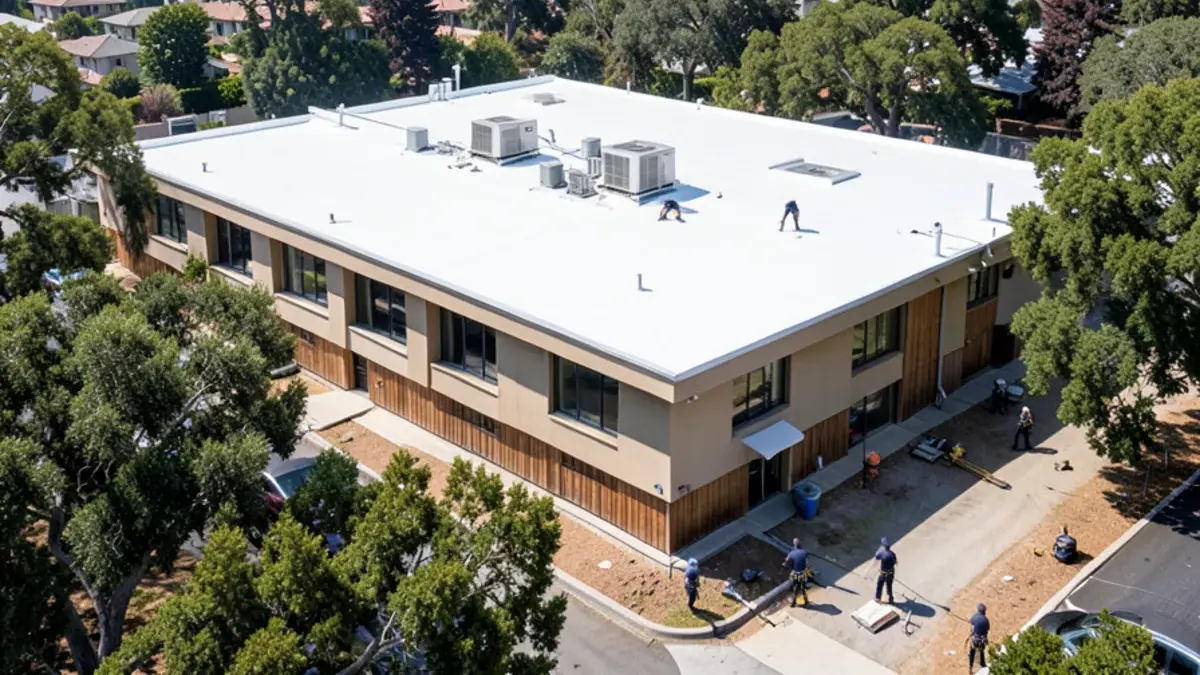
Which roofs are good candidates for a commercial roof coating?
Coatings are fluid-applied layers that cure into a seamless skin over an existing membrane or metal roof. They work best as a planned step in a roof's life, applied while the roof below is still doing its job. A building is usually a good candidate when most of these are true:
- Dry insulation: a moisture survey finds wet areas are small and can be cut out and replaced.
- Attached membrane: single-ply, modified bitumen, built-up or spray foam is still adhered or fastened down, with no widespread blistering.
- Repairable seams and flashings: splits and open laps are isolated rather than everywhere.
- Working drainage: drains and scuppers clear water, or ponding is limited and the chosen coating tolerates it.
- Metal roofs with surface rust only: fasteners can be reset and rust treated before coating.
- A sound deck: no sagging, corroded or rotted sections under foot.
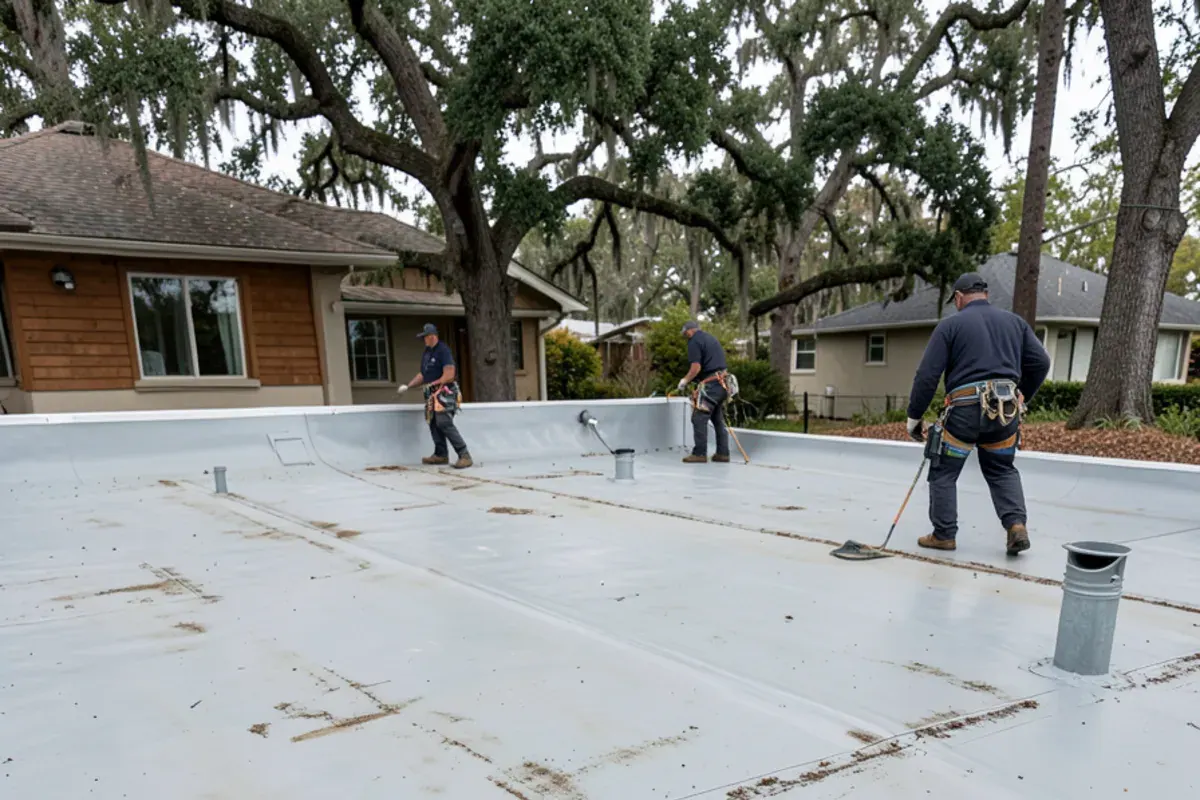
Wondering whether your building's roof can be coated? Call (725) 745-8803 for a written assessment with photos.
Call (725) 745-8803When is coating the wrong call?
Coating over these conditions usually shortens the life of the coating and hides damage that keeps spreading underneath. Each one either needs repair first or points to a replacement.
| What we find | Why it matters for a coating | Usual next step |
|---|---|---|
| Large areas of wet insulation | Trapped moisture keeps rotting the deck and can blister the coating | Tear off wet areas or replace the roof |
| Widespread blisters or delamination | Coating cannot bond to a membrane that is coming loose | Replacement |
| Ponding across big sections | Acrylics soften and fail under standing water | Add drains or tapered insulation, or choose silicone |
| Membrane shrinking from edges | Stress keeps pulling at the coating | Repair edges and terminations, or replace |
| Deteriorated deck | No coating adds structure | Deck repair and a new roof system |
| Two or more roofs already in place | Extra weight and hidden moisture between layers | Full tear-off to the deck |
When the survey lands on the wrong side of this table, our commercial roof replacement page explains how a new single-ply or modified system is scoped.
Silicone, acrylic or urethane: which coating fits?
| Coating | Strengths | Watch-outs |
|---|---|---|
| Silicone | Tolerates ponding water; holds up well to UV; can often be applied in one or two passes | Collects dirt, which lowers reflectivity; generally only silicone sticks to silicone when recoating |
| Acrylic | Bright white and reflective; water-based; usually lower material cost | Weak under ponding water; needs dry, mild weather to cure |
| Urethane | Tough against foot traffic and impact; good at roof edges and walkways | Higher cost; solvent-based products need odor planning around occupied spaces |
Many systems use more than one: a urethane base over seams and a silicone or acrylic topcoat. Our roof coatings page covers the residential and small-commercial side of the same choice.
Ask for the product standard by name
ASTM International publishes material specifications for the main chemistries: ASTM D6694 covers liquid-applied silicone roof coatings and ASTM D6083 covers liquid-applied acrylic coatings. A data sheet that cites the matching standard tells you the product has been tested for tensile strength, elongation and water resistance at a defined level. A bid that names only a color and "elastomeric coating" leaves too much open.
What does prep involve before any coating goes on?
Most of the work in a coating job happens before the coating is opened. Skipping steps is where cheap bids save money.
- Run a moisture survey, often infrared scanning confirmed by small core cuts, and map wet areas.
- Cut out and replace wet insulation and membrane, then patch to match.
- Power wash and clean the whole surface, then let it dry fully.
- Repair seams, flashings, penetrations and edge metal; reinforce them with fabric embedded in base coat.
- Run an adhesion test patch and prime if the manufacturer calls for it.
- Apply the coating at the manufacturer's specified thickness, checked with a wet-film gauge, in dry weather.
The South Bay's dry season from late spring into fall is the natural window. Coatings need dry surfaces and several rain-free days to cure, which is hard to find between November and March.
Wet mils, dry mils and why two bids differ
Coating thickness is where bids quietly diverge. One U.S. gallon spread over 100 square feet lays down about 16 mils of wet film, since a gallon is 231 cubic inches. What stays on the roof after curing depends on the product's volume solids. At 60 percent solids, that same 16 wet mils dries to roughly 9.6 mils; at 90 percent solids it dries to about 14.4 mils. Ask every bidder to state gallons per square, the number of coats and the target dry thickness, then compare those numbers rather than the brand name.
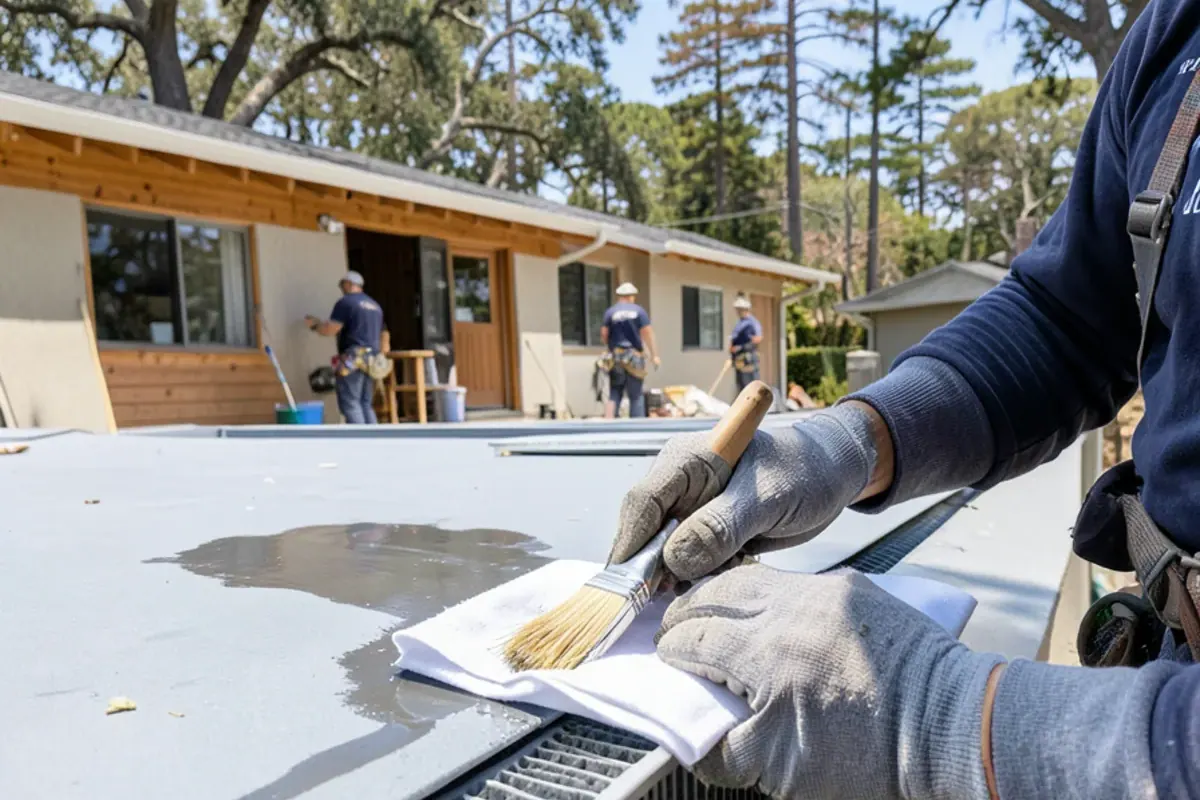
Coating vs. replacement: lifespan, energy code and budget
How long a coating lasts depends mostly on how much is applied and what it sits on. Manufacturers publish system terms tied to specific thicknesses, and many systems can be cleaned and recoated near the end of their term rather than torn off. Any material warranty comes from the manufacturer under its own terms; workmanship terms are written on the estimate.
Coatings also bring energy benefits. A white, reflective surface reflects sunlight that would otherwise heat the roof and the space below. If your coating will count toward California's Title 24 cool-roof rules for a low-slope roof, choose a product rated by the Cool Roof Rating Council and confirm with the building department. Financially, a coating is usually treated as maintenance spending, while a replacement is a capital project. Ask your accountant how that applies to your building.
What Title 24 asks of a low-slope commercial roof
For nonresidential buildings, the 2022 Energy Code set low-slope roofs (2:12 or flatter) at a minimum aged solar reflectance of 0.63 and thermal emittance of 0.75, or a Solar Reflectance Index of 75, across all 16 climate zones, and Energy Commission summaries of the 2025 code carry the same values. Those are aged ratings, so check the CRRC listing for the three-year number, not the initial one. Whether a coating job counts as a reroof that triggers the rule is a question for the building department.
From our roof visits: coating jobs in the South Bay
We have applied silicone coating on a flat office roof in Campbell, and the pattern on buildings like that is consistent: the membrane field is usually fine, and the trouble sits at the edges. HVAC curbs, conduit supports, condensate lines and pipe boots added by other trades over the years account for most of the open seams we reinforce before coating.
Silicone looks brightest the day it goes on; dust from nearby freeways and construction dulls it over time, so a gentle cleaning helps keep it reflective. Low spots near clogged drains show up as dirt rings and are worth fixing during prep. Office and light-industrial buildings in Santa Clara and Campbell with large, simple flat roofs tend to be the strongest coating candidates, because there is more open field and fewer details per square foot.
The trade-offs deserve a straight answer. A coating costs less up front than a tear-off and keeps the building in service, but it does not add insulation or change the slope, so a roof that ponds will still pond. Silicone resists standing water yet is slick when wet and limits future recoats to more silicone. Acrylic is easier to recoat and paint over, and it suffers wherever water sits. When a roof has more than a few wet areas, we usually tell owners the coating budget is better put toward commercial roof repair now and a planned replacement later.
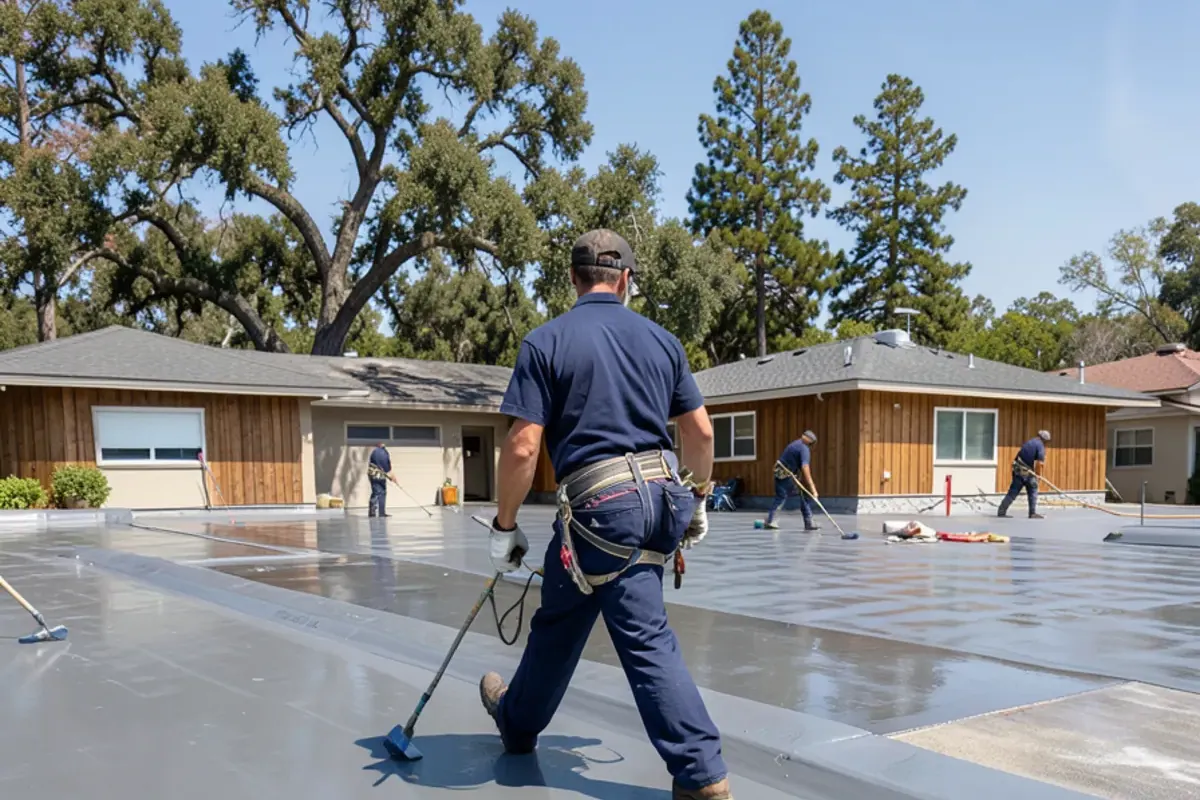
Coat, repair or replace: a quick decision path
Most coating decisions come down to what the moisture survey and a close look at the details show. Use this path as a starting point, then let the written assessment confirm it:
- Dry insulation, sound membrane, weathered surface: a coating is a strong option, ideally applied in the dry season.
- Dry roof with a few open seams or failed flashings: repair those first, then coat, or simply repair and recheck next year.
- Several wet areas but a sound deck: cut out and replace wet sections; coat only if what remains is mostly dry.
- Widespread wet insulation, blisters or two existing roofs: plan a tear-off and a new system.
Whatever the path, ask for the product, thickness and prep steps as line items, so the coating you pay for is the coating that goes on.
Want a moisture-aware assessment before you commit to a coating? Ask Xylo Fix Roofers for a written roof report with photos.
Call (725) 745-8803