
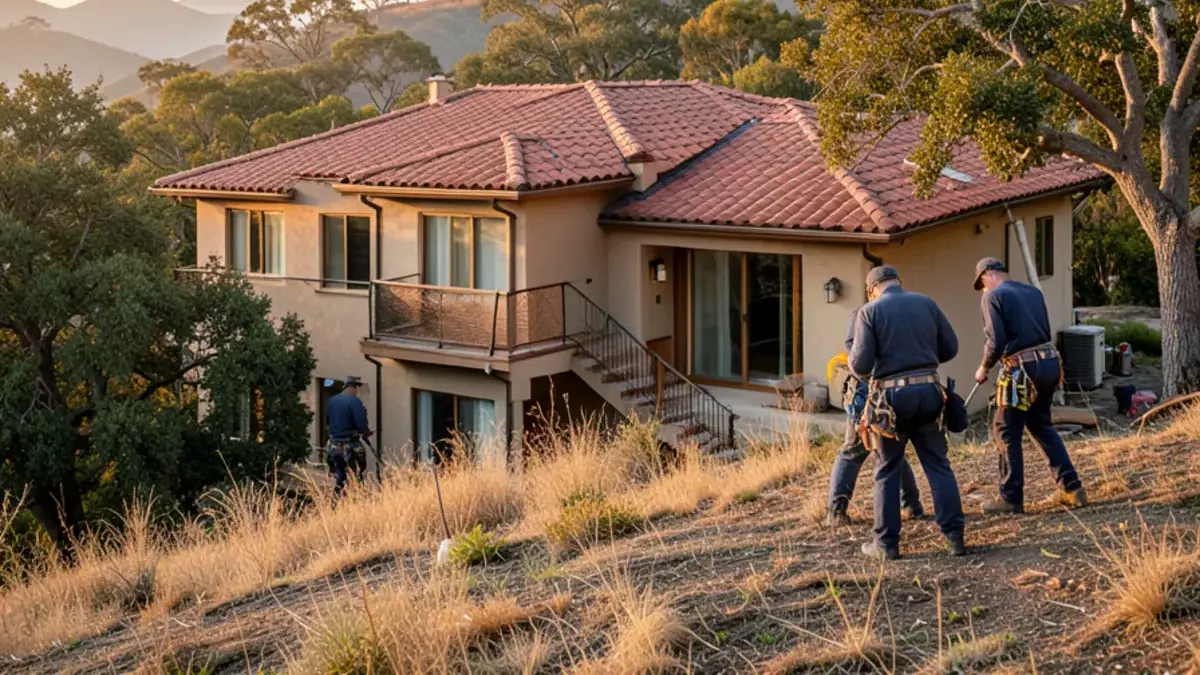
Which roofing materials reach a Class A fire rating?
Class A is the highest fire rating for a roof, based on standardized tests of how a roof resists flame spread and burning brands. The rating usually belongs to the assembly, meaning the covering plus the underlayment or cap sheet tested with it. That is why two roofs of the same visible material can carry different ratings.
The tests behind the rating, published as ASTM E108 and UL 790, measure how far flame spreads across the roof, whether a burning brand set on the surface burns through to the deck, and how the roof holds up under repeated flame. A Class A listing names the exact covering and underlayment combination that passed.
| Roof type | Typical path to Class A | What to watch |
|---|---|---|
| Asphalt shingles | Most fiberglass-based shingles are Class A on their own | Open valleys and edges still collect needles |
| Concrete or clay tile | Class A, often as a tested assembly | Open ends at the eaves must be fire-stopped so embers and nests stay out |
| Metal panels | Typically Class A when installed over the tested underlayment | Gaps under ridge caps and at panel ends need closures |
| Wood shake | Only fire-retardant-treated shakes over a specific assembly | Untreated shake does not qualify; check the listing and local rules |
| Synthetic shake | Varies by product; many are listed Class A | Confirm the exact product listing, not the brand name |
If you like the look of cedar but live on a ridge, ask about synthetic shake or treated shake with the right assembly. Our wood shake roofing page covers those choices in more depth.
Want a Class A roof that still fits a Los Gatos or Saratoga hillside home? Call (725) 745-8803 for a free written estimate.
Call (725) 745-8803Where do embers get into a house?
During a wind-driven fire, burning embers can land far ahead of the flame front. They ignite whatever small fuel they find. On a roof, that means these spots:
- Gutters full of dry oak leaves or pine needles sitting against the roof edge.
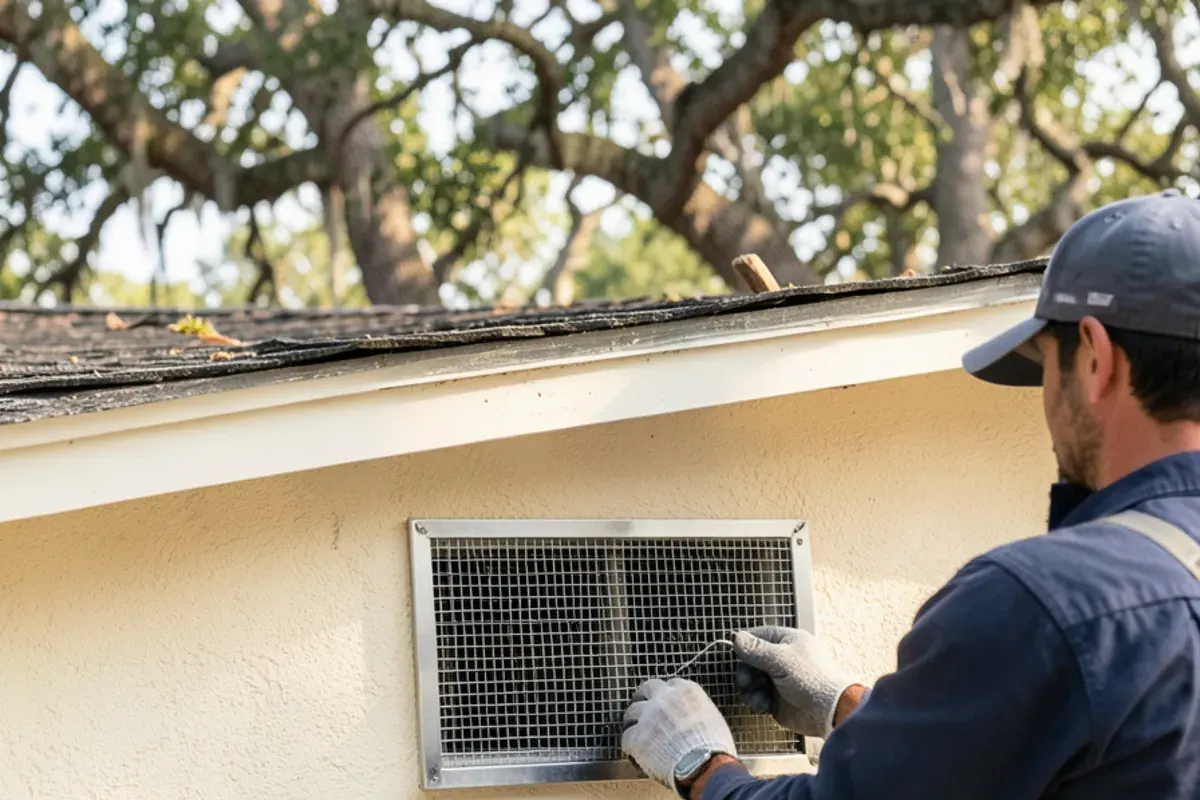
- Attic and soffit vents with coarse screens or none, letting embers into the attic.
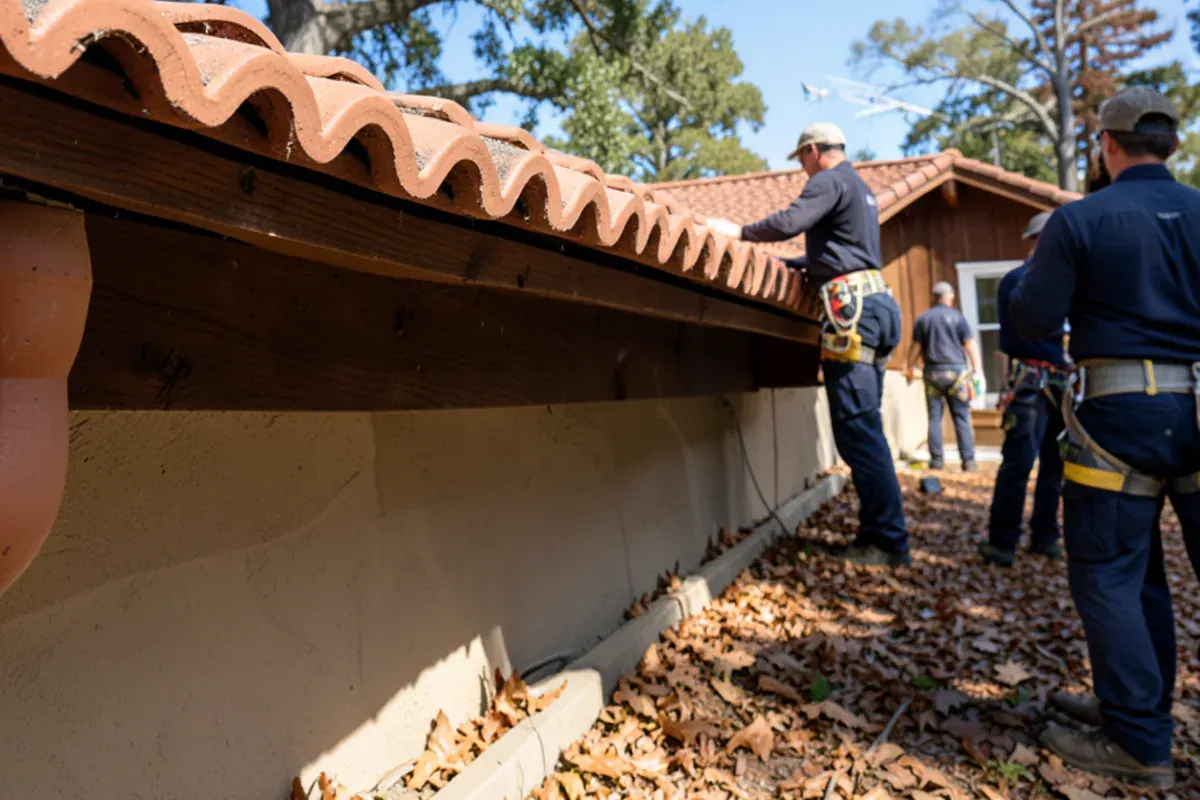
- Open tile ends at the eaves, which act like small chimneys if debris or nests are inside.
- Roof-to-wall joints and dormers where needles pile up in corners.
- Skylights and roof decks with combustible materials near the roof surface.
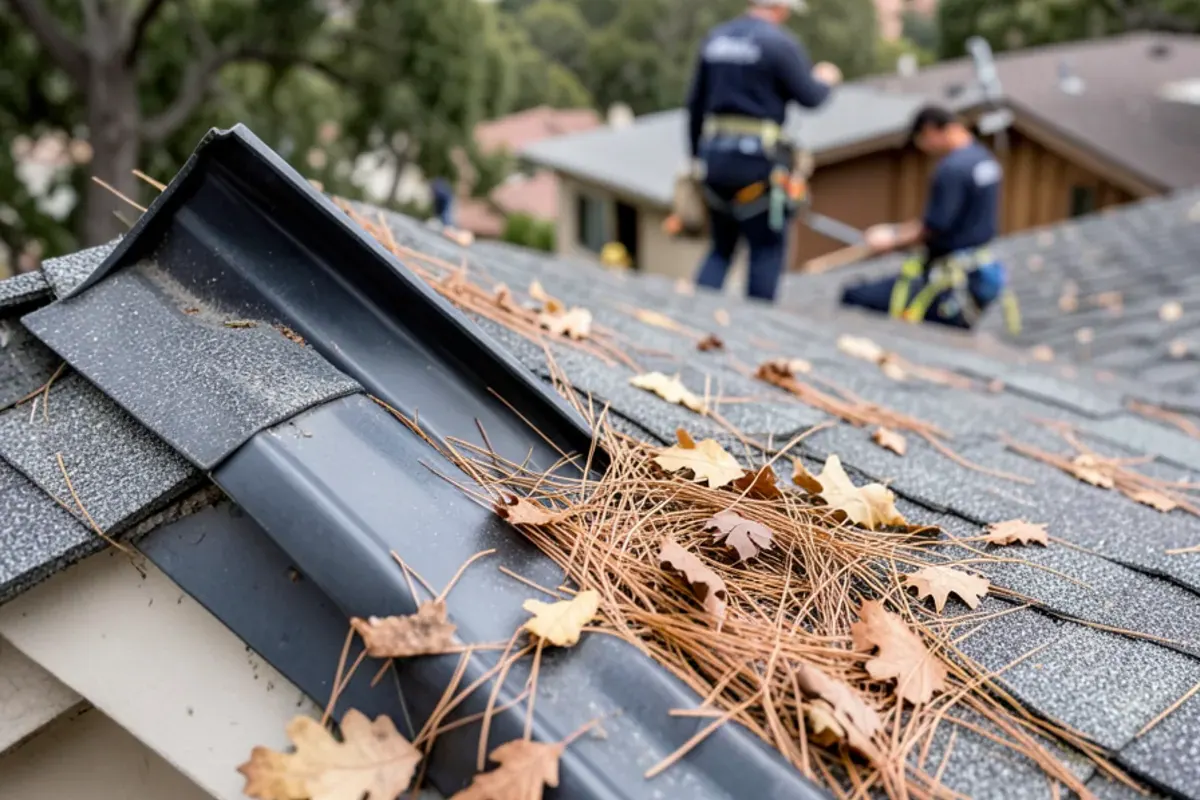
Ember-resistant vents and gutters in fire hazard zones
Chapter 7A treats vents as an opening to protect. It calls for vents that resist ember intrusion, either products tested for that purpose or vents covered with fine noncombustible, corrosion-resistant mesh. Mesh fine enough to stop embers needs more open area to keep the attic breathing, so a vent upgrade is also a ventilation calculation.
Gutters get similar treatment. The code asks for a way to keep leaves and debris from building up in roof gutters, which in practice usually means noncombustible gutter covers plus regular cleaning. Plastic guards are a poor match for a fire zone.
What changed in the wildland-urban interface code for 2026?
For years these rules lived in Chapter 7A of the California Building Code. Starting January 1, 2026, the state moved them into a stand-alone California Wildland-Urban Interface Code, Title 24, Part 7. Many town handouts and older estimates still cite Chapter 7A, and the core expectations for roofs carry over: a Class A assembly, protected vents, gutters that do not hold debris, and edges and valleys detailed against embers.
Roof-edge and valley details the rules spell out
- Tile and other profiled roofs: where the covering leaves a space above the deck, the eave ends have to be fire-stopped, or the deck covered with a heavy mineral-surfaced cap sheet, so embers cannot lodge underneath.
- Valleys: metal valley flashing laid over a full-length strip of mineral-surfaced cap sheet, rather than the open felt valleys common on older roofs.
- Vents: Chapter 7A called for noncombustible mesh that resists corrosion, no coarser than 1/8 inch and no finer than 1/16 inch, or vents tested to the ASTM E2886 ember-and-flame standard.
- Gutters: a means to keep leaves and needles from collecting, which usually means a noncombustible cover.
Exact wording and any local amendments come from the Town of Los Gatos, the City of Saratoga or the County, so we confirm the details for each address before we write the scope.
Is a metal roof the most fire resistant roofing for Los Gatos hillsides?
Metal is a strong option, not the only one. Steel panels do not burn, shed needles more easily than textured surfaces, and are light enough for most framing. A metal roofing system still needs a tested underlayment and tight closures at ridges and eaves to keep embers from slipping under the panels.
Tile and Class A shingles perform well too when the edges are detailed correctly. On roofing in Saratoga and in the Los Gatos hills, we often see the choice come down to slope, weight, look and budget once every option on the table meets Class A.
From our roof visits: details that undo a Class A rating
The covering is rarely the weak link. These are the things we point out most often on hillside roofs:
- Gutters packed with oak leaves months after the last cleaning, right against the fascia.
- Original gable vents with window-screen mesh that has torn or rusted through.
- Tile roofs with no bird stops, so the open ends hold old nests and twigs.
- Wood fascia and exposed rafter tails that have dried and checked in the sun.
- Firewood, patio cushions or a wood deck sitting directly under the eaves.
Each item is inexpensive compared with the roof itself, and most can be fixed during a reroof or a single maintenance visit.
Every upgrade on that list comes with an honest trade-off:
- Fine ember mesh catches dust and dryer lint, so it needs a look and a brush-off each year or attic airflow drops.
- Metal gutter covers cut cleaning but do not end it. Oak leaves and needles still mat on top during a dry fall.
- Fire-stopping tile ends and rebuilding valleys adds labor to a tile reroof, and none of it shows from the street.
- A Class A roof lowers the chance that embers ignite the roof itself. It does not make a house fireproof, and defensible space around it still matters.
Steps before the dry season
Use this list each spring, before summer winds and heat dry the hills:
- Clean gutters and valleys, and check that gutter covers are metal and seated.
- Look at every vent opening from the ground for torn or missing mesh.
- Clear needles from roof-to-wall corners and behind chimneys.
- Trim branches back from the roof and chimney.
- Look up your address on CAL FIRE's Fire Hazard Severity Zone maps so you know which rules apply when you reroof.
Planning a fire-ready reroof on a hillside lot
Look up the parcel on the CAL FIRE map first, because the zone sets the rules. Choose a Class A assembly that suits the slope, framing and look of the house, then price the details that make it work: vents, eave closures, valley flashing and metal gutter guards. Have each one itemized separately in the written estimate; that shows what the fire-zone work costs and makes bids easier to compare.
Planning a reroof inside a mapped fire zone? Ask us for a free estimate that lists the Class A assembly, vents and gutter details line by line.
Call (725) 745-8803