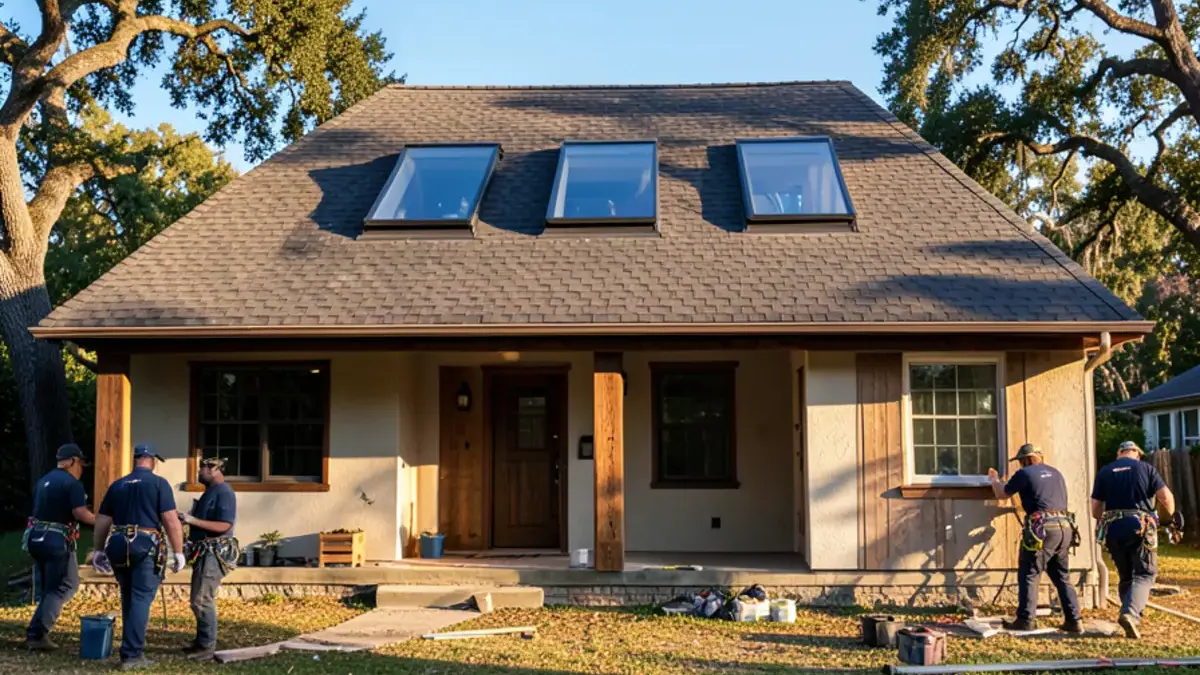
Skylight repair in Campbell, CA starts on the roof
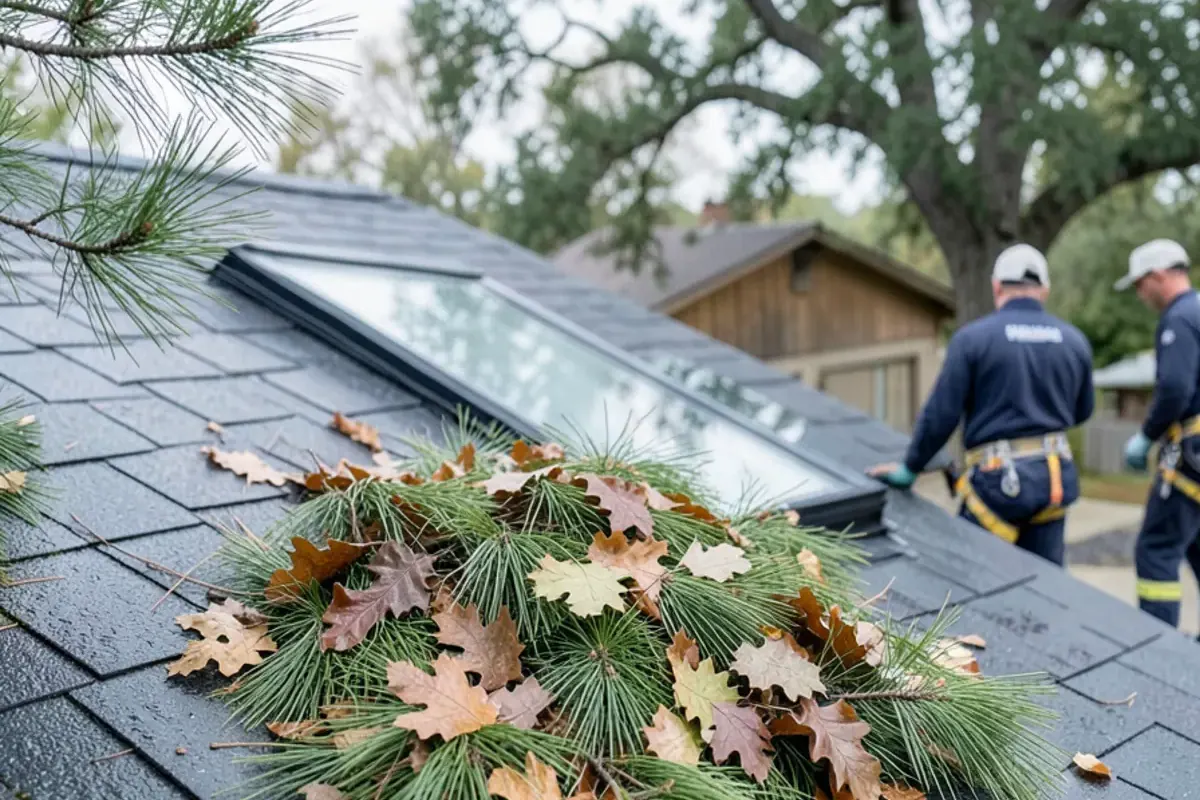
A ceiling stain tells you roughly where water is landing, not where it is entering. Water can run along a rafter or the top of the light shaft for a few feet before it shows. So the first part of every skylight leak fix is on the roof:
- Look at the uphill side of the curb for leaves, needles or a dam of debris holding water.
- Check the head, side and sill flashing for rust, gaps, lifted edges and old caulk patches.
- Inspect the shingles or tiles around the skylight for cracks and slipped pieces.
- Examine the frame-to-curb seal and gasket, and the dome or glass for cracks.
- Water-test in stages when needed, starting low and working uphill, while someone watches inside.
You get photos of each finding. Often the cause is obvious from the roof; sometimes it takes the water test to separate a flashing leak from a roof leak a few feet above.
What our skylight leak repair covers
A skylight repair from us fixes the path the water took, not just the spot where it showed. Depending on the roof check, the work can be as small as clearing a debris dam or as involved as reflashing a curb set in tile. Each item is described on the written estimate with photos attached.
- Debris and drainage: needles and leaves cleared from the uphill side and the valley below it.
- Flashing: new apron, step and head pieces, bent on site for odd-sized curbs.
- Seals and gaskets: the frame-to-curb joint cleaned and resealed with a compatible product.
- Surrounding roofing: cracked shingles or broken tiles near the curb replaced to match.
- Curb wood: soft or split curb framing rebuilt so the flashing has solid backing.
Is it a leak or skylight condensation?
Condensation fools a lot of people. Warm, humid air from a shower or a pot of pasta hits the cold underside of a skylight, beads up and drips down the shaft. It looks exactly like a leak, but no roof repair will stop it.
| Clue | Points to a leak | Points to condensation |
|---|---|---|
| When it drips | During or right after rain | After a hot shower, a simmering pot or a chilly night, even in a dry spell |
| Where the water is | One corner or side of the shaft, often uphill | Beads across the whole glass, drips from the lowest edge |
| Room type | Any room | Bathrooms, kitchens, laundry rooms |
| Skylight type | Any | Single-pane acrylic domes and old aluminum frames |
The fixes for condensation are inside the house: a working bath fan vented outdoors, a venting skylight to release steam, or a dual-glazed unit that stays warmer. Our article on skylight maintenance, seals and condensation has more on that. We have found indoor humidity rather than a roof leak before, and we will tell you if that is what is going on.
Questions about skylight repair?
Call first for the quickest answer, or request a free written estimate below.
Request a free written estimate
Fastest answer: call (725) 745-8803. Or send the details below and we will call you back.
Signs a skylight needs repair, and why South Bay units fail
Most people spot the problem from inside: a brown ring at one corner of the shaft, peeling paint on the light well, or a drip that appears only in wind-driven rain. Outside, the clues are caulk smeared over the flashing, needles banked against the curb and a dome gone hazy.
Local weather explains most of it. Long, dry summers bake gaskets and sealant until they shrink. Trees drop debris all year, and the pile on the uphill side holds water against the metal. Then the November–March storms arrive, often as atmospheric rivers that drive rain sideways, and a joint that stayed dry for months leaks in one night.
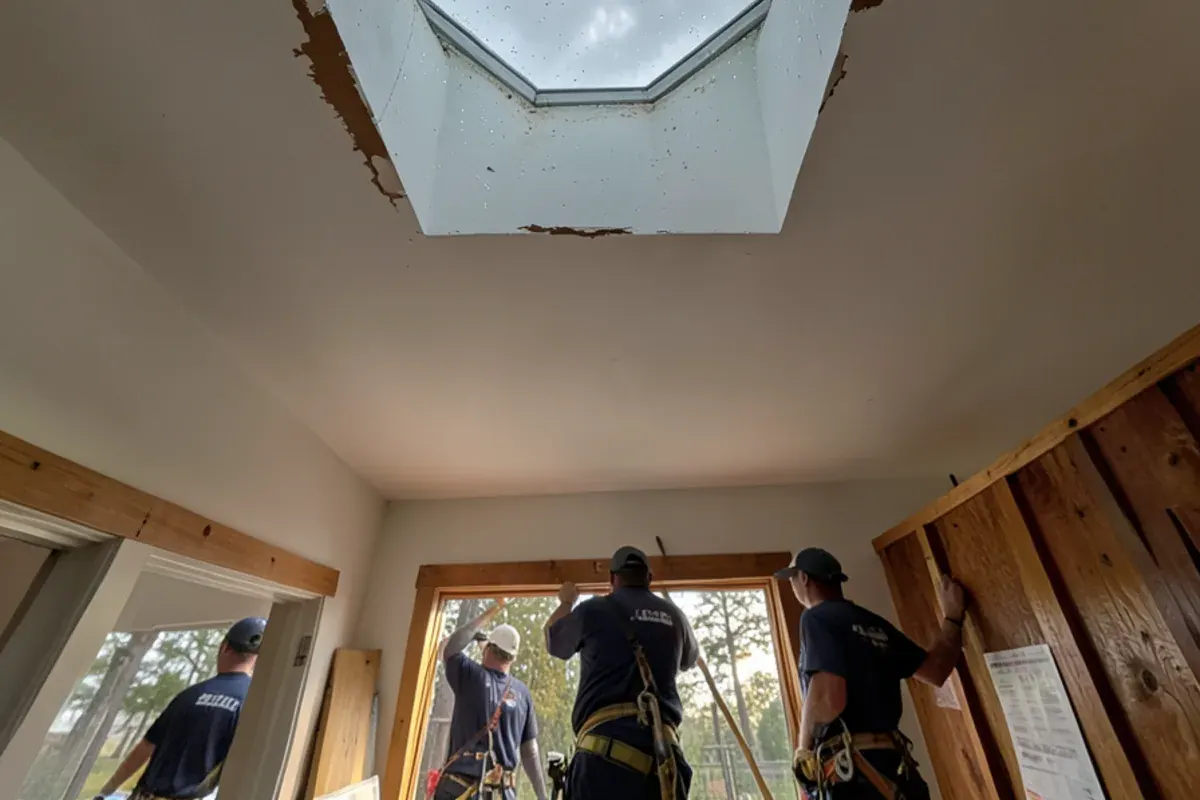
Skylight flashing repair: reflashing the curb
Flashing is the sheet metal that turns water away from the joint between the skylight curb and the roof. On a shingle roof it includes an apron at the bottom, step flashing that weaves with each course of shingles up the sides, and a head flashing or cricket at the top. When any piece rusts, separates or was lapped wrong, water gets in.
Reflashing means removing the shingles around the curb, pulling the old metal, adding fresh underlayment and self-adhering membrane up the curb sides, and installing new flashing in the correct order. We bend custom pieces when a standard kit does not fit an older site-built curb. Then the shingles go back, matched as closely as available.
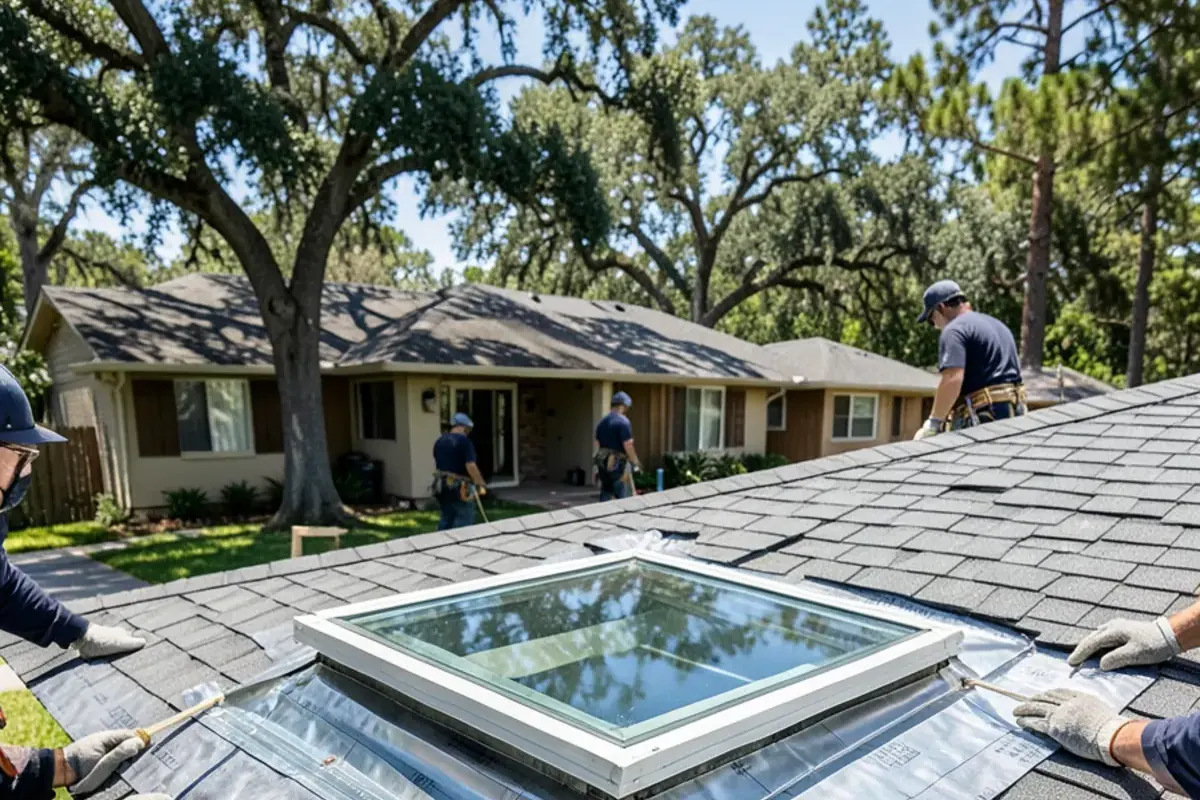
Skylight seal repair on glass and dome units
Between the skylight frame and its curb sits a gasket or bead of sealant. Hot South Bay summers dry those materials out until they shrink and leave a gap. On many units, we can lift or loosen the frame, clean off the failed material, and reseal with a compatible sealant or a new gasket strip.
Insulated glass skylights have another seal: the one between the two panes. When it fails, the glass fogs or shows a white film between the layers. That seal cannot be fixed in place; the glass or the whole unit has to be replaced. It is a cosmetic and efficiency issue first, not usually a leak.
Can a cracked skylight dome be repaired?
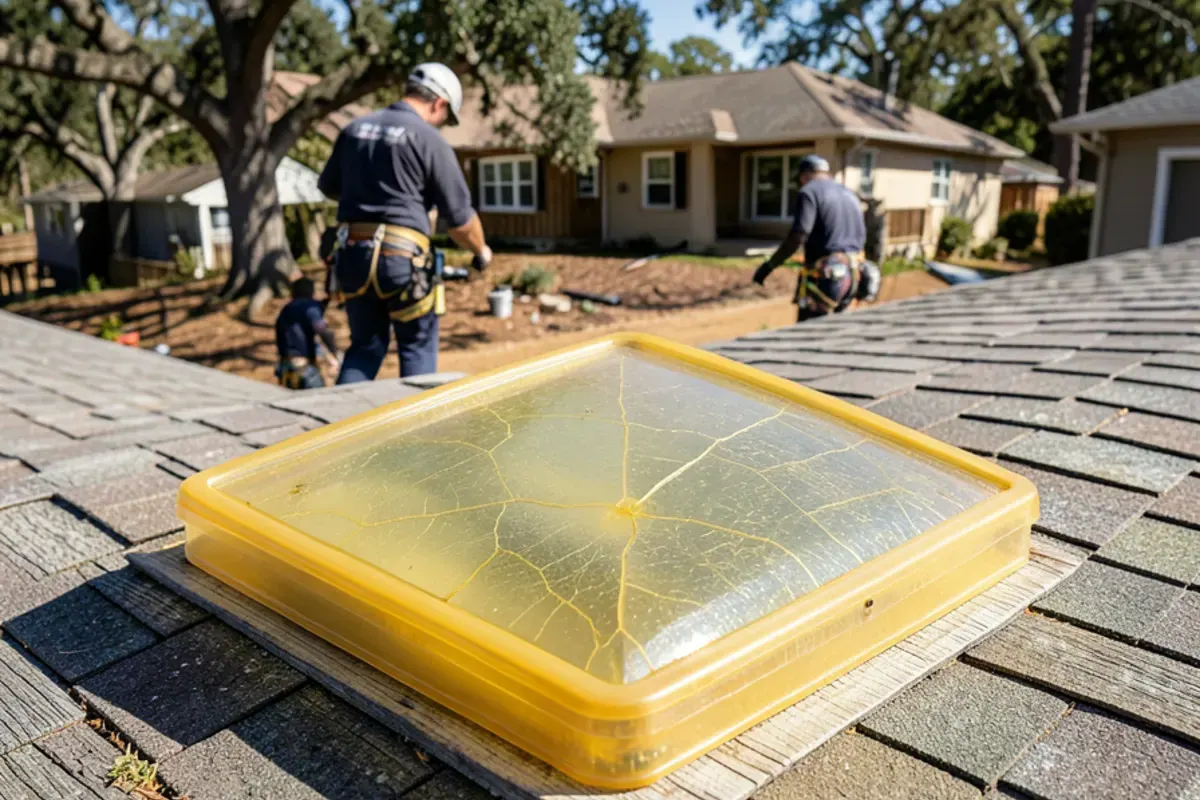
Sometimes, for a short while. A small crack in an acrylic dome can be cleaned and sealed with a clear sealant compatible with acrylic as a stopgap. It buys time, not years, because a dome that cracks once is usually brittle all over from UV exposure.
Cracked skylight repair makes sense when the rest of the dome is clear and the crack came from a falling branch or a dropped tool. If the dome is yellowed, crazed or cracking in more than one place, the honest answer is a new unit; see skylight replacement for how that works on an existing curb.
When we recommend replacing instead
- The dome is crazed, yellowed or cracked in more than one spot.
- The frame is corroded aluminum or rotted wood.
- The curb itself is soft, so new flashing would have nothing solid to grip.
- The roof is being replaced soon and the skylight is more than about 20 years old.
- The same skylight has been repaired more than once in the past few years.
If you also want more light or a different layout, adding a unit is covered on our skylight installation page.
Do skylight repairs need a permit or a licensed contractor?
Resealing or reflashing an existing skylight is repair work, but whether it needs a permit is for Campbell's Building Division to say (the County decides for unincorporated parcels); ask if the curb or framing will be rebuilt. The California Residential Code (Section R903.2) requires flashing at roof penetrations installed so water cannot get into the roof, the standard a caulk-only patch fails. The CSLB draws its line at $1,000 in labor and materials; at or above it the work needs a licensed contractor. Smaller permit-free jobs can go to a handyman, so ask whether they will replace the metal or only add sealant.
What shapes a skylight leak repair estimate
The cost depends on what the fix involves and what roof surrounds the skylight. Resealing a frame is a smaller job than reflashing; reflashing a skylight in clay tile takes longer than in shingles because tiles must be lifted and reset. Pitch, height, the age and condition of surrounding roofing, and any interior drywall repair also count. The estimate lists each item, so you can compare repair against replacement side by side.
A few Campbell conditions move the number. Many 1970s skylights sit on site-built wooden curbs that need custom flashing instead of a kit. Concrete and clay tile must be lifted and reset, and on a roof near the end of its life a full reflash may be poor value next to waiting for the reroof. Second-story skylights and steep pitches add safety setup, and a temporary storm cover is its own line.
Drip under the skylight after the last storm? Call (725) 745-8803 and we'll trace it from the roof.
Call (725) 745-8803Why Campbell homeowners call us when a skylight drips
Our family-run crew treats one leaking skylight as a job worth doing well. The estimate is free and written, and the photos show the flashing, seal or debris we found, so the repair-or-replace decision is yours with full information. When a reseal or reflash will hold, that is what we quote. Crews bend custom flashing on site, protect the room below and clean up before they leave.