
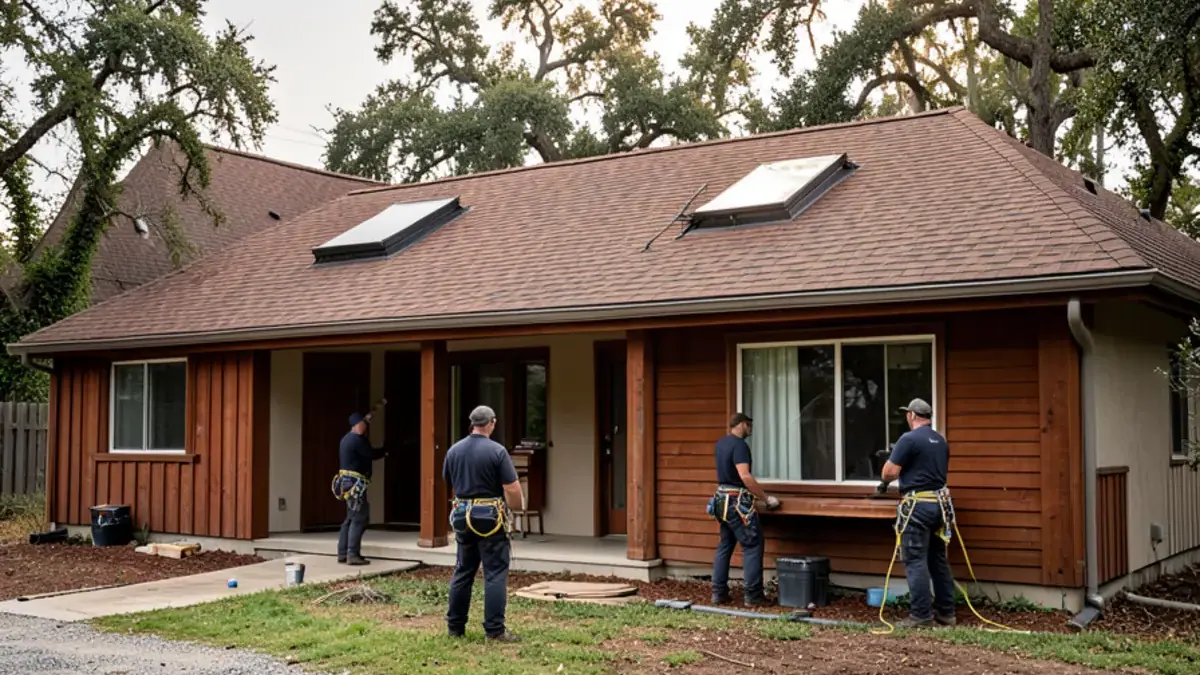
Why do skylights leak? Match the drip to the cause
Before anyone opens the roof, the pattern of the water narrows the list. Note when it happens and exactly where it appears.
| What you see | Likely cause | Typical fix |
|---|---|---|
| Stain on the drywall of the light shaft, worse in heavy rain | Curb or step flashing | Remove shingles around the curb and re-flash |
| Drip from the frame edge in any rain | Failed gasket or perimeter seal | Reseal or replace the unit |
| Drip from the middle of the dome | Crack or crazing in acrylic | Replace dome or whole unit |
| Fogging between two panes | Failed insulated glass seal | Replace glazing or unit; not a roof leak |
| Droplets on cold mornings, dry during rain | Condensation | Lower indoor humidity, improve ventilation |
| Water only during wind-driven storms | Head flashing or short laps uphill | Rework the uphill flashing |
Skylight dripping and not sure why? We will check the flashing, seals and glazing and show you photos before recommending anything.
Call (725) 745-8803Skylight flashing: the usual culprit
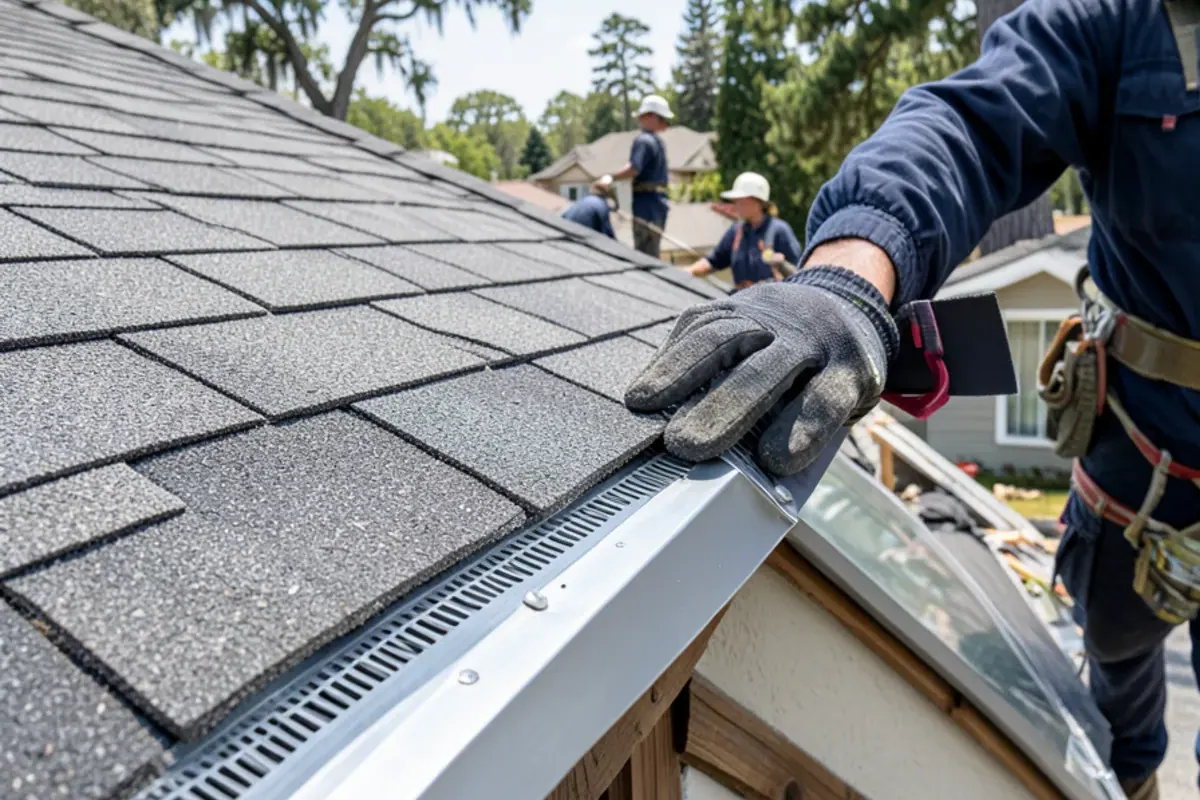
A skylight sits on a curb, a short box that lifts it above the roof surface. Water has to be turned away on all four sides: a head flashing on the uphill side, step flashing along the sides, and an apron at the bottom. When any piece is missing, rusted or lapped the wrong way, rain runs under it and down the shaft.
Old skylights often outlast their flashing. Many South Bay roofs have been reroofed around an original skylight, with new shingles tucked against old metal or with roofing cement standing in for flashing. That works for a season or two. Real skylight repair involves pulling back the shingles at the curb and fitting new flashing that laps correctly.
Cracked domes, worn seals and fogged glass
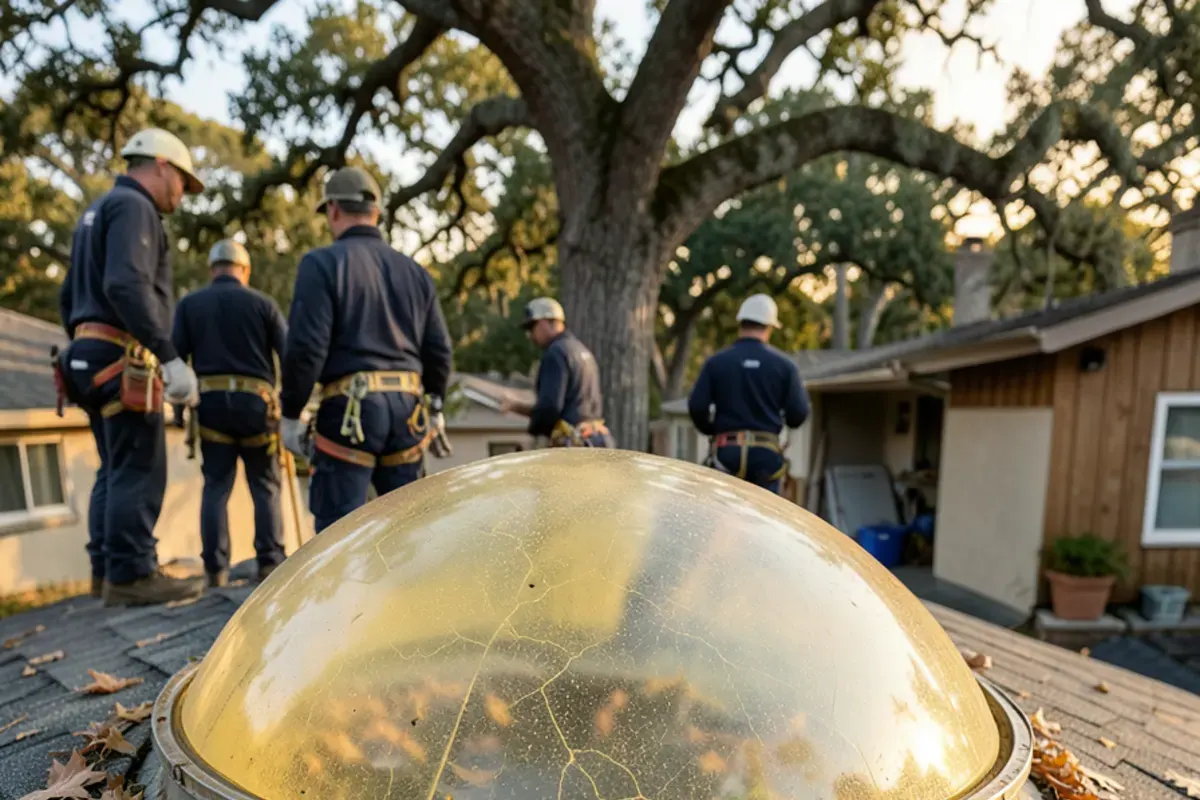
- Acrylic domes: common on older homes. Years of sun turn them yellow and brittle, and fine crazing becomes a crack. A cracked dome usually means a new unit.
- Gaskets and seals: the rubber between glazing and frame shrinks and hardens. Some units can be resealed; many older ones cannot be serviced.
- Insulated glass: a fogged double pane means the seal between panes has failed. It does not leak rain into the house, but it will not clear.
- Frames: older aluminum frames sweat and corrode, while wood curbs can rot from years of slow leaks.
Is it skylight condensation, not a leak?
On cold winter mornings, a skylight is often the coldest surface in the room. Warm, moist indoor air touches the glass, cools and turns into droplets that run down and drip. Bathrooms, kitchens and rooms with humidifiers are the usual spots.
The giveaway is timing. Condensation shows up on clear, cold mornings and dries by afternoon, and it can happen in weeks without rain. A real leak follows the weather. Single-pane domes and uninsulated light shafts make condensation worse. Running the bath fan, lowering humidifier settings and insulating the shaft walls often solve it without any roof work.
How the way a skylight is mounted changes where it leaks
Skylights reach the roof in three basic ways, and each has its own weak spots. Knowing which kind you have explains a lot about the leak and the fix.
| Mounting type | How it sits on the roof | Where it tends to leak |
|---|---|---|
| Curb-mounted | Unit rests on a site-built wood box with field-cut flashing around it | Head flashing and step flashing at the curb; rotted curb wood |
| Deck-mounted | Unit has its own frame fastened to the roof deck and a matching flashing kit | Corners where the kit meets shingles; kits reused or skipped at a reroof |
| Self-flashing | A flat flange nailed to the deck and sealed with mastic | The flange edges once the mastic dries and cracks |
Self-flashing units were common on budget installs and many older homes. They rely on sealant more than on lapped metal, which is why they tend to drip again a few winters after each touch-up. Deck-mounted units with the maker's flashing kit are the most forgiving, as long as the kit goes back on correctly when the roof around them is replaced.
Tile roofs add a layer of complexity
On concrete and clay tile, the skylight flashing has to work with the tile profile and the underlayment beneath it. Water that slips past the tile runs on the felt toward the curb, so a pan or apron that carries it around the skylight matters as much as the metal you can see. Tile cut short or set in mortar against a curb is a frequent shortcut that leaks.
A skylight water test, done in the right order
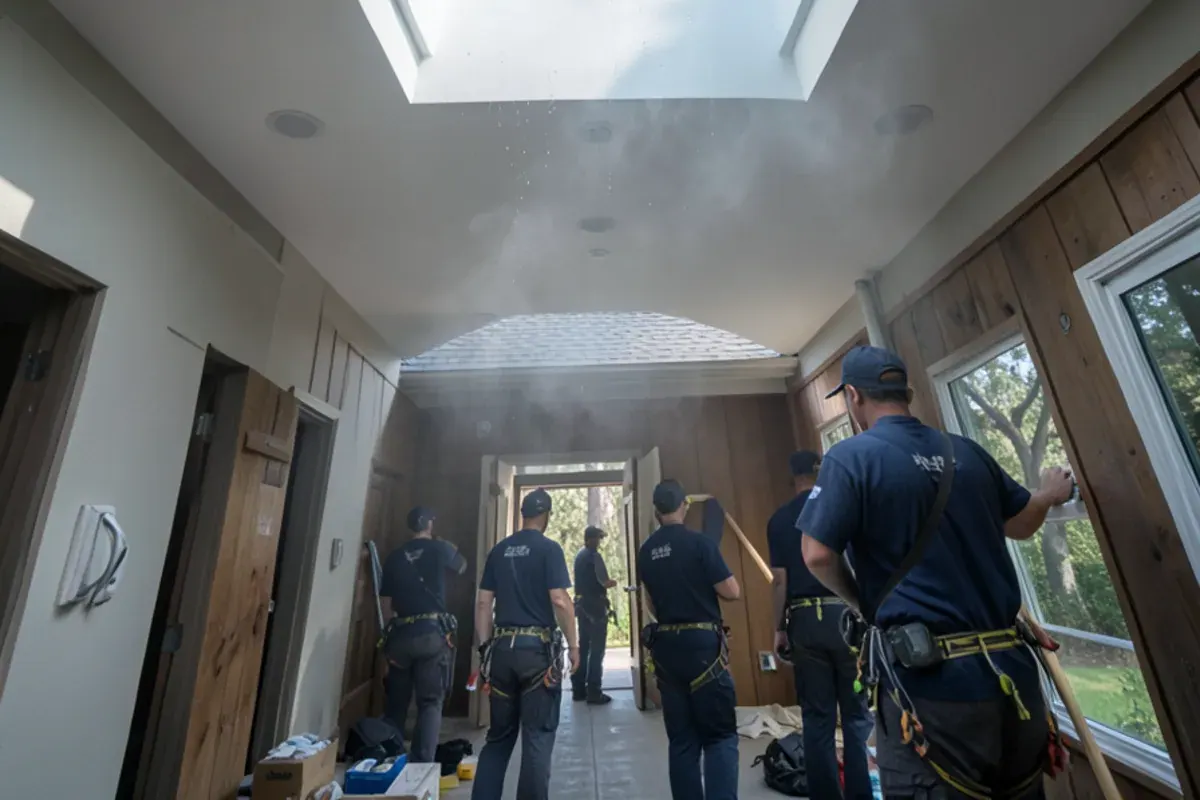
When the cause is not obvious, a controlled water test settles it. The trick is to start low and move up, so each wet spot can only have one source. A helper inside watches the shaft with a flashlight while someone on the roof runs a garden hose at gentle pressure.
- Wet the roof below the apron flashing for several minutes, to rule out a leak that has nothing to do with the skylight.
- Move to the apron at the bottom of the curb.
- Work up each side over the step flashing, one side at a time.
- Wet the head flashing on the uphill side, where leaves and wind-driven rain cause trouble.
- Finally, run water over the glass or dome and the frame seals.
Each stage gets about ten minutes before moving on. Skipping straight to the head flashing, or soaking the whole skylight at once, tells you only that water got in somewhere. We note which stage produced the drip and photograph that spot before any repair is priced.
Leaks that only look like skylight leaks
A stain on a light-shaft wall can come from higher up the roof. A cracked pipe boot or a failed valley above the skylight can send water down a rafter until it reaches the shaft framing and shows there. That is why step one of the test wets the roof outside the skylight first.
When should you replace a skylight instead of repairing it?
Repair makes sense when the unit is sound and the flashing failed. Replacement is usually the better call when you check two or more of these:
- The dome is yellowed, crazed or cracked.
- Glass panes are fogged between layers.
- The frame or curb is rotted or corroded.
- The unit is old enough that seals and parts are no longer available.
- You are reroofing, so the flashing is coming off anyway.
- Condensation is constant because the unit is single-pane.
Replacing a skylight during a reroof is the cleanest timing, since new flashing kits are made to integrate with the new roofing. Our skylight replacement estimates list the unit, the flashing kit and any curb or shaft repair as separate lines.
From our roof visits: skylight lessons
Sealant around a skylight is a sign that someone has already been chasing a leak. Layers of caulk and roof cement trap debris and water, and they hide the flashing that actually failed. Peeling them back usually shows the real problem.
Leaves collect on the uphill side of skylights, especially under oaks and pines. That little dam pushes water sideways under the head flashing during storms. Keeping that spot clear prevents a lot of leaks.
Homeowners in Campbell and the wooded hills of Saratoga often have several skylights from the same era. When one fails from age, the others are rarely far behind, so it is worth weighing the cost of doing them together. We price each one so you can decide.
Each skylight fix carries a trade-off we explain on site. Re-flashing a sound skylight is the least expensive repair, but on a unit already near the end of its life it can mean opening the roof twice. Reusing an old curb saves framing work, yet a curb with soft wood will not hold new flashing well. Venting skylights let heat and steam out of a bathroom, but they add hinges, motors and more seals that can fail. And new glazing must meet California's Title 24 energy rules, which can narrow the choice of units.
What to do about a leaking skylight this season
A dripping skylight rarely fixes itself, and water in a light shaft soaks drywall and framing out of sight. A short plan keeps the repair small:
- Note whether the drip follows rain or cold mornings, and which part of the shaft gets wet.
- Clear leaves from the uphill side of the curb, but only from a steady ladder and never on a wet roof.
- Photograph the stain each time it grows.
- Check the age and type of the unit: dome, flat glass, curb-mounted or self-flashing.
- If a reroof is within a few years, weigh replacing the skylight then instead of re-flashing twice.
Want the flashing, seals and glass on your skylight checked and photographed? Ask us for a skylight leak inspection and a written repair or replacement option.
Call (725) 745-8803