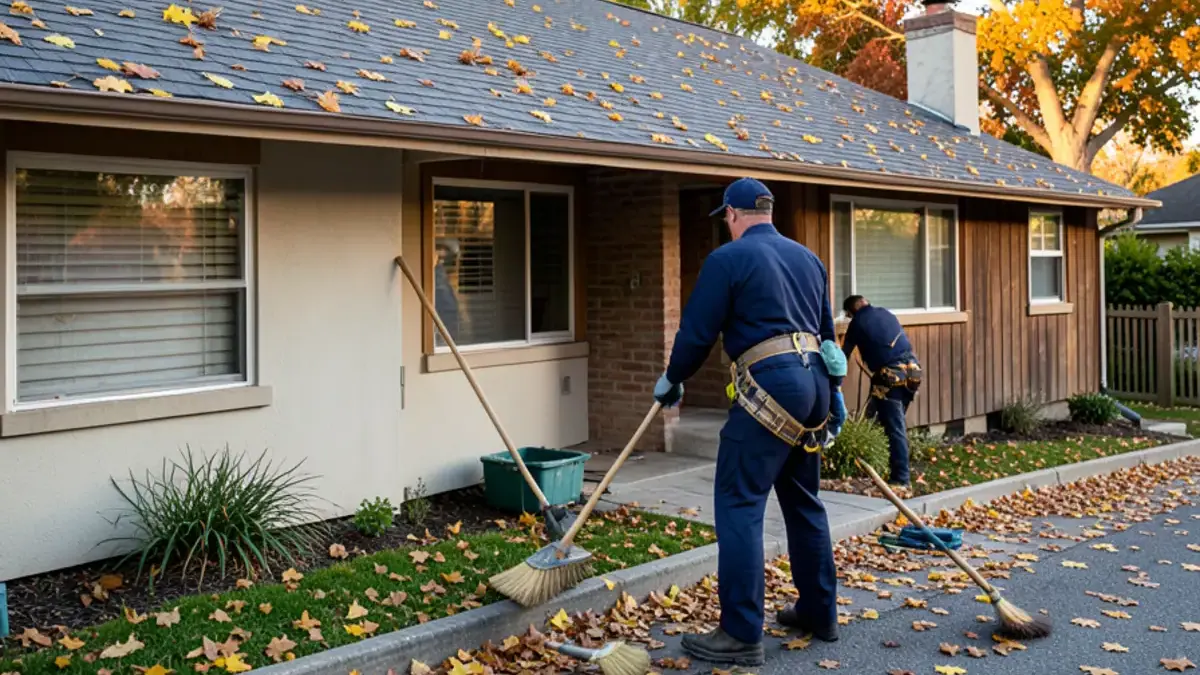
What is included in a roof tune-up?
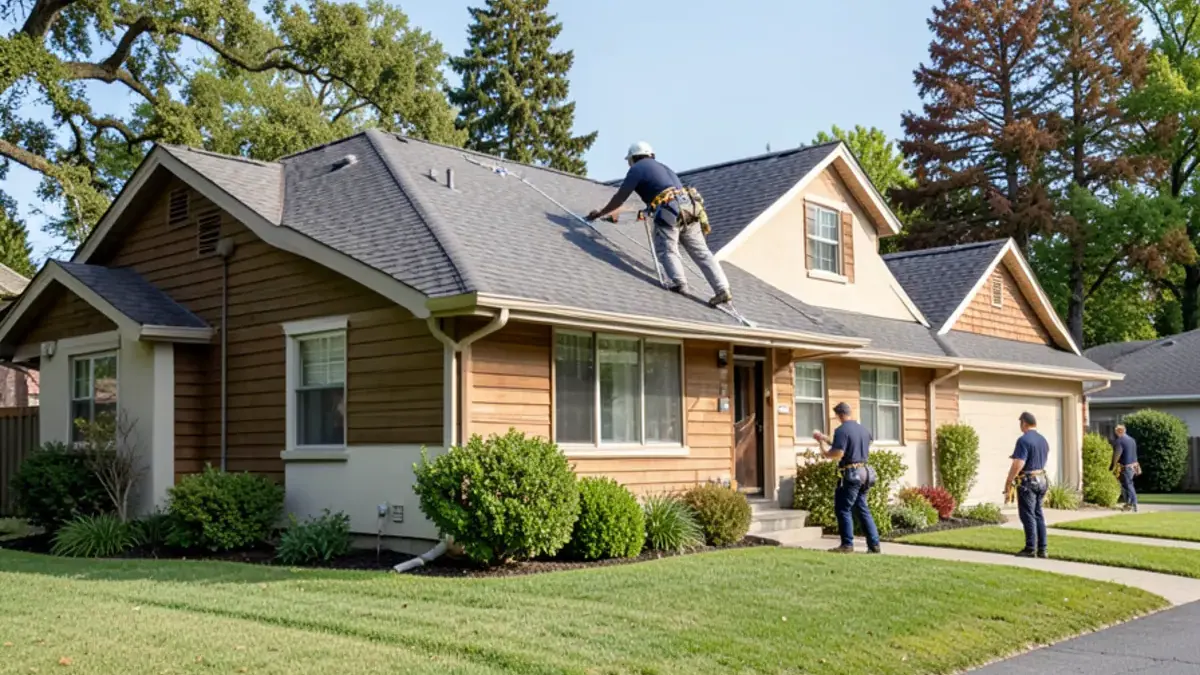
Every roof tune-up in Campbell is scoped to the roof in front of us, but most include the following:
- Debris removal from the roof surface, valleys, behind chimneys and around skylights.
- Damaged pieces replaced: cracked, missing or creased shingles, broken tiles, split shakes.
- Vent boots and flues checked, with cracked rubber collars replaced rather than caulked.
- Flashing details resealed where sealant is part of the design, such as counterflashing edges and exposed fasteners.
- Ridge and hip caps re-nailed or replaced where loose or cracked.
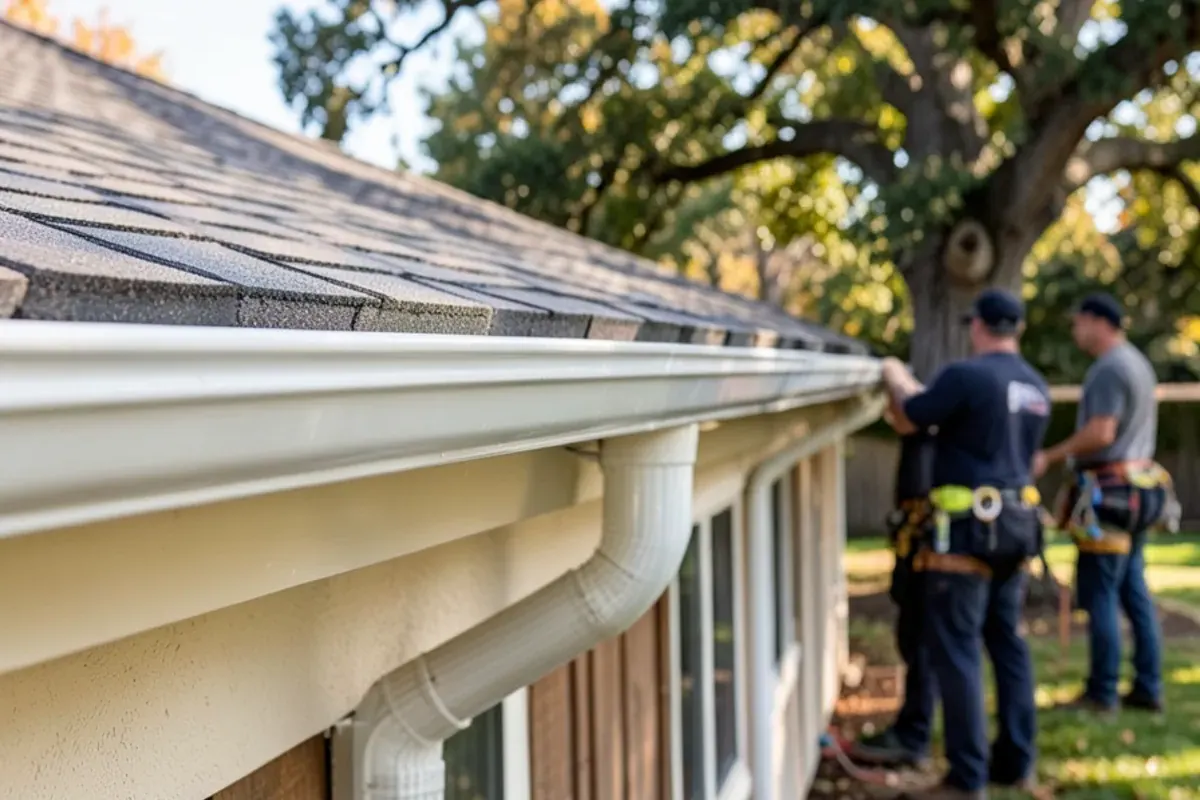
- Gutters and downspouts cleared and checked for sags, leaks and loose hangers.
- Photos and notes on anything that needs more than a tune-up, so you can plan for it.
You get the scope in writing before the work, so there is no question about what was done.
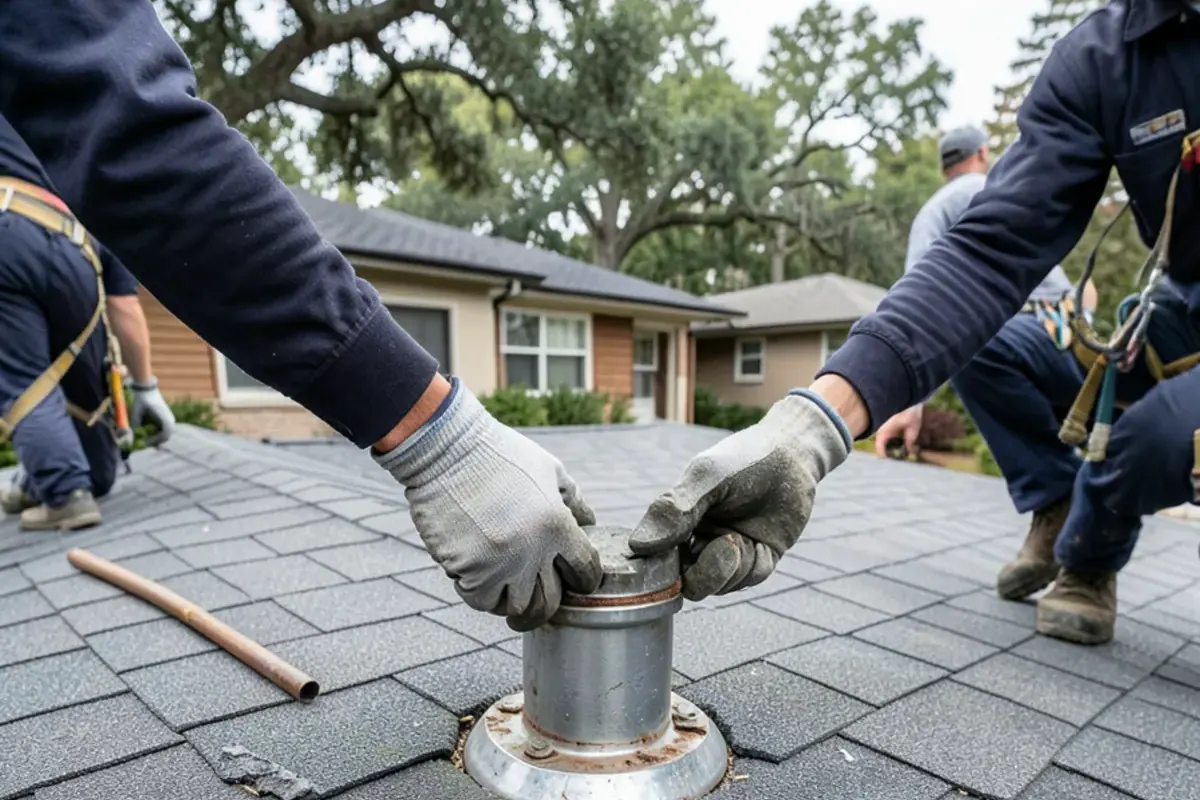
How a fall tune-up visit unfolds
- Ground check. Gutters, downspout outlets and roof lines are viewed before anyone climbs.
- Clear the water path. Leaves and needles come off the surface, the valleys and the uphill side of chimneys and skylights.
- Fix the small things. Cracked boots, loose caps and broken pieces are replaced from the written scope.
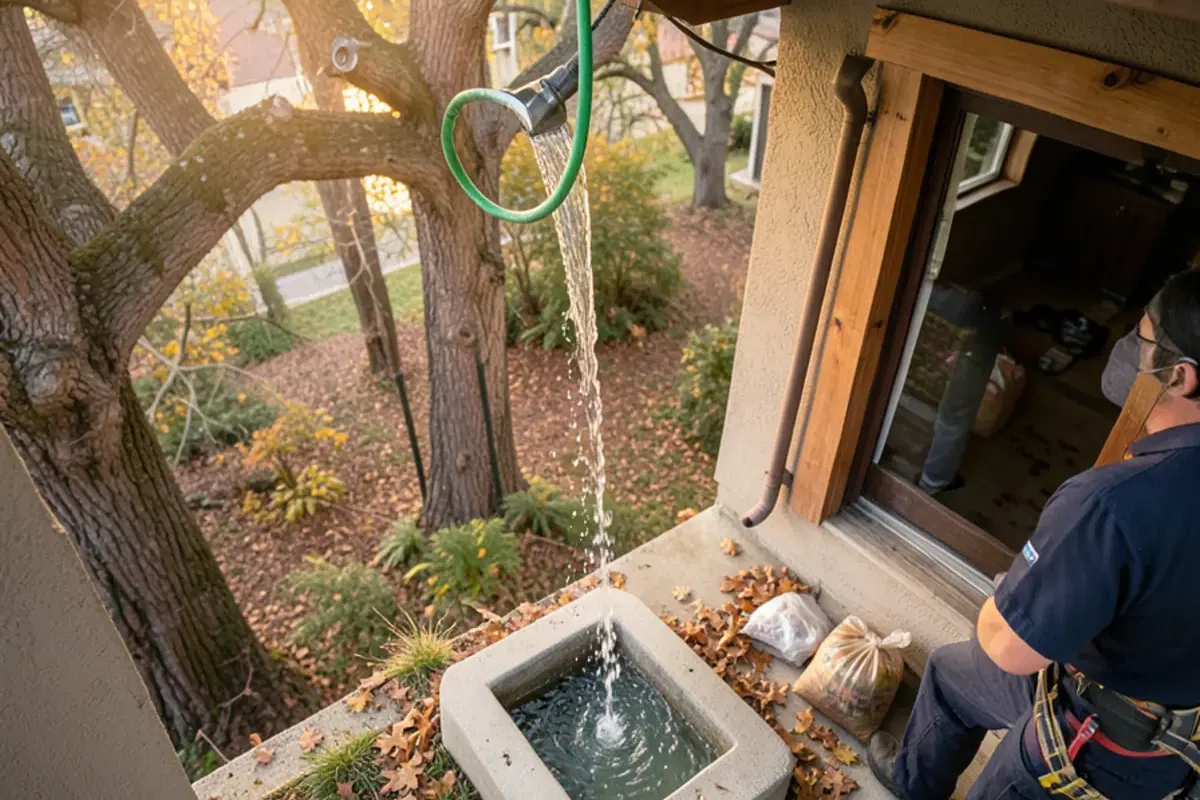
- Flush the gutters. Each downspout gets run with a hose to confirm it drains.
- Photo report. Anything beyond routine work is photographed and priced separately.
Questions about roof maintenance & tune-ups?
Call first for the quickest answer, or request a free written estimate below.
Request a free written estimate
Fastest answer: call (725) 745-8803. Or send the details below and we will call you back.
When should Campbell roofs get their annual maintenance?
Early fall, ideally late September into October. By then summer sun has done its year's damage to boots, sealant and shingles, most trees have dropped a first load of leaves, and there is still time to fix anything before the first storm. A second, lighter visit in late winter makes sense for homes under heavy tree cover, to clear what the storms brought down.
Signs a roof is overdue: granules at the downspouts, seedlings sprouting in gutters, debris piled behind the chimney, dark streaks on north slopes, and gutters that overflow in moderate rain.
| Season | What to do | Why |
|---|---|---|
| Late Sept–Oct | Full tune-up, gutter cleaning, valley clearing | Fix sun damage before the November rains |
| Dec–Feb | Look from the ground after big storms; clear gutters if they overflow | Catch wind-lifted shingles and debris dams early |
| Mar–Apr | Debris and moss removal on shaded roofs | Clear what winter left before it dries into the keyways |
| Summer | Trim branches back from the roofline | Less leaf drop, more sun, fewer rodent routes |
Roof moss removal and algae cleaning without a pressure washer
Moss grows on the shady side of roofs under Campbell's oaks and redwoods, and dark algae streaks show up on north-facing shingles. Both hold moisture, and moss lifts shingle edges and tile laps as it grows.
We take moss off by hand with soft brushes and plastic scrapers, working downslope so water keeps shedding the right way. We do not pressure-wash roofs. High-pressure water strips the protective granules off asphalt shingles, breaks tile and shreds cedar, and it drives water up under the laps where it causes leaks. For algae, a gentle cleaner suited to the roofing material does the job without blasting the surface.
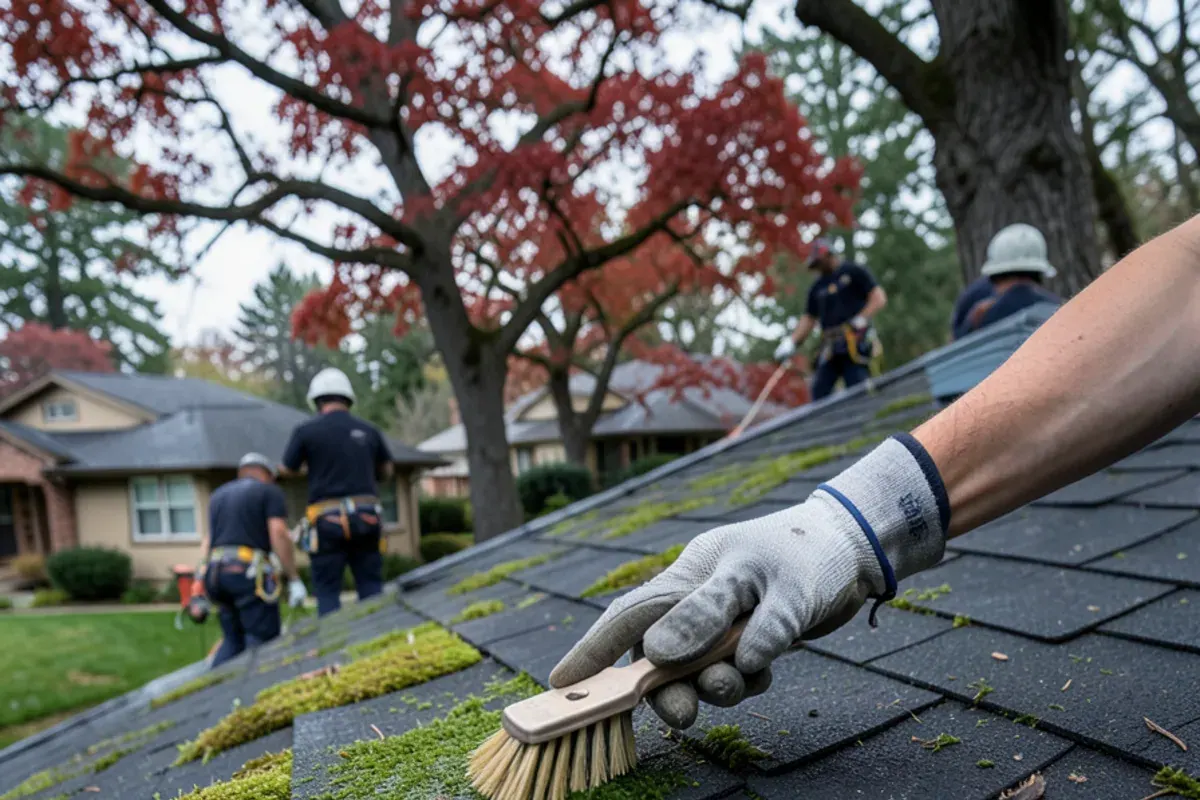
Roof debris removal under oaks, sycamores and redwoods
Leaf litter is the most common cause of avoidable leaks we see. Oak leaves pack into valleys and behind chimneys; sycamore leaves are big enough to plug a downspout outlet on their own; redwood and pine needles slide under shingles and tile and hold water against the underlayment.
Debris removal covers the whole water path: roof surface, valleys, the uphill side of every chimney and skylight, gutters and the downspout outlets. On tile roofs we also clear what has gathered under the tile at valleys and walls, where it is easy to miss.
In wildland areas, debris clearing is also a legal duty: California Public Resources Code section 4291 requires owners in covered areas to keep roofs free of leaves and needles and to cut back branches within 10 feet of a chimney outlet, and hillside fire codes echo it. Routine maintenance needs no building permit, though any job of $1,000 or more should go to a roofer with a current CSLB license.
Roof maintenance in Campbell, CA: a plan by roof type
| Roof type | Focus each year | Watch for |
|---|---|---|
| Composition shingle | Vent boots, ridge caps, valleys, sealant at flashing | Granule loss and curling on south and west slopes |
| Clay or concrete tile | Broken or slipped tiles, debris under tile, valley metal | Felt aging under intact tile; broken tiles from other trades |
| Cedar shake | Moss, keyway debris, split shakes | Soft wood on the shaded side; fire-zone and insurer questions |
| Flat and low-slope | Drains, seams, coatings, ponding areas | Blisters, cracked seams, water standing two days after rain |
Some owners prefer to book the same fall visit every year instead of calling when they remember. A written list like this one, kept with your estimate, makes each year's roof maintenance plan quick to scope.
What sets the price of a roof tune-up?
Tune-ups are scoped per roof and priced in writing before we start. What changes the number:
- Roof size and pitch, including garages and ADUs.
- Tree cover: a roof under oaks or redwoods carries far more debris.
- Material: tile and shake call for slower footing than shingles.
- Repairs found: boots, caps and broken pieces beyond the base scope.
- Gutter length and guards, which have to be lifted to clean underneath.
Can maintenance add years to an older roof?
It can add some, and it can certainly keep an older roof from failing early. A roof dies from its weakest points: a boot that cracks, a valley that dams, a few shingles that blow off and expose the felt. Fixing those as they appear keeps water off the deck, and a dry deck is what lets a roof reach the end of its normal life.
What maintenance cannot do is reverse aging that is already everywhere. When the tune-up shows widespread wear, we tell you so, and a roof inspection gives you a fuller picture. If you are selling, roof certification builds on the same work.
Why homeowners book their tune-up with us
We are a family-run Campbell team. You get the scope in writing, photos of what we did and found, an honest word when a roof needs more than upkeep, and a yard cleared of every leaf we pulled off the roof.
Rains are coming. Call (725) 745-8803 to schedule a fall roof tune-up.
Call (725) 745-8803