

Which trees fill gutters, and when?
South Bay streets mix native oaks with planted street trees, and each sheds on its own schedule. Coast live oaks keep their leaves through winter but drop a wave of old leaves in spring as the new ones come in. Deciduous street trees drop in late fall. Conifers shed a little all year with a heavier fall drop.
| Tree | Main drop | What lands in the gutter |
|---|---|---|
| Coast live oak | Spring, with some all year | Small, stiff leaves, catkins and acorns that pack tight |
| Sycamore and London plane | Late fall into early winter | Large leaves and seed balls that cover outlets |
| Liquidambar (sweetgum) | Late fall | Leaves plus spiky seed balls that jam downspouts |
| Pines | Fall, with some needles all year | Needles that mat and bridge across guards |
| Coast redwood | Mostly fall | Branchlets and fine needles that compost in place |
| Fruit trees | Summer and fall | Fruit, leaves and blossoms in spring |
Not sure how often your gutters need attention? Call (725) 745-8803 and we'll look at your trees and roof together.
Call (725) 745-8803How often to clean gutters by lot type
- Open lot, few trees: once a year, in October or early November.
- Typical Campbell street with one or two large trees: twice a year, in late fall after the main drop and again in spring if oaks are nearby.
- Under sycamores or liquidambars: a late-fall cleaning after leaves are down, plus a check in January.
- Under oaks: fall before the rains and late spring after the oak leaf drop.
- Under pines or redwoods in the hills: three to four times a year, including midwinter.
In wooded parts of Saratoga and the Los Gatos foothills, schedule at least one cleaning before summer as well, since dry debris at the roof edge is an ember hazard in mapped fire zones.
How much water a clogged gutter has to handle
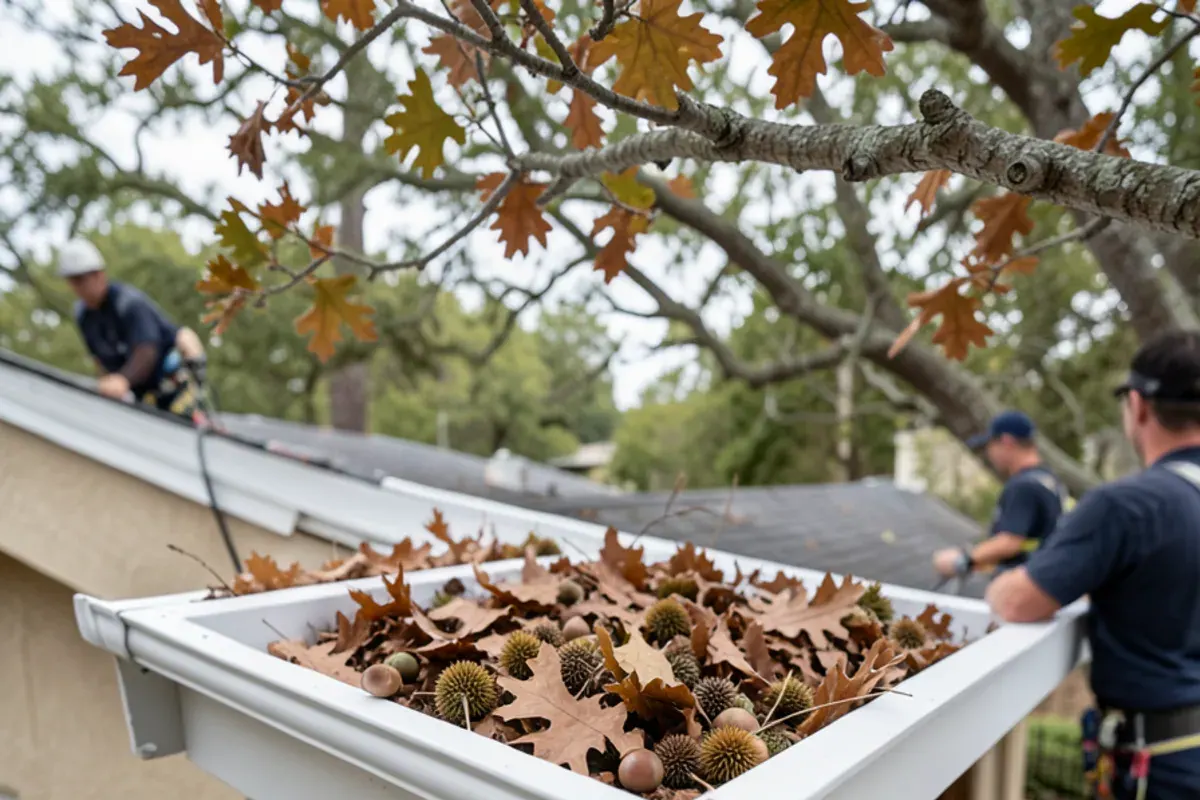
An inch of rain falling on 1,000 square feet of roof adds up to roughly 620 gallons, a conversion the U.S. Geological Survey uses in its water-science material. Every gallon from the roof is supposed to leave through the gutters and downspouts.
A worked example for a ranch house
Take a single-story Campbell ranch house with 1,800 square feet of roof and four downspouts. A two-inch storm day sends about 2,200 gallons into the gutters, or around 560 gallons per downspout if the water splits evenly. Block one downspout with a wad of sycamore leaves and its share has to go over the edge, usually at a corner, right beside the foundation. During an atmospheric-river series, that repeats day after day, which is how soaked fascia and soffit boards and washed-out planting beds begin.
Building a schedule for your own lot
Here is how the drop timings above turn into a calendar for a common setup: a sycamore by the street and a coast live oak in the back yard.
| When | What to do | Why |
|---|---|---|
| Late November to early December | Full cleaning and downspout flush | Sycamore leaves and seed balls are down before the wettest months |
| January, after a storm | Quick check of corners and downspout drops | Late leaves and wind-blown debris |
| May | Second full cleaning | The oak has shed its old leaves |
| June, fire-zone parcels only | Clear any dry debris at the roof edge | Dry leaves at the eaves can catch embers |
Do not forget underground drains
Many downspouts empty into buried pipe that runs to the curb or a pop-up emitter in the yard. Those lines clog out of sight. Run a hose into the downspout for a few minutes and confirm water comes out at the far end; if it backs up at the downspout instead, the clog is underground and needs a flush or a drain specialist.
Signs your gutters need cleaning sooner
A schedule is a starting point. These signs mean the gutters are already full:
- Water spilling over the front edge or corners in moderate rain
- A downspout that stays dry while the gutter above overflows
- Plants or seedlings growing in the gutter
- Gutters sagging or pulling away from the fascia
- Stains or peeling paint on the fascia board
- Puddles or erosion along the foundation under one section
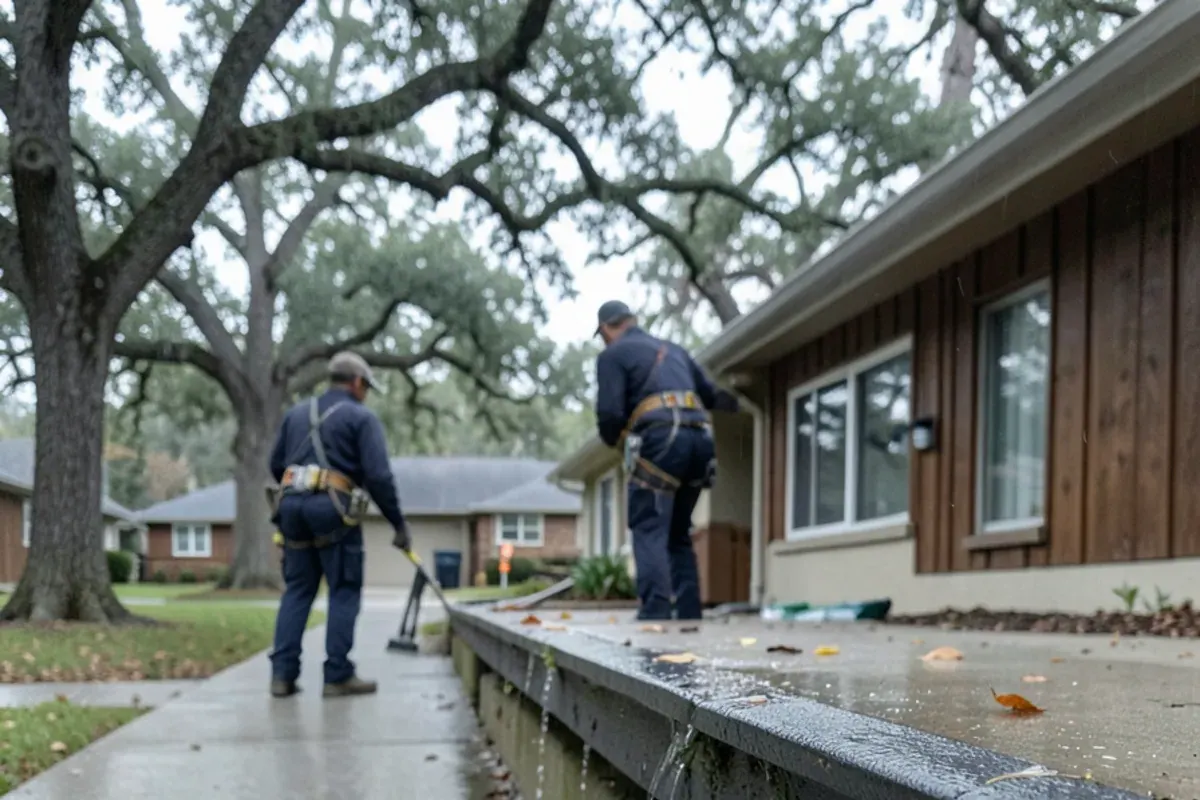
If you notice any of these during the first storm, do not wait for the next scheduled cleaning. Overflow against the fascia soaks wood that has been drying all summer, and repeated overflow at one spot can wash out soil next to the foundation.
Do gutter guards change the schedule?
They reduce cleanings but rarely end them. Fine mesh guards stop most leaves and needles, but debris can sit on top of the mesh, and fine needles and seed pods still get through some designs. Under heavy conifer drop, guards need brushing off at least once a year. Under oaks and sycamores, good gutter guards can cut cleanings to once a year with a quick check after the main drop.
Choose metal guards near the hills. Plastic guards can warp in summer heat and are a poor fit for fire hazard zones.
From our roof visits: where gutter clogs really hide
- At the downspout drop, where a single liquidambar seed ball or clump of leaves can block the whole run.
- In the elbows at the bottom of downspouts, especially where they turn into an underground drain.
- Under the first course of shingles, where debris tucks in behind the gutter at the roof edge.
- Behind gutter guards that were installed over gutters that were never cleaned first.
- In inside corners where two gutter runs meet and water slows down.
That is why our gutter cleaning includes flushing each downspout rather than just scooping the trough.
Some honest trade-offs come with any cleaning plan:
- More cleanings cost more each year, but one season of overflow can rot a fascia board that costs more to replace than several visits.
- On tile roofs we work from the ladder rather than walking the tile, which takes longer, because stepping on tile to reach a gutter can crack more tile than the clog was worth.
- Pressure-washing gutters looks thorough but sprays muck onto siding and windows; hand scooping plus a downspout flush is slower and cleaner.
Doing it yourself safely
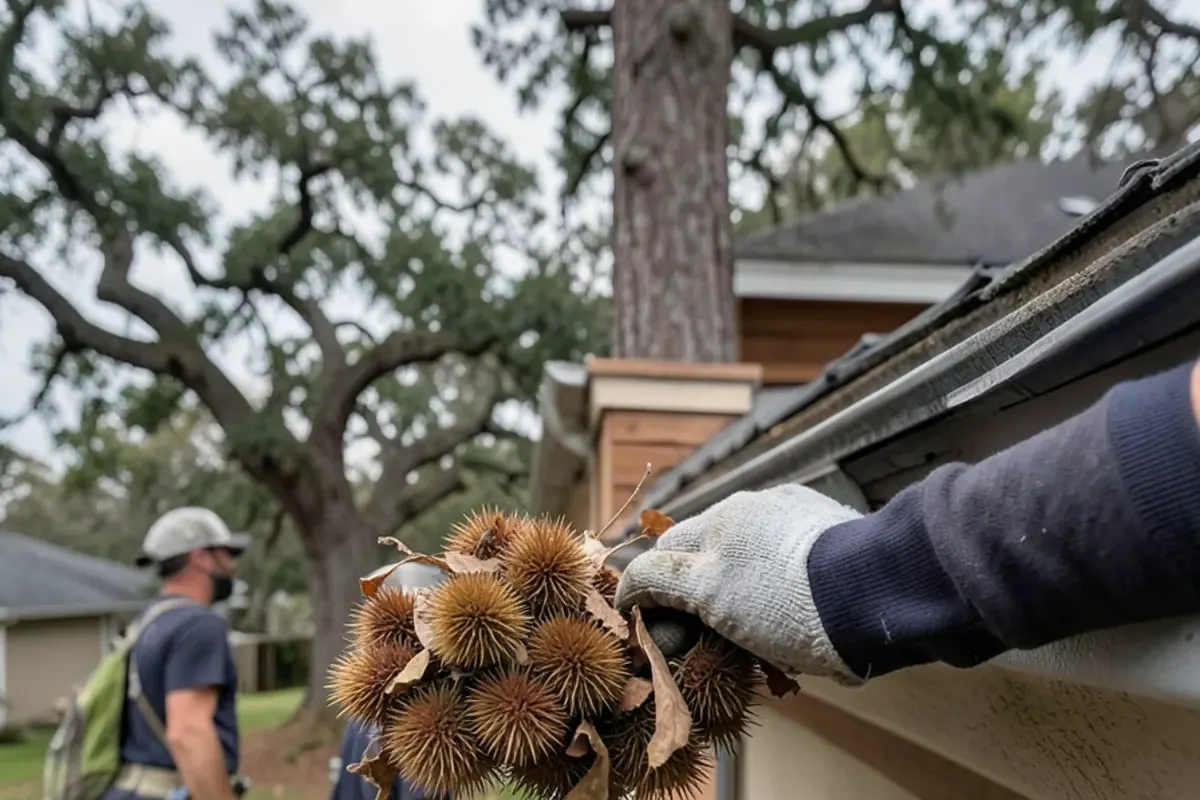
Single-story gutters are a reasonable homeowner job with the right setup. Use a stable ladder with a standoff so it does not rest on the gutter, work with a helper, wear gloves, and scoop debris into a bucket rather than onto the roof. Finish with a water test: start the hose at the end farthest from the outlet and confirm the downspout runs freely. Leave two-story homes, steep roofs and any gutter repair to a pro.
In Campbell and nearby cities, green-bin yard waste programs generally accept leaves and needles, so you do not need to bag them separately; check with your local hauler.
The takeaway: match the schedule to your trees, clean after the main drop rather than before it, and test the downspouts every time, including any that run underground. Watch the first real storm of the season; overflow at a corner tells you the schedule needs another visit.
Want your gutters on a schedule that fits your trees? Ask us for a free written estimate covering cleaning, downspout flushing and any fascia repair.
Call (725) 745-8803