
Why so many cedar roofs are coming off now
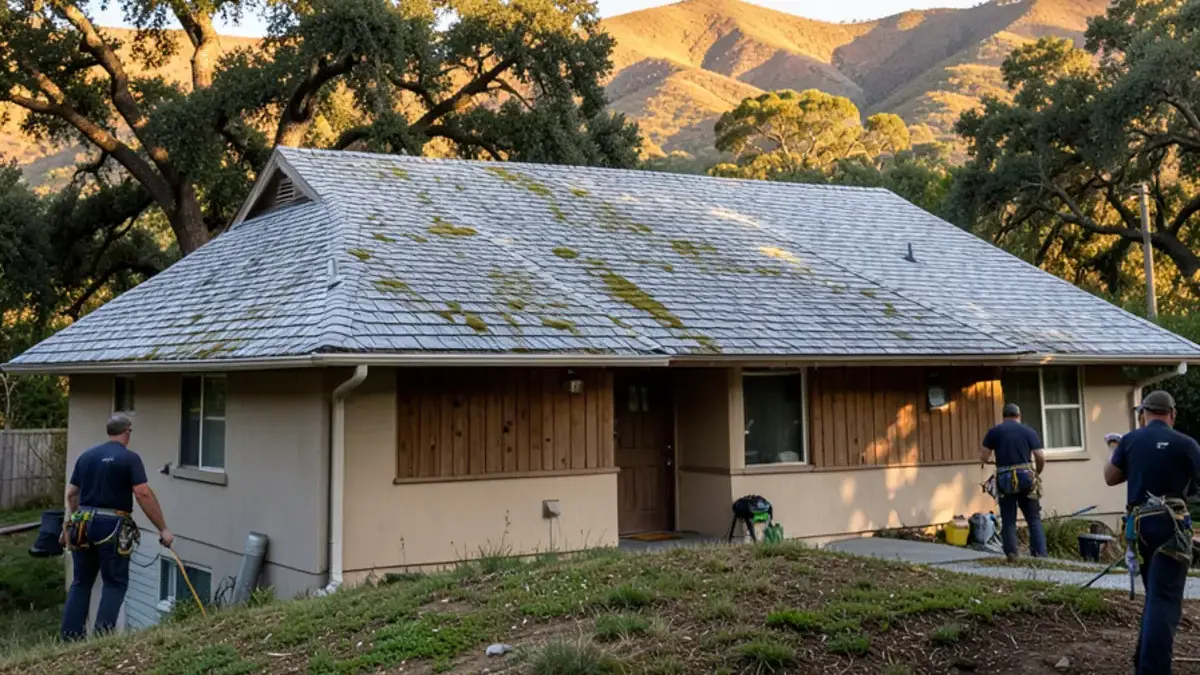
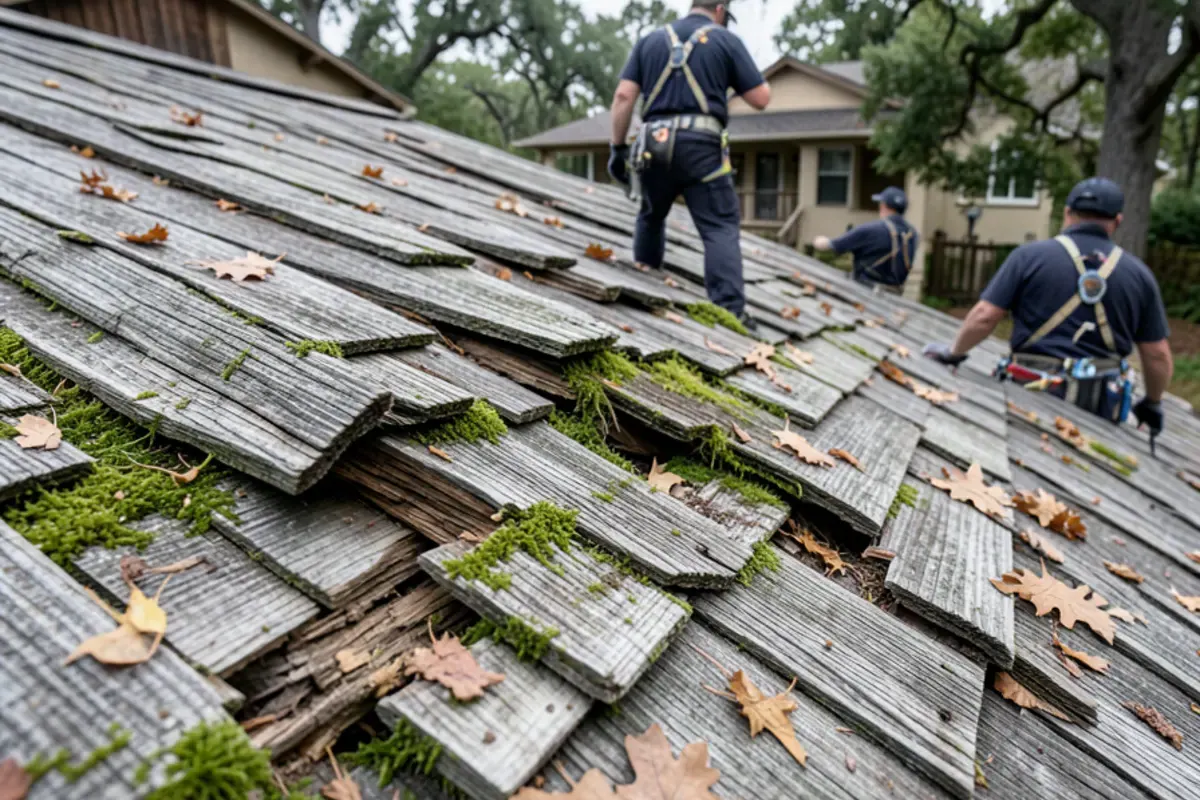
Hand-split cedar shakes were a popular roof on South Bay homes built from the 1960s into the 1980s, especially in the foothill towns. Most of those roofs are at or past the end of their service life. The cedar has dried, split and thinned in decades of summer sun, and shaded slopes under oaks and redwoods grow moss that holds moisture against the wood.
Homeowners usually call when they notice one or more of these:
- Shakes that are cupped, split through or missing after a windy storm
- Daylight visible through the roof from the attic
- Moss, lichen or dark streaks covering shaded slopes
- Leaks at valleys, chimneys and skylights where flashing has rusted
- An insurer asking about roof age or material at renewal
Insurers in California have been dropping or declining to renew many homeowner policies, and an older roof is a frequent reason a house is singled out. A wood roof in a fire-prone area draws even more attention.
Weighing cedar against synthetic shake? Phone (725) 745-8803 to have both priced on one estimate after an inspection.
Call (725) 745-8803Wood shake vs. synthetic shake compared
| Factor | Treated cedar shake | Synthetic (composite) shake |
|---|---|---|
| Fire rating | Class A only as part of a tested assembly with treated shakes and specified underlayment | Many products reach Class A, some only with a specified underlayment |
| Local restrictions | Restricted or discouraged in many fire hazard zones | Generally accepted where Class A is required |
| Look | Natural grain and color; weathers to silver gray | Molded from real shakes; color stays more uniform |
| Upkeep | Periodic cleaning, moss control and replacing split shakes | Little routine upkeep beyond clearing debris |
| Moss and rot | Vulnerable in shade and damp | Does not rot; moss can still grow on debris |
| Weight | Light | Typically similar to cedar or lighter, by product |
| Deck | Can go over spaced or solid sheathing | Usually needs a solid deck |
| Relative cost | Treated, Class A-assembly cedar is usually higher | Usually lower to comparable; varies by brand and profile |
Synthetic shakes are made from polymers, often with recycled content, molded from real cedar to copy its texture. Quality varies a lot between brands, so look at samples in daylight and read the maker's written warranty terms, which come from the manufacturer, not the installer.
Impact ratings: what Class 4 means here
Many synthetic shakes advertise a Class 4 rating under UL 2218, the top class in a test that drops steel balls of increasing size on the roofing and checks for cracks. Hail is rare in the South Bay, so the practical value is resistance to falling acorns, pine cones and small limbs, which split dry cedar easily. Treat the rating as a sign of a tough product rather than a reason on its own to switch.
Class A ratings and fire hazard zones
California's wildland-urban interface rules, in Chapter 7A of the Building Code and the matching sections of the residential code, call for Class A roof assemblies in mapped Fire Hazard Severity Zones, along with ember-resistant vents. CAL FIRE maps those zones, and parts of Los Gatos, Saratoga, Monte Sereno, Los Altos Hills and the Santa Cruz Mountains fall inside them.
A Class A rating applies to the whole tested assembly, not just the shingle. Cedar reaches it only with pressure-treated shakes installed over a specific underlayment or cap sheet. Many local jurisdictions in fire-prone areas go further and restrict wood roofs outright. Before choosing, look up your address on the CAL FIRE maps and check with your town or city building department, since local ordinances can be stricter than the state baseline.
What "fire-treated" cedar has to prove
The model building code requires fire-retardant-treated shakes to be pressure-impregnated with chemicals, not brushed or sprayed, and to keep their rating after an accelerated weathering test (ASTM D2898) that simulates years of rain washing the treatment out. Ask for the treatment listing and the tested assembly on paper. A surface coating applied to an existing cedar roof does not turn it into a Class A assembly.
Look, lifespan and how each one ages
Cedar's appeal is that it changes. New shakes are honey to red-brown and fade to silver over a few years, with every piece a little different. That variety is also its weakness: individual shakes split, cup and thin at different rates, so a cedar roof needs ongoing attention to stay tight.
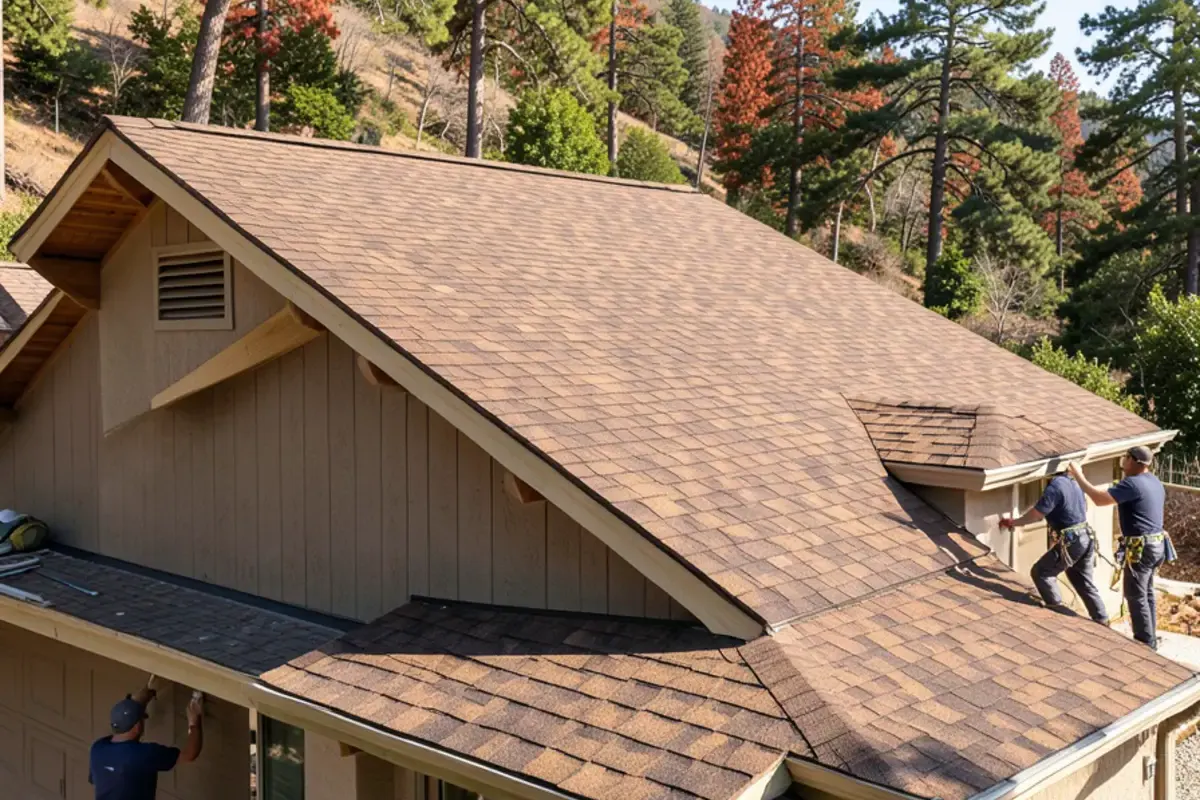
Synthetic shake ages more evenly. Better products blend several colors and widths so the roof doesn't look stamped, and they don't split or rot. Expect some color fade over time. Both systems depend on good flashing and underlayment underneath, and those layers usually decide when the next roof is due.
Questions to settle before choosing a shake roof
- Is the home in a mapped fire hazard zone, and does the town allow wood roofs there?
- What does your insurer say about wood versus Class A synthetic roofing?
- Is the deck spaced boards or solid sheathing, and will it need to be sheathed over?
- Which synthetic brands and profiles meet Class A, and with what underlayment?
- Are you willing to maintain cedar, or do you want a roof you mostly leave alone?
- Could the current roof be repaired for a few more years instead?
If the cedar still has life and the problem is a few slipped or split pieces, wood shake roof repair may carry it a few more seasons. When it is time to replace, our wood shake roofing page covers synthetic shake installs, decking and Class A assemblies.
How a cedar-to-synthetic switch runs on the roof
Changing materials is more than swapping one shake for another. The order of work on a typical foothill reroof looks like this:
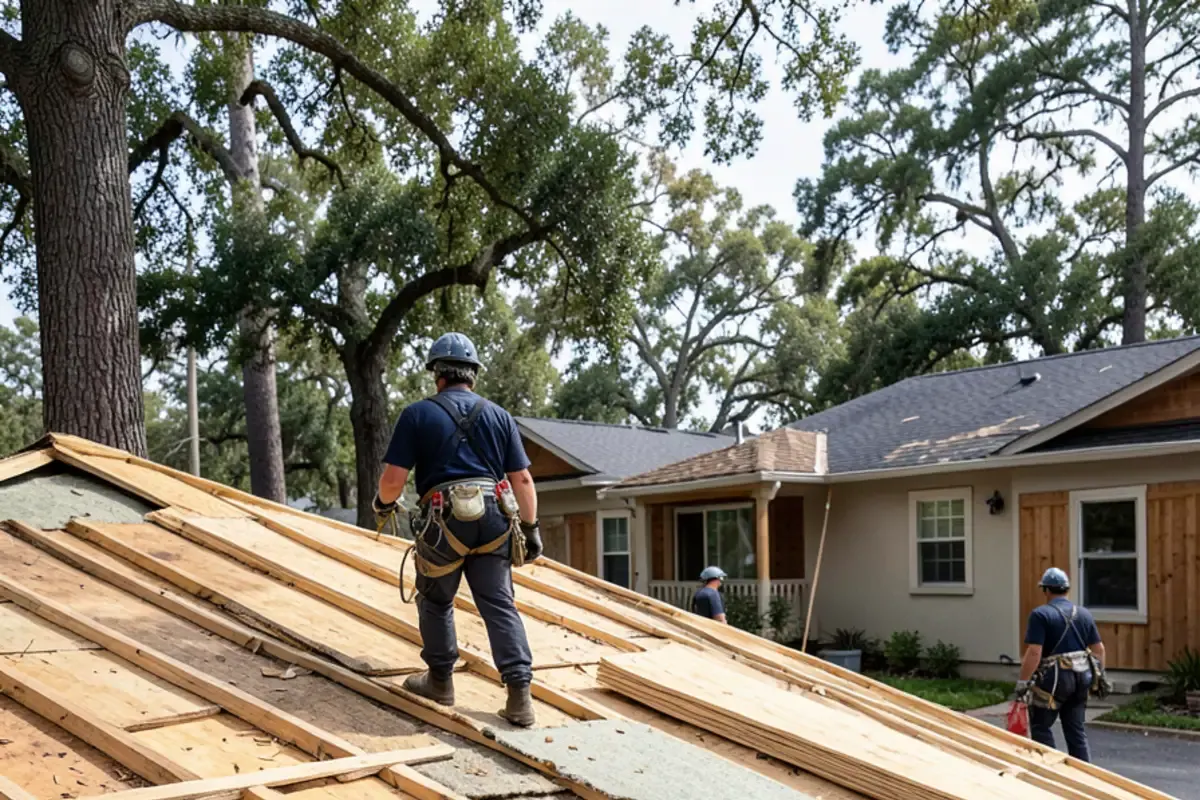
- Tear off the cedar and the old interlayment down to the spaced boards, protecting the yard from debris.
- Inspect the boards and rafters; replace rotted pieces and sheathe the roof solid with plywood.
- Pass the sheathing nailing inspection where the city requires one, as Campbell does.
- Install the underlayment or cap sheet the Class A listing names, plus new valley, wall and chimney flashing.
- Lay the synthetic shake in the maker's pattern, mixing colors and widths so the roof does not look stamped.
- Replace attic and eave vents with ember-resistant units where the fire zone calls for them, then do a final cleanup and walk-through.
The solid deck and new flashing are where most of the work sits, and they are the same whichever shake goes back on.
From our roof visits: what old shake roofs hide
Tearing off cedar usually exposes spaced board sheathing with gaps between the boards. Most replacement materials, synthetic shake included, need a solid deck, so new plywood goes over or between the boards. That step belongs on the estimate from the start, not as a surprise.
Underneath the shakes, the felt interlayment is often brittle and torn, and flashing at chimneys and valleys has rusted thin. Old chimneys sometimes carry cracks from past earthquakes. Leaf and needle litter packed between shakes shows how much debris a hillside roof collects, which is a reason to plan gutter guards and regular clearing whatever material goes back on.
Both materials come with trade-offs we spell out before anyone signs. Cedar is authentic, repairable piece by piece and weathers beautifully, but it asks for ongoing cleaning and replacement shakes, draws insurer questions and is restricted in many fire zones. Synthetic shake asks almost nothing of you once installed and meets Class A requirements more easily, yet quality varies by brand, the category has a shorter track record than cedar, and a matching replacement piece years later depends on the product still being made. Keep a box of spare pieces from the original job.
Choosing your next shake roof with confidence
Start with the fire map and your insurer, because those two answers often settle the question before looks come into it. If cedar is still allowed and you love it, budget for treated shakes, the full Class A assembly and regular upkeep. If you want the look with far less maintenance, compare two or three synthetic brands in daylight and confirm each one's Class A listing and underlayment. Either way, price the solid sheathing and new flashing up front.
Ready to compare cedar and synthetic shake for your roof? Ask Xylo Fix Roofers for an inspection and both options on one written estimate.
Call (725) 745-8803