
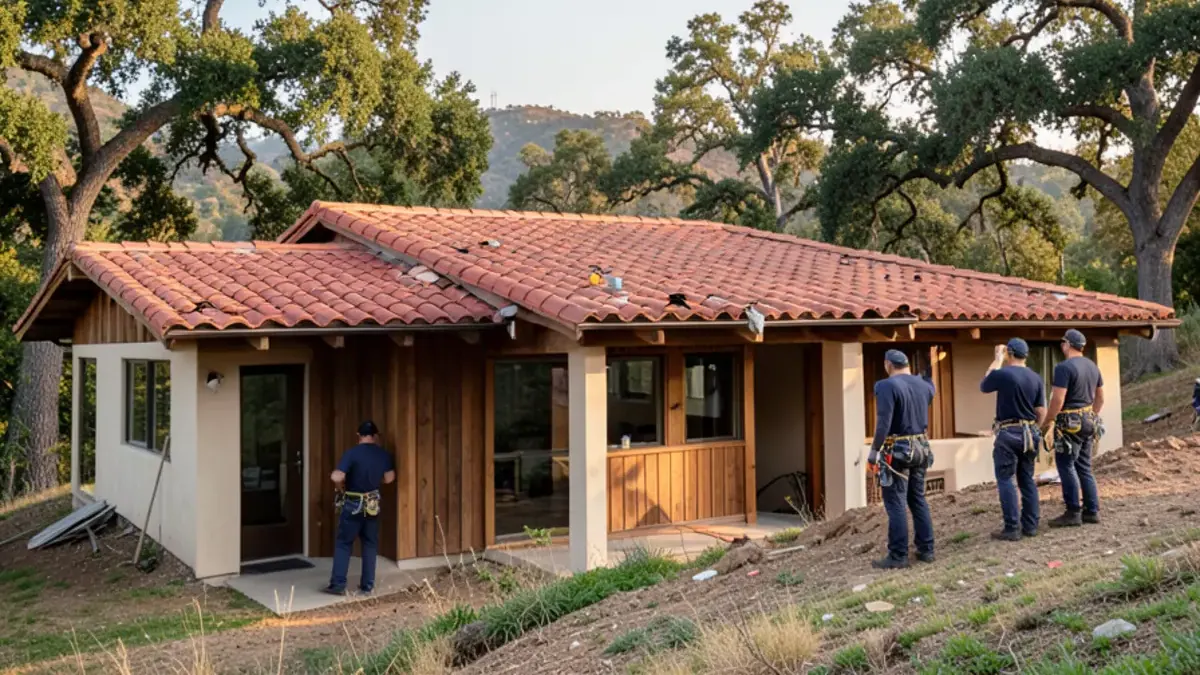
Does a cracked tile mean your roof is leaking?
Not necessarily. A tile roof is a two-layer system. The tiles block sun and most of the rain, and some water always runs under them, across the underlayment and out at the eaves. A single cracked tile lets in more water than usual, but if the underlayment below is healthy, the attic may stay dry.
That is why a cracked tile should be replaced soon, not ignored. Each storm sends extra water and sunlight onto the underlayment at that spot, and broken pieces can slide down and jam the water channels below.
Spotted broken tiles from the yard? Stay off the roof and let us look. We share photos of every damaged piece we find.
Call (725) 745-8803Three levels of tile roof repair
Tile repairs fall into three sizes. The right one depends on how many tiles are damaged and how the underlayment looks once a few are lifted.
1. Single-tile replacement
The cracked tile is broken out, the tiles above are lifted slightly, and a new tile is slid in and secured with a clip, a fastener or adhesive suited to the profile. This fits scattered damage from a fallen branch or a careless footstep.
2. Lift and relay on one section
Tiles in the problem area are removed and stacked, the worn underlayment is replaced, flashing is renewed, and the same tiles go back on with replacements for any broken ones. This fits a leak at a valley, a wall or a chimney on an otherwise sound roof.
3. Full re-felt or replacement
Every tile comes off, the deck is checked, new underlayment and battens go on, and good tiles are reinstalled. When the tiles themselves are failing, the roof is replaced with new tile or another material.
| Option | What changes | Best fit | What it does not fix |
|---|---|---|---|
| Single-tile replacement | One or a few tiles | Isolated breaks, healthy underlayment | Aging underlayment elsewhere |
| Lift and relay (section) | Tiles off and back on; new underlayment in one area | Leaks at a valley, wall or penetration | Underlayment on the rest of the roof |
| Full re-felt | New underlayment across the roof, tiles reused | Sound tiles over worn underlayment | Tiles that are crumbling or discontinued |
| Replacement | New roofing throughout | Brittle, porous or widely broken tile | Nothing left over; a fresh start |
Clay tile repair vs. concrete tile repair
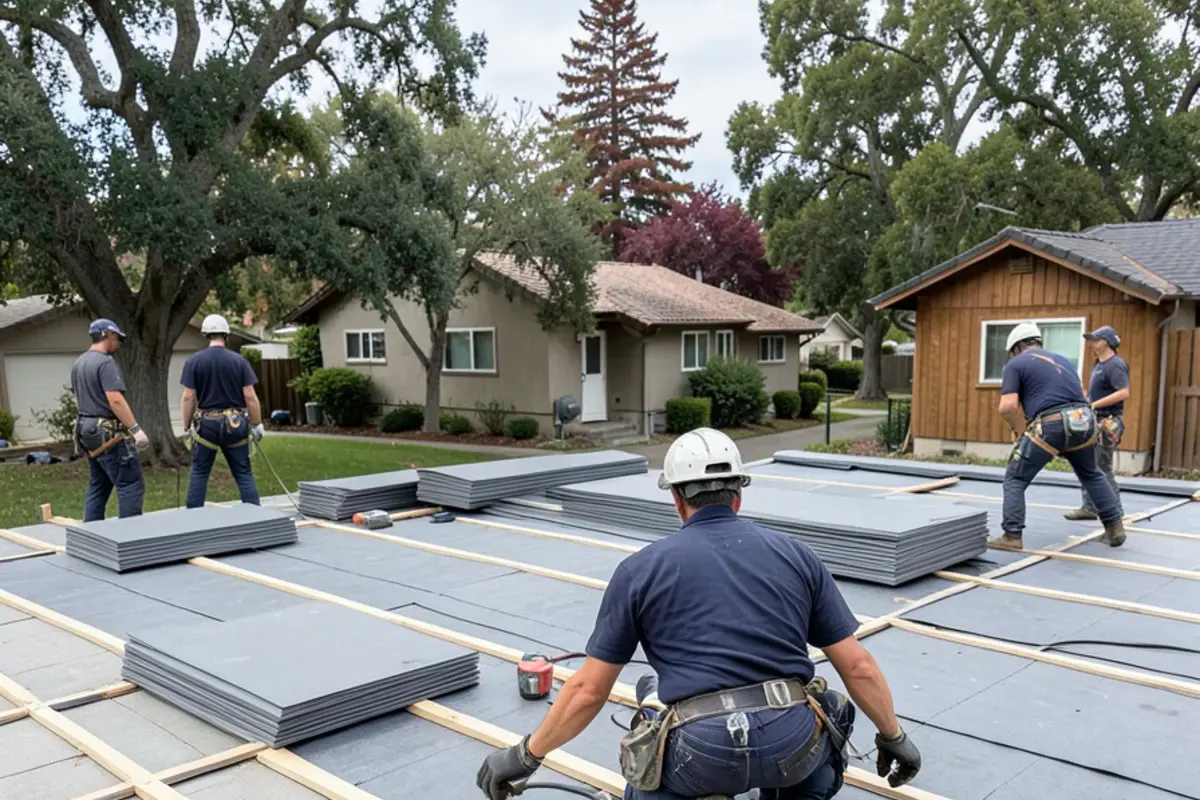
The two materials look alike from the street but repair differently.
- Clay tile: fired, colored through, and can last a very long time, but it is brittle and cracks under point loads. Old Spanish and mission profiles can be hard to match, so we often salvage tiles from a hidden area to patch a visible one.
- Concrete tile: heavier and tougher, but the surface color fades and the face can turn porous with age. Some profiles have been discontinued, which makes exact matches harder.
- Both: need correct underlayment, flashing and fasteners. A perfect tile on top of worn felt still leaks.
- Fire zones: where CAL FIRE maps a hazard zone, the state's wildland-urban interface code expects a Class A rated roof assembly, so repairs and re-felts should keep that rating intact.
Hillside homes in Saratoga and newer subdivisions in Morgan Hill both carry a lot of tile, often concrete on later builds and clay on older or custom homes. Matching the original is part of every tile roof repair we quote.
Why tile roof underlayment fails before the tile
Many tile roofs built decades ago used a single layer of felt paper. Heat building up under the tiles bakes that felt every summer until it turns brittle and splits. Nail holes widen. Where tiles have shifted, sunlight reaches it directly and speeds the breakdown.
The clue is usually a leak that shows up in several places once the roof is a few decades old, even though most tiles look fine. At that point replacing tiles one at a time will not help. A re-felt with modern synthetic or high-temperature underlayment, reusing the sound tiles, is often the most economical fix. When the tiles are also worn out, tile roofing replacement becomes the better path.
Earthquakes matter too. Ground shaking can loosen ridge and hip tiles set in mortar and nudge field tiles out of line. After a noticeable quake, a look at the ridges is worthwhile.
What happens during a tile re-felt, step by step
A re-felt sounds drastic, but it reuses most of what you already paid for. The order of work below is typical for a concrete or clay roof on a South Bay house; your written estimate should describe each step.
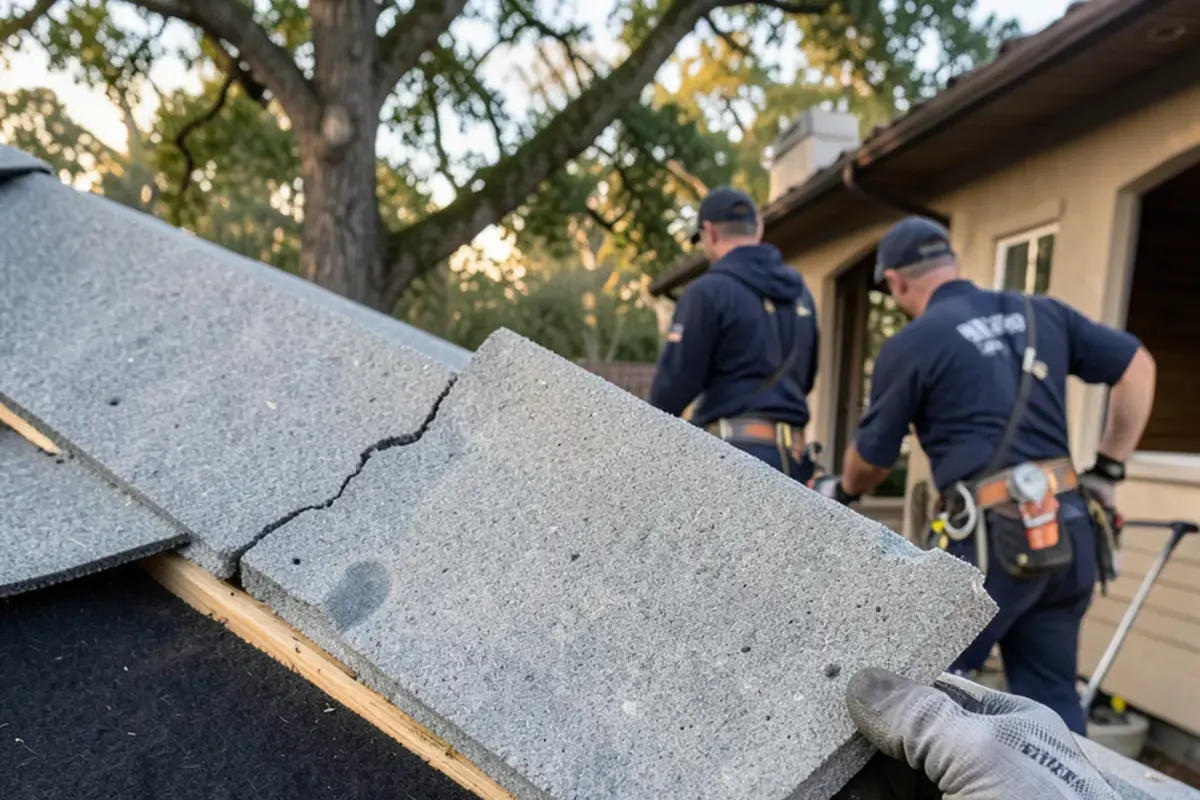
- Tiles come off and get stacked in small piles spread across the roof, so no one spot carries too much weight.
- Old felt and battens are stripped down to the wood deck, along with worn valley and wall metal.
- The deck is checked and repaired. The City of Campbell wants rotted or damaged deck boards swapped out before its reroof inspection, so soft spots get found and fixed at this stage.
- New underlayment, flashing and battens go on, with valley metal, wall flashing and pipe flashings replaced rather than reused.
- Inspections happen as the building department requires for a reroof.
- Tiles go back on, with replacements for broken pieces, ridge and hip tiles reset, and eave closures or bird stops renewed.
Why the code minimum slope matters on additions
The California Residential Code sets a minimum slope of 2.5:12 for clay and concrete tile and calls for double underlayment on slopes up to 4:12. Low porch roofs and additions that were tiled to match the main house sometimes sit below that line. Those sections leak at the laps no matter how many tiles are replaced, and they are better rebuilt with a low-slope membrane.
Weight is a design question, not just a material choice
Standard concrete tile weighs roughly three times as much per square foot as asphalt shingles. Going back on with the same tile is normally straightforward. Switching a shingle house to tile is not: the City of Campbell notes that roofing heavier than the existing roof may need an engineer's review of the framing, so ask about that before falling for a tile sample.
From our roof visits: what really breaks tiles
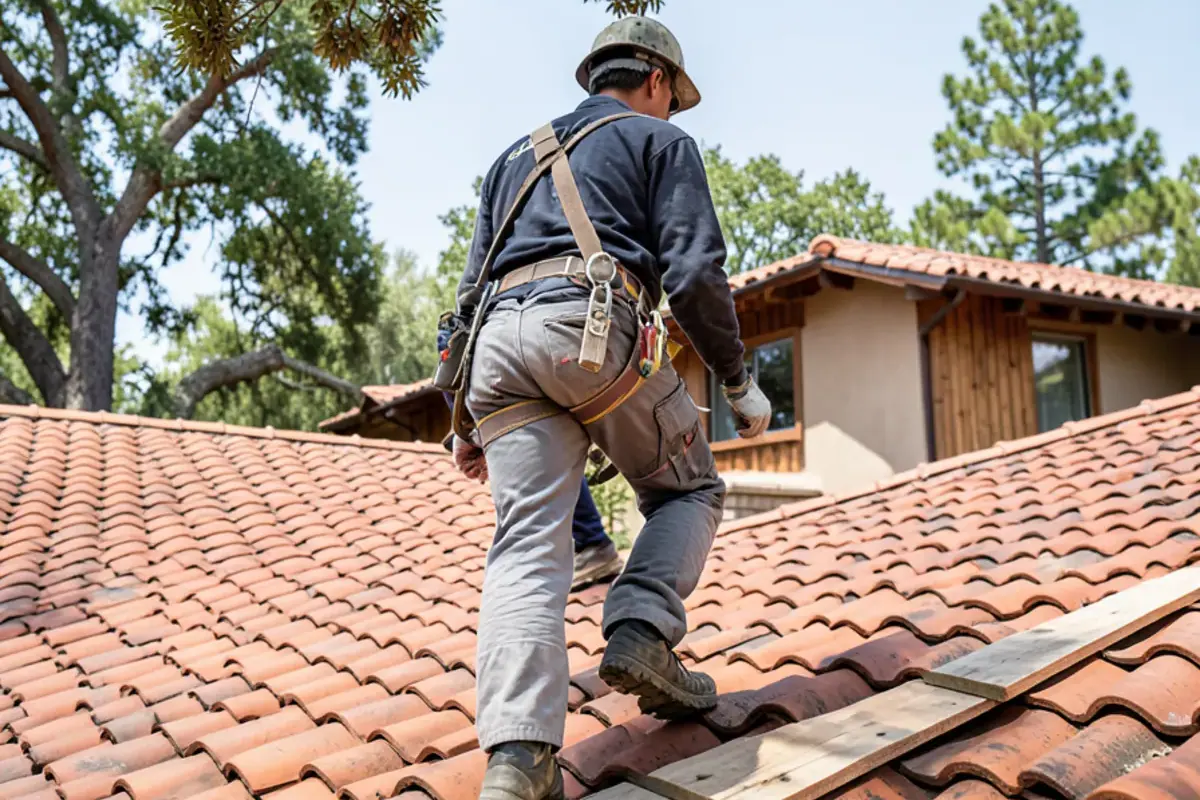
Foot traffic breaks more tiles than weather. Satellite installers, solar crews, painters and well-meaning gutter cleaners walk on the middle of tiles, where they snap. Trained roofers step on the lower portion of each tile, near the lap where it is supported, or use walk boards.
Falling branches are next, especially from oaks and pines during winter wind. Pressure washing also does harm: it can crack old clay and force water up under the laps.
Cracks hide well. A hairline split can look whole from the ground and only show when the tile is lifted. That is why we check tiles by hand around every leak and photograph both sides of the ones we pull.
Repairs and re-felts carry trade-offs that belong on the estimate. Lifting old tile always breaks some of it, more so with brittle clay, so a fair quote includes an allowance for replacement pieces. Salvaged or new tiles rarely match a weathered roof exactly, which is why we move the closest matches to the front slope and put the rest where no one looks. Mortar-set ridges look traditional but can crack in a quake; mechanically fastened ridge systems hold better but change the look slightly. We lay out those choices with photos so you can pick.
What should you do about a cracked roof tile now?
- Stay off the roof. Walking on tile is how one crack turns into ten.
- Photograph the damage from the ground or a window, with a date.
- Check the attic below the spot during or after the next rain.
- Look in your garage or side yard for spare tiles left by the builder; they make the best match.
- If a storm or a falling limb caused the damage, note the date for your insurer.
- Book an inspection so the underlayment can be checked, not just the tile.
Cracked tiles are rarely urgent on their own, but they are the easiest warning a tile roof gives. Replacing a few pieces before the wet season keeps sun and water off the underlayment and tells you whether the felt still has life.
Want the tiles and the felt under them checked before the rains? We'll photograph what we find and write up repair and re-felt options.
Call (725) 745-8803