
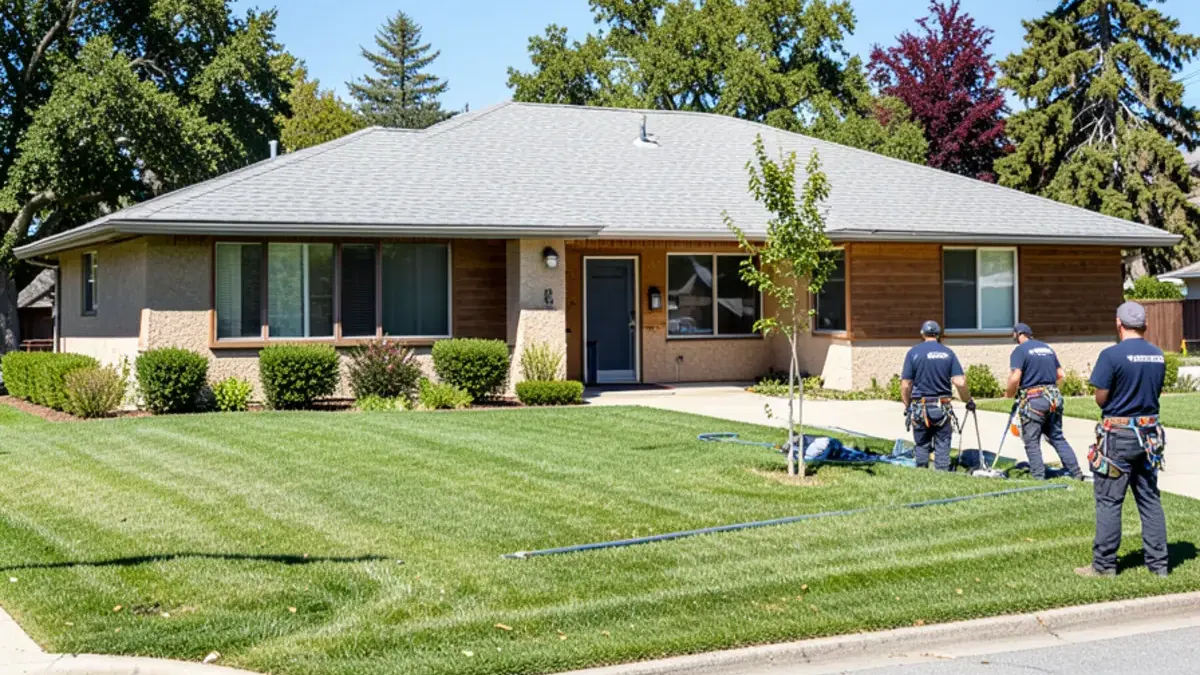
What do Title 24 cool roof requirements cover on a reroof?
California's Building Energy Efficiency Standards, Title 24, Part 6, are written by the California Energy Commission and revised on a three-year cycle. They set minimums for how much sunlight a roof surface reflects and how quickly it gives off the heat it does absorb. For existing homes, the rules arrive through the code's alterations section: once a project counts as replacing the roof rather than repairing it, the new surface may have to meet a cool-roof threshold.
Three variables decide whether that happens on your house. The table shows how each one usually plays out in Campbell.
| Variable | What it means | How it tends to land in Campbell |
|---|---|---|
| Climate zone | The Energy Commission divides California into 16 weather-based zones | Campbell is in Climate Zone 4, a zone the code treats as warm enough for some cool-roof rules |
| Slope | Low-slope roofs (flat up to about a 2-in-12 pitch) are handled separately from steep roofs | Flat roofs on additions, carports and garages are the likeliest to need a cool-rated surface |
| Scope | How much of the roof the project replaces | Repairs and small sections usually fall outside; replacing most or all of a roof brings the rules into play |
| Paperwork | Product ratings and compliance forms attached to the permit | Keep the product's rating listing so the inspector can match it to what went on the roof |
Not sure whether your reroof triggers the cool-roof rules? Call (725) 745-8803 and we'll walk through slope and scope with you before you choose a product.
Call (725) 745-8803Does a shingle reroof in Climate Zone 4 need a cool-rated product?
Sometimes, and the answer has shifted between code cycles. The steep-slope provisions for homes have listed Climate Zone 4 among the zones where a full reroof may need a cool-rated surface, but the reflectance bar for steep roofs is far lower than for flat ones. Many standard dark shingle colors miss it, while cool-rated shingle lines are designed to clear it.
Because exceptions and numbers change with each edition, we confirm the current requirement with the City of Campbell building division for every job rather than assume. For addresses in unincorporated pockets, the permit counter is the County of Santa Clara Planning and Development Department, and the same question applies there.
If you are already comparing asphalt shingle roofing options, ask to see the cool-rated colors alongside the standard ones. On past jobs we have installed Owens Corning TruDefinition Cool Plus shingles, which look like ordinary architectural shingles from the street.
What numbers does Title 24 set for a Climate Zone 4 reroof?
The figures below come from the 2022 Energy Code as summarized in BayREN's residential reroofing permit guide. The 2025 edition governs permits filed on or after January 1, 2026, so check these values against it rather than treating them as final.
| Roof type | Slope | Aged solar reflectance | Thermal emittance | Or SRI |
|---|---|---|---|---|
| Steep-slope | Steeper than 2:12 | 0.20 minimum | 0.75 minimum | 16 minimum |
| Low-slope | Less than 2:12 | 0.63 minimum | 0.75 minimum | 75 minimum |
BayREN puts the scope trigger at replacing 50 percent or more of the roof. A worked example: on a ranch house with 2,000 square feet of roof, replacing the 1,100-square-foot main gable is 55 percent, so the new surface must comply. Redo only the 900-square-foot rear section and you sit at 45 percent, under the line. The permit checklist asks for both figures, so take them from your written estimate.
Exceptions that can excuse a steep-slope reroof
Under the 2022 rules, a steep-slope replacement can skip the cool-rated surface when one of these applies:
- No ducts in the attic, now or after the work.
- Deep ceiling insulation: R-38 or more, or a ceiling U-factor of 0.025 or lower.
- A qualifying radiant barrier in the attic.
- Continuous roof insulation of R-2 or more above or below the deck.
- Roof construction of 25 pounds per square foot or more, such as a green roof; ordinary concrete tile weighs far less.
- Solar coverage: area under building-integrated photovoltaic or solar thermal panels is exempt, while the rest of the roof still has to comply.
Exceptions are claimed on the residential reroof compliance form filed with the permit (2025-cycle handouts call it CF1R-ALT-01-E), and the inspector can ask to see the attic. Settle yours before material is ordered.
Low-slope reroofs bring an insulation question too
Flat sections carry a second rule in the 2022 code: when half or more of a low-slope roof is replaced, insulation must reach listed levels unless the existing roof already has R-10 continuous insulation or meets another exception. Added deck insulation can also offset part of the reflectance requirement. On a TPO or PVC roof over a garage or addition, that choice changes edge height, flashing and price, so it belongs in the estimate from the start.
How is roof solar reflectance measured?
A cool roof is defined by numbers, not by color names. Products are tested and listed by the Cool Roof Rating Council, and those listings are what the energy code and inspectors rely on.
- Solar reflectance: the share of sunlight the surface bounces back, from 0 to 1. Higher means less heat absorbed.
- Thermal emittance: how readily the surface releases heat it has absorbed, also from 0 to 1.
- Aged values: ratings after three years of outdoor weathering. Dirt and sun lower reflectance, so codes generally lean on the aged number.
- Solar Reflectance Index (SRI): a single figure combining the two, accepted as an alternative path in some parts of the code.
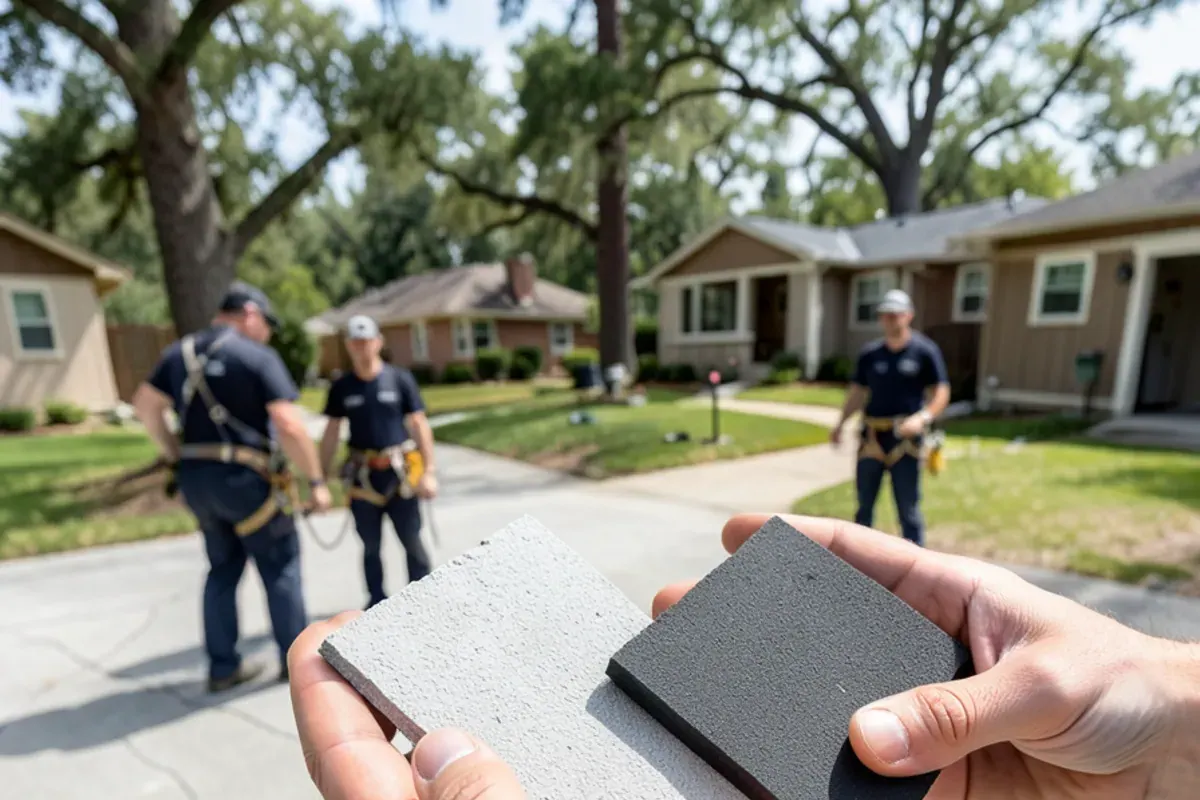
You can look up any product in the council's online directory by brand and color before you commit. A sample board in your hand tells you how it looks; the directory tells you whether it qualifies.
Which cool roof products suit South Bay homes?
Low-slope roofs
White or light single-ply membranes such as TPO and PVC, and reflective coatings over a sound existing membrane, are the usual answers. These surfaces carry the highest reflectance ratings and are the core of our cool roof installation work.
Steep roofs
Cool-rated shingles use reflective granules in grays, tans and muted browns. Some concrete and clay tile colors carry cool ratings, and factory-coated metal panels with reflective pigments can rate well in darker shades than you might expect.
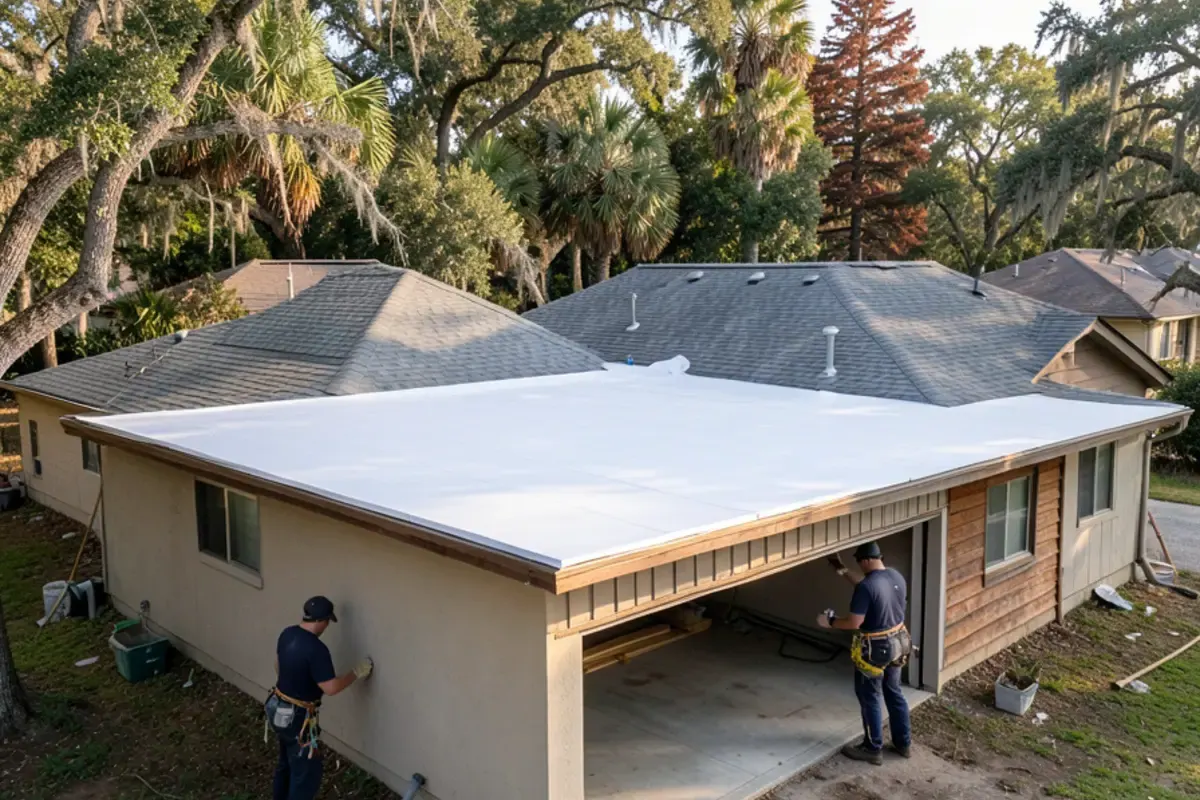
For neighbors across the city line, the same climate zone generally applies to roofing in San Jose, but the permit counter is the City of San Jose, so confirm scope there.
From our roof visits: what cool roofs change in practice
A few things come up again and again once a cool surface is on the house.
- White flat roofs show dirt, leaves and tree sap. A gentle rinse during routine maintenance keeps reflectance closer to the rated value.
- Reflective coatings only last when the surface underneath is clean, dry and repaired first. Coating over blisters or wet insulation hides the problem for a season.
- Cool-rated shingle colors rarely look unusual. Most homeowners cannot pick them out from standard shingles on the same street.
- A bright low-slope roof below second-story windows can throw glare. Lighter grays reduce that while still rating well.
- Attic ventilation and insulation still matter. A reflective surface reduces heat gain but does not fix a poorly vented attic.
The trade-offs are worth hearing before you commit, too:
- Cool-rated shingle lines come in fewer colors than a full standard palette, and the deepest charcoals and browns are usually the ones missing. If a dark color matters to you, check whether an exception fits your attic before you choose a sample.
- A reflective surface cuts summer heat gain but gives up the little winter warmth a dark roof soaks up. With Campbell's mild winters the trade usually favors the cool surface, but it is still a trade.
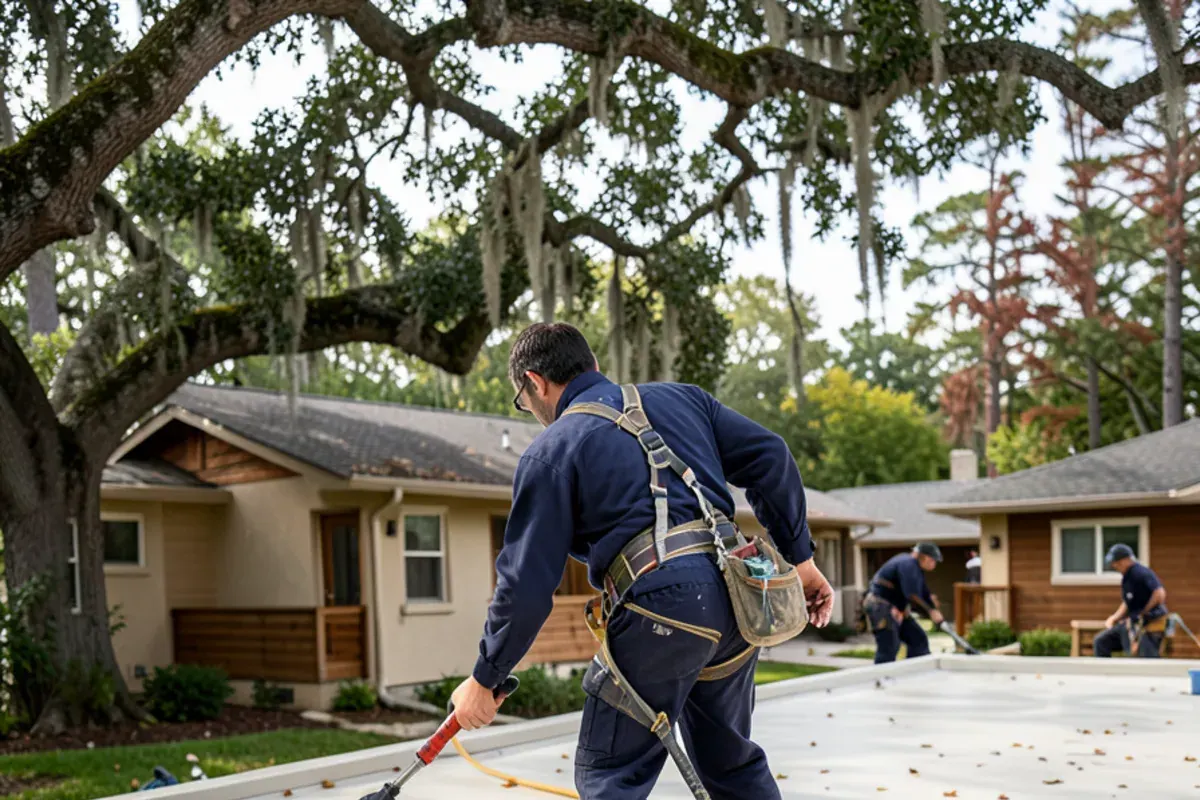
Steps to choose a compliant cool roof
- Measure the slope of each roof section and decide how much of the roof you are replacing.
- Confirm with the permit office whether that slope and scope trigger a cool-roof requirement in Climate Zone 4.
- Shortlist products with Cool Roof Rating Council listings that meet the required aged values.
- Compare colors in daylight on your own roof, not only under showroom lights.
- Keep the product data and rating printout with your permit file for the final inspection.
- Read the written estimate for the product line and color, the manufacturer's warranty terms and the workmanship terms.
Where this leaves a Campbell homeowner planning a reroof
Map the roof's sections and slopes, add up the area you plan to replace and compare it with the half-the-roof line. Check whether an exception fits your attic before you narrow down colors. If the rules apply, choose a rated product and keep its listing for the inspector; if they do not, a cool-rated product is still worth pricing on a broad, sun-facing ranch roof. The City of Campbell building division, or the County for unincorporated addresses, has the final say on your scope.
Planning a reroof and want the cool-roof question settled before you pick a color? Ask us for a free written estimate that spells out slope, scope and product.
Call (725) 745-8803