
Start with the reserve study, then get eyes on the roofs
Under California Civil Code section 5550, part of the Davis-Stirling Act, a board must have a visual inspection of the major components it maintains done at least once every three years and review the reserve study each year. Roofs are usually the largest line in that study. The study gives a remaining-life estimate and a funding target, but it is a planning tool, not a roof diagnosis.
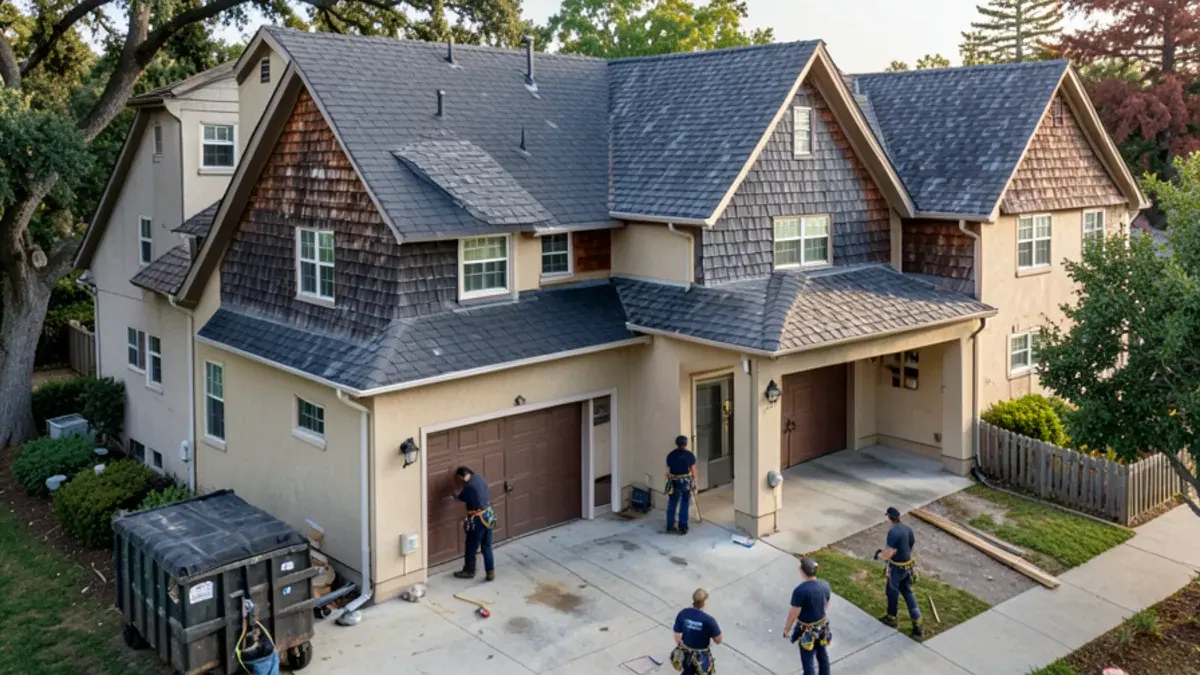
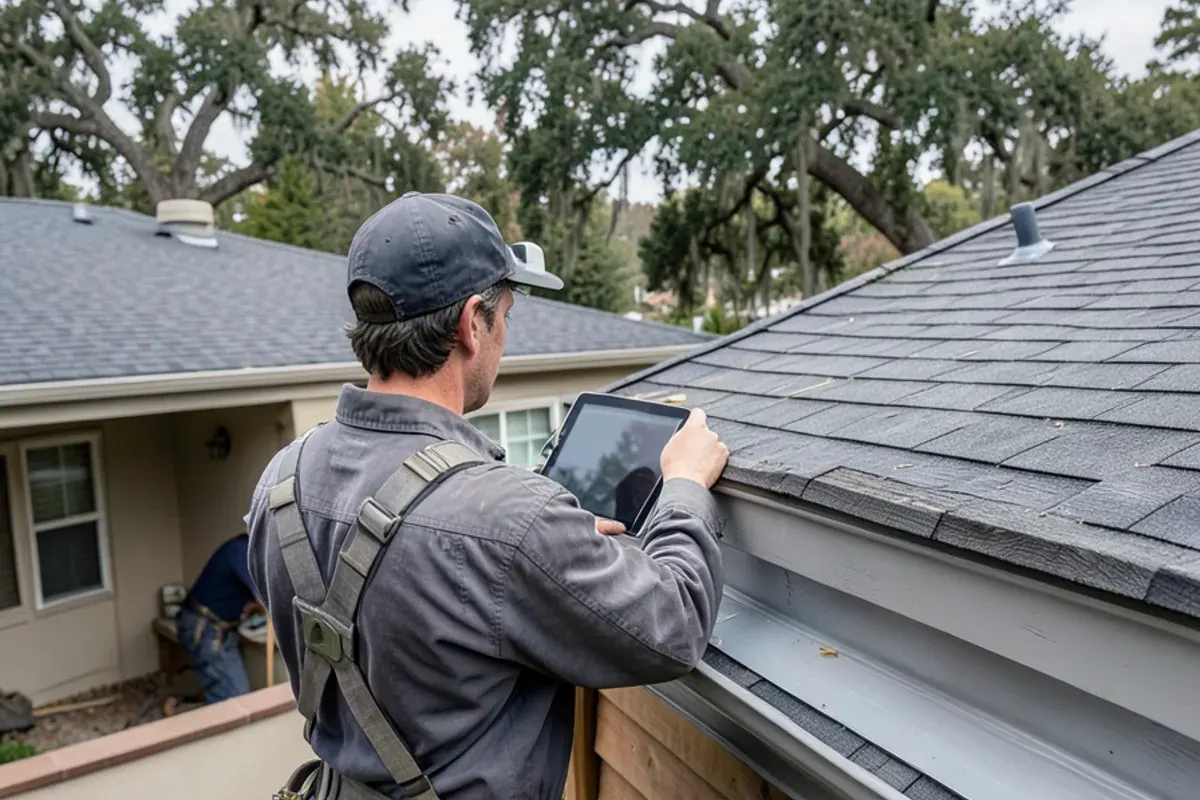
Before asking for bids, have each building looked at by a roofer and get a written condition report. A useful report records, per building:
- Roofing material, number of existing layers and approximate age
- Active leaks reported by residents and where they show inside
- Soft or rotted decking found by walking the roof
- Flashing condition at party walls, chimneys, skylights and vents
- Gutter and downspout condition and where water drains
- Owner-added items such as solar arrays, skylights or satellite mounts
- Dated photos tied to a simple site map
Planning a reroof for your association? A building-by-building roof condition walk starts with a call to (725) 745-8803.
Call (725) 745-8803What does the Davis-Stirling Act mean for a reroof?
Three parts of California's common interest development law tend to matter on a roof project. First, the CC&Rs decide who maintains the roofs. In many townhome communities the association does; in others, owners handle their own roof above their unit, and the documents spell out the line. Read them before anything else.
Second, funding. Civil Code section 5605 limits how far a board can raise regular assessments, or how large a special assessment it can impose, without a vote of the members, with exceptions for defined emergencies. A roof program that outruns the reserves may need member approval, which takes time to schedule. Third, notice: members are entitled to information about assessments and association business under the Act and the governing documents.
How the 5 percent special assessment line works
Under section 5605, as the Act is generally summarized, a board can raise regular assessments by up to 20 percent over the prior year and levy special assessments totaling up to 5 percent of that year's budgeted gross expenses without a member vote. Above those lines, approval comes from a majority of a quorum of the members. Section 5610 carves out emergencies, such as a condition that threatens personal safety. A roof that is leaking into units may qualify for repairs; a planned replacement usually does not.
Worked example: an association with a budget of $400,000 in gross expenses could levy special assessments of up to $20,000 that year on the board's own vote. If the reserves fall short of the roof program by more than that, the schedule has to allow for an election, and the condition reports become the evidence members read before they vote.
Coordinating with balcony and deck inspections
Civil Code section 5551 requires associations with buildings of three or more units to have exterior elevated elements, such as balconies and walkways, inspected every nine years. Where a balcony or roof deck ties into a roof, it pays to time that inspection near the reroof, so flashing at the deck edge and door thresholds is opened and replaced once.
How can a board get HOA roofing bids it can compare?
Boards often receive three bids that describe three different jobs. The fix is to hand every bidder the same written scope and ask them to price it line by line, with any alternates listed separately. These are the lines we see missing most often:
| Scope line | What to specify | Why it matters |
|---|---|---|
| Tear-off | Remove all existing layers to the deck | Bids that skip tear-off are not pricing the same roof |
| Decking | A unit price per sheet of replaced sheathing | Rot is unknown until tear-off; unit prices stop disputes |
| Underlayment and flashing | Product type, new step and party-wall flashing | Most shared-roof leaks start at flashing seams |
| Ventilation | Intake and exhaust vents per building | Old attic vents are often undersized or blocked |
| Energy code | Cool-roof products where Title 24 applies | Low-slope sections often trigger the rule |
| Permits | Who pulls them, and how many | Campbell issues one permit per building |
| Resident protection | Tarps, daily cleanup, magnet sweeps, parking plan | Protects cars, patios and children's play areas |
| Terms | Maker's material warranty under its terms; installer's workmanship terms on paper | Lets the board compare what each bidder commits to |
Our HOA and multifamily roofing estimates are written and itemized, with photos from each building, so a board can line them up against other bids without guessing.
Decisions the board should make before bidding
Bidders price what the board puts in writing. Settle these questions in a board meeting first, record them in the minutes, and the bids that come back will describe the same project:
- Material and color for every building, with a backup color in case the first is discontinued mid-program.
- Who pays for owner-added items, such as skylights, solar arrays and satellite mounts, when they have to be removed and reset.
- Whether gutters, downspouts and fascia are in scope or a separate contract. Old gutters often come off during tear-off anyway.
- A dry-rot allowance and a contingency, so a board vote is not needed every time a crew finds soft sheathing.
- Low-slope sections over carports or entries, which need a membrane spec and may fall under Title 24 cool-roof rules.
- The communication plan: one contact, a notice schedule and where residents look for updates.
A short decision memo like this also helps the next board. Roof programs can run several years, and directors change in between.
Phasing townhome roof replacement building by building
Few associations reroof every building at once. Phasing spreads cost across budget years and keeps parking and noise manageable. A workable order looks like this:
- Fix active leaks on all buildings now with targeted repairs, so no unit waits a year with water coming in.
- Rank buildings by condition report findings, not by address or which owners complain loudest.
- Group neighboring buildings into phases that share a staging area and a dumpster location.
- Schedule tear-offs in the dry months; South Bay rain falls mostly from November to March.
- Hold one walk-through at the end of each phase before the next begins, and fold lessons into the next scope.
Keep the same materials and colors across phases so the community does not end up with a patchwork, and order enough for later phases if a color is at risk of being discontinued.
Resident notices that head off most complaints
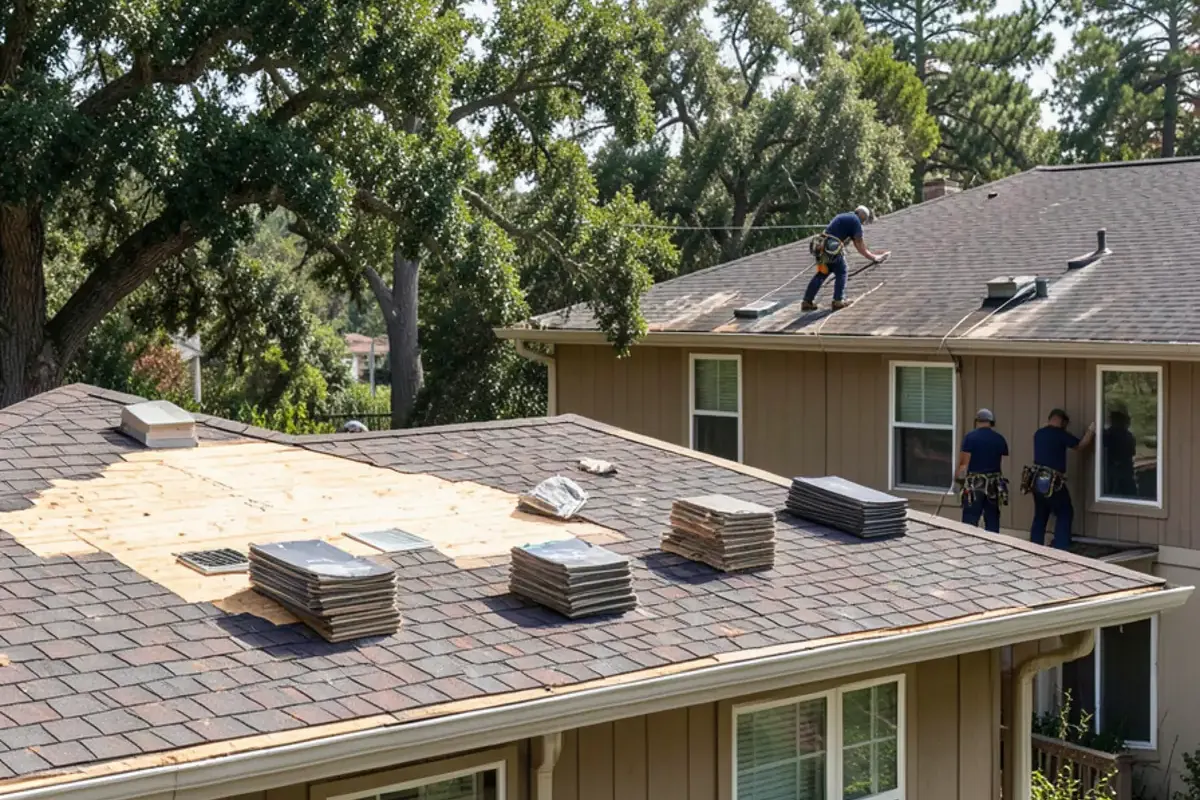
Most friction on a condo roof replacement comes from surprise, not the work itself. A written notice to each affected unit, two to three weeks ahead and again a few days before, should cover the start and end dates for that building, where cars cannot park, what to move off patios and balconies, and keeping pets inside. Add a reminder to take fragile items off walls that share a framing line with the roof, since hammering carries.
Owners with solar panels need early notice: panels must come off before tear-off and go back on after, and the owner may need to arrange that with their solar company. Give residents one contact name at the management company for questions, rather than having them approach crews on the roof.
From our roof visits: patterns on shared roofs
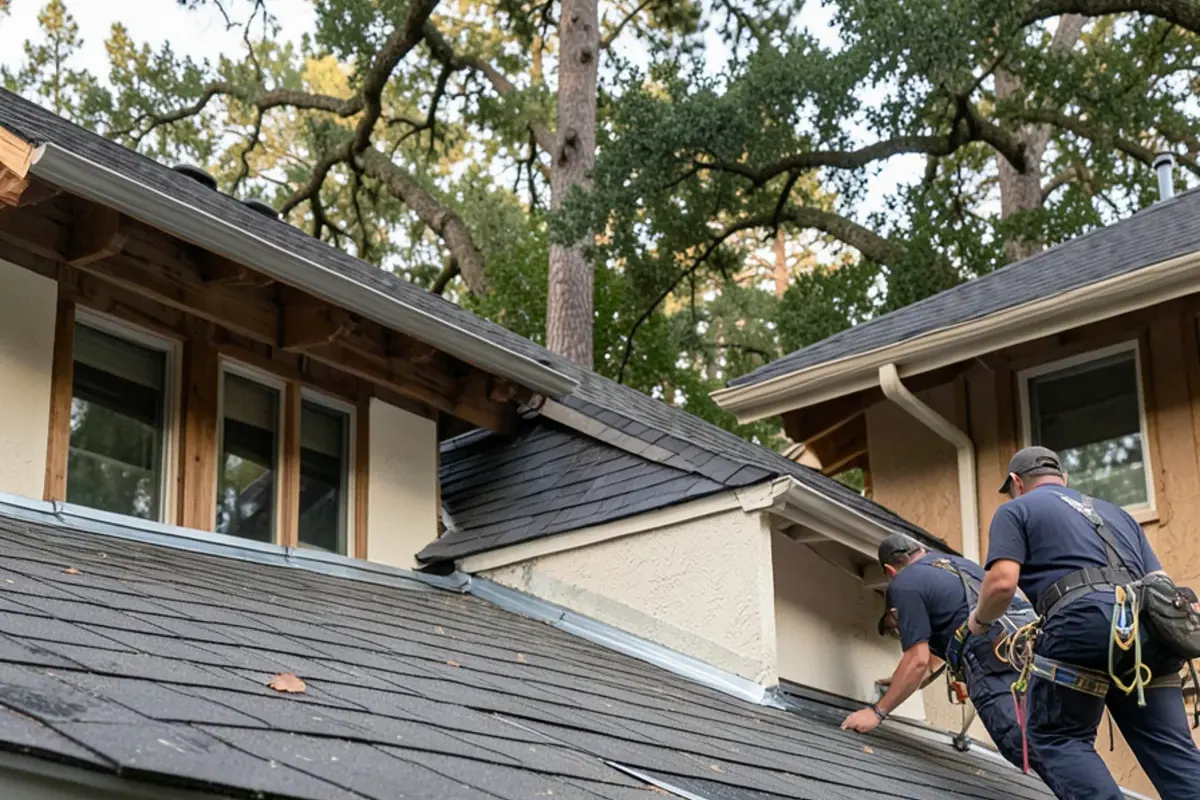
Shared roofs leak at the seams between units more than anywhere else, especially where one owner reroofed years earlier and tied new material into an old neighbor's roof. Those transitions rarely match in height or flashing method. Owner-added skylights and satellite mounts installed without the association's roofer are the next most common entry points.
We have replaced shared townhome roofs for neighbors who decided to do both units together, and the joined approach removes that mismatched seam entirely. For boards, the same logic argues for replacing whole buildings rather than individual units. Communities in Mountain View and around Campbell with flat or low-slope sections should also plan those areas with the commercial roofing scope in mind, since membrane roofs follow different rules than shingles.
Phasing has honest trade-offs. It spreads the cost and keeps the property livable, but each phase pays its own setup, dumpster and permit, and the edge of each finished building needs a temporary tie-in to the old roof next door until that one is done. Doing everything at once gives a lower overhead per building and one color batch, at the price of a much larger assessment and a busier site. Neither is wrong; the reserve study and the condition reports should decide.
Taking the roof plan to a board vote
A board that walks into the vote with condition reports, a written scope, line-item bids and a phase map rarely gets stuck. Members can see why one building goes first and what each phase costs, and the manager can answer questions with photos instead of opinions.
- Before the meeting: circulate the condition summary and the bid comparison table.
- At the meeting: adopt the scope, the phase order and the funding plan in separate motions.
- After the meeting: send the first resident notice and book a dry-season start.
Getting ready to scope an association reroof? Ask Xylo Fix Roofers for a building-by-building condition walk with photos.
Call (725) 745-8803