
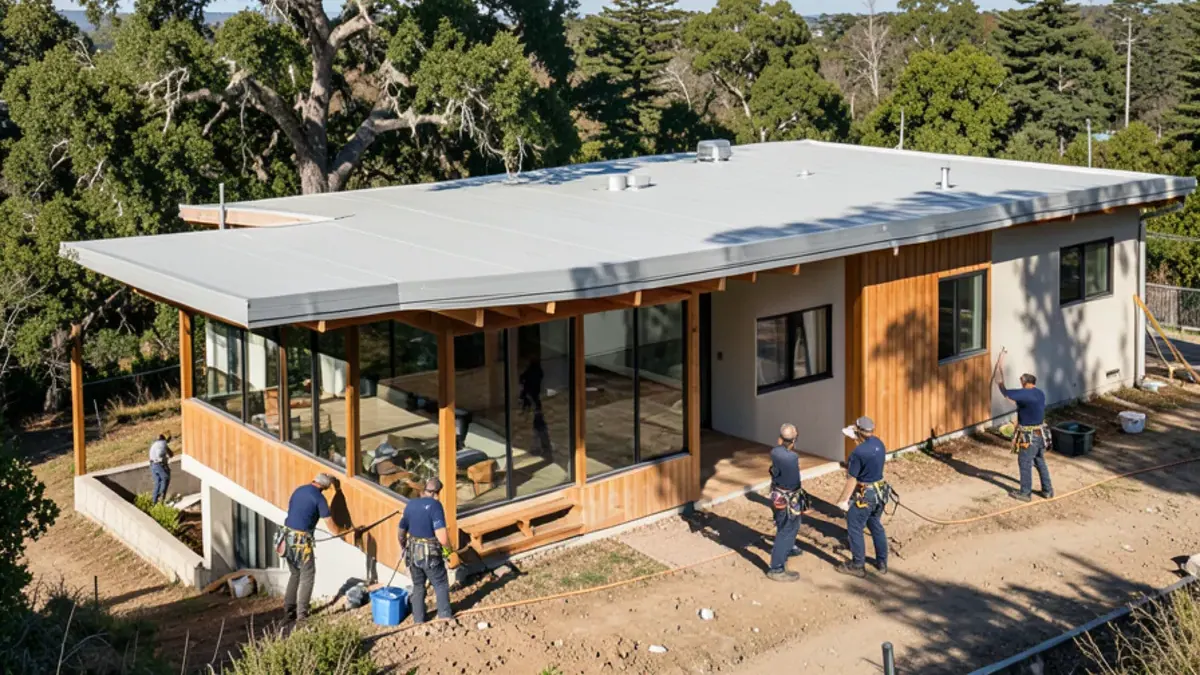
Why do flat roofs need more attention than pitched roofs?
Water runs off a pitched roof in seconds. On a low-slope roof it moves slowly toward drains, scuppers or gutters, and any blockage or low spot leaves it sitting on the membrane. Summer sun also hits a flat roof squarely all day, which ages membranes, sealants and coatings faster than on angled surfaces.
In the South Bay, low-slope roofs are everywhere: Eichler tracts from Palo Alto and Mountain View down through Sunnyvale, Cupertino and San Jose, flat additions on Campbell ranch homes, garages, carports, patio covers and roof decks.
Leaks on flat roofs also travel. Water entering at a seam can run along the deck before it appears on a ceiling several feet away, so maintenance that prevents the leak in the first place is easier than tracing one later.
Want your flat roof checked before the rainy season? Call (725) 745-8803 and we'll send photos of every drain, seam and edge we inspect.
Call (725) 745-8803The twice-yearly flat roof maintenance checklist
| Check | Spring (after rains) | Fall (before rains) | Red flag |
|---|---|---|---|
| Drains and scuppers | Clear winter debris | Clear leaves; test flow with a hose | Water still standing two days after rain |
| Seams and laps | Look for edges lifted by winter wind | Press-test suspect seams | Open or fishmouthed seams |
| Membrane surface | Look for punctures and storm damage | Look for blisters, cracks and crazing from summer heat | Soft spots underfoot |
| Flashing and parapets | Check walls and curbs for gaps | Check counterflashing and termination bars | Loose metal or open caulk joints |
| Penetrations | Check pipes, vents, HVAC stands | Same, plus skylight curbs | Cracked pitch pockets or sealant |
| Coating | Note worn or thin areas | Plan recoat before winter if worn | Exposed base membrane |
| Gutters and edges | Clean and inspect | Clean again after leaf drop | Water running behind the gutter |
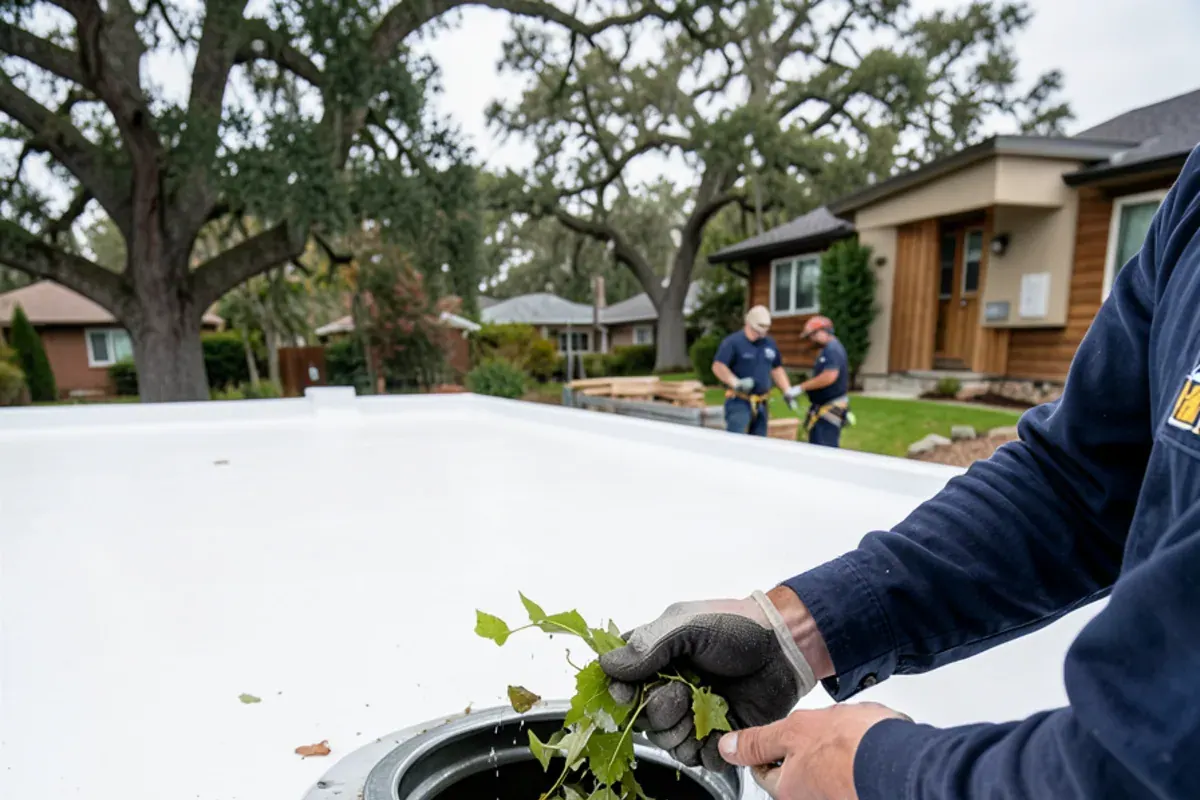
What to watch on each type of flat roof
TPO and PVC
These single-ply membranes rely on heat-welded seams. Look for seams that have separated at the edges, punctures from dropped tools or branches, and shrinkage pulling at corners and curbs.
Modified bitumen and torch-down
Watch for blisters, cracked or bare granule surfaces and open laps. Small blisters that are not growing can often be left alone; ones that crack open need repair.
Foam and coated roofs
Spray foam depends on its coating for UV protection. Bare foam, bird pecking and cracks in the coating need attention before rain gets into the foam.
Tar and gravel
Look for bare spots where gravel has washed away, exposing the bitumen to sun, and for gravel clogging drains.
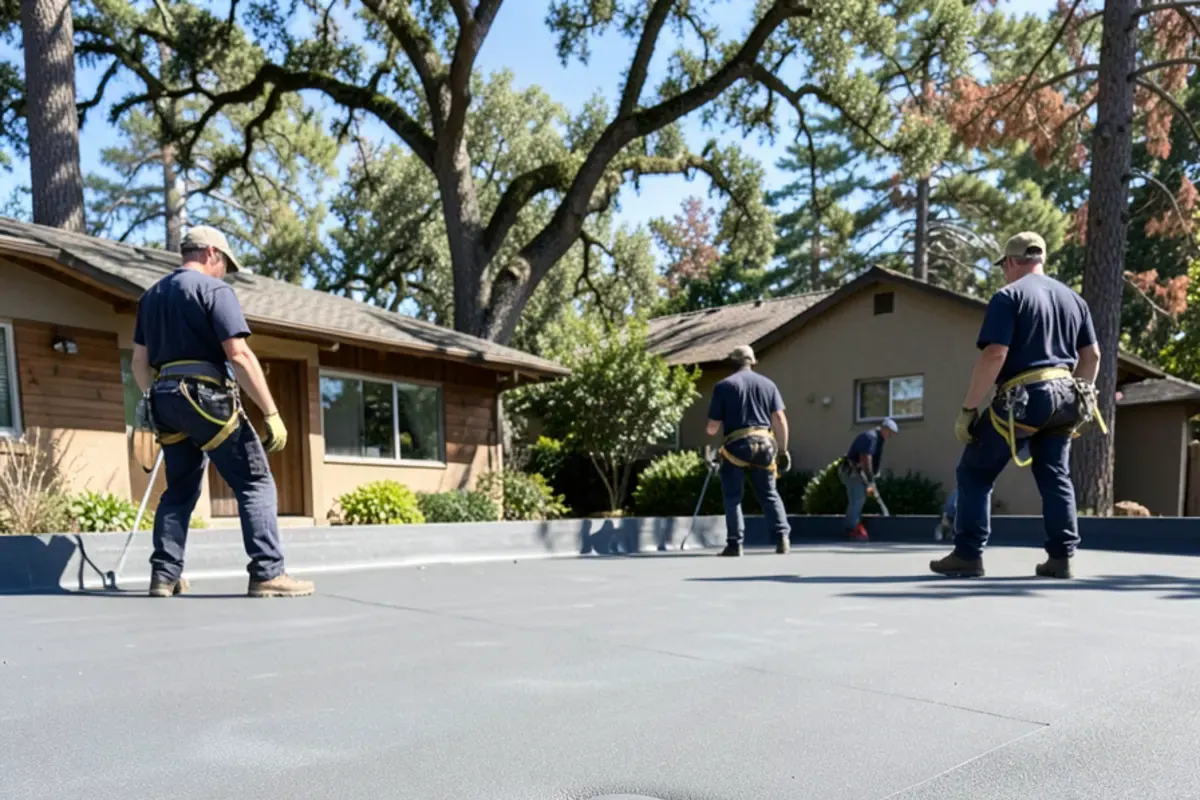
How much ponding water is too much?
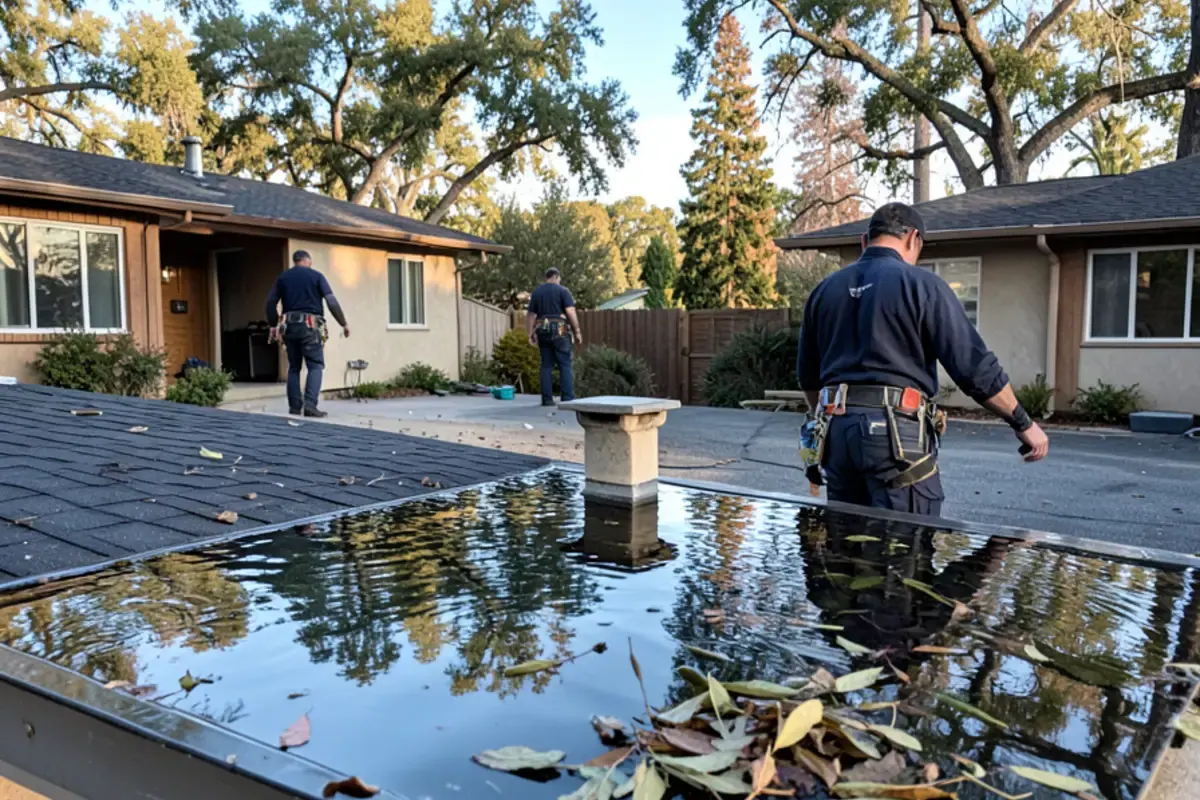
A common industry rule treats water still standing 48 hours after rain as ponding. Shallow puddles that dry within a day are normal on many low-slope roofs. Ponding that lasts longer speeds membrane wear, adds weight to the structure, collects dirt and can find any weak seam in the area.
- First, clear the nearest drain or scupper and see if the water moves.
- Mark the ponding area with a photo after the next rain to track whether it is growing.
- Look for a sagging deck below, which can signal structural or rot problems.
- Ask about tapered insulation, added drains or crickets if ponding persists.
Persistent ponding, open seams and soft spots are the point to call for flat roof repair instead of waiting for the next inspection.
Drains, scuppers and the backup path
Most flat-roof maintenance is really outlet maintenance. Each kind of outlet clogs in its own way, so each gets its own check.
| Outlet | What clogs it | What to check |
|---|---|---|
| Interior drain with a dome strainer | Leaves and grit packed around the dome | Dome seated and bolted to the clamp ring; nothing missing or crushed |
| Through-wall scupper | Leaves and seed pods at the opening | Clear opening, sealed metal sleeve, conductor head below not overflowing |
| Roof edge into a gutter | Debris at the gutter outlet | Water entering the gutter, not running behind it onto the fascia |
| Overflow scupper or drain | Screens, caulk or stored items | Open and unobstructed, a little higher than the main outlet |
Why a missing strainer matters
A dome strainer keeps leaves on the roof, where they can be swept up. Once it is missing or crushed, debris goes down the drain and lodges in the pipe inside the walls or ceiling, where clearing it means a plumber with a drain snake. Replacing a lost strainer is a small, cheap fix worth doing on the spot.
Overflow scuppers are the backup path
Where parapet walls would trap water, the building and plumbing codes call for secondary drainage, usually overflow scuppers or drains set a little higher than the main ones. Water coming out of an overflow scupper is a warning that the primary drain is blocked. Clear both on every visit, and never let an overflow opening be screened shut or caulked over.
Timing coatings and seam repairs
Coating makers generally call for a clean, dry surface, mild temperatures and a dry forecast while the product cures, so spring and early fall are the working windows here. Acrylic coatings are generally not suited to areas that pond, while silicone tolerates standing water better, which is one reason the coating choice follows the drainage check rather than the other way around.
From our roof visits: small flat-roof problems that grow fast
- A single leaf-clogged scupper turning a whole patio roof into a shallow pond.
- HVAC technicians' foot traffic leaving punctures around rooftop units.
- Caulk at parapet terminations that dried and split after one summer.
- Coatings applied over dirty or damp surfaces peeling in sheets.
- Flat additions tied into a pitched roof with flashing that was never stepped correctly.
Each of these is a modest repair when caught in spring or fall. Left through a wet winter, water spreads under the membrane and into the insulation and deck.
And the honest trade-offs in keeping a flat roof going:
- Walkway pads around rooftop equipment cost extra, but they are cheaper than patching punctures after every service call.
- A fresh coating hides the membrane beneath it, so seams and old repairs are harder to judge on later visits. Photograph the surface before any recoat.
- Recoating a sound roof is far cheaper than replacing it, yet each recoat adds to a stack of material that a future tear-off has to remove.
- White surfaces stay cooler but show every footprint and leaf stain, so they look worn before they actually are.
When does a roof coating make sense?
A coating can extend the life of a membrane that is still sound: dry insulation, seams that can be repaired, and no widespread ponding. Silicone and acrylic coatings add UV protection and, in white, a reflective surface. They do not fix a saturated roof. A moisture check comes first, then cleaning, seam repair and the coating itself. Our roof coatings page explains the steps and materials.
For Eichler owners in Mountain View and across the South Bay, a well-timed coating on a sound roof can push back a full replacement, as long as the twice-yearly checks continue.
Keeping a flat roof on schedule year after year
Keep a simple log: the date of each spring and fall check, photos of every drain, scupper and seam you looked at, how long water stood after the last storm, and any repair or recoat. Compared over a few years, those entries show whether ponding is spreading, when a recoat is due and when replacement planning should start. On Eichler roofs, where there is no attic to check from below, that record is often the only early warning you get.
Want a second set of eyes on your flat roof each spring and fall? We'll inspect it, photograph every drain and seam, and write up anything that needs work.
Call (725) 745-8803