
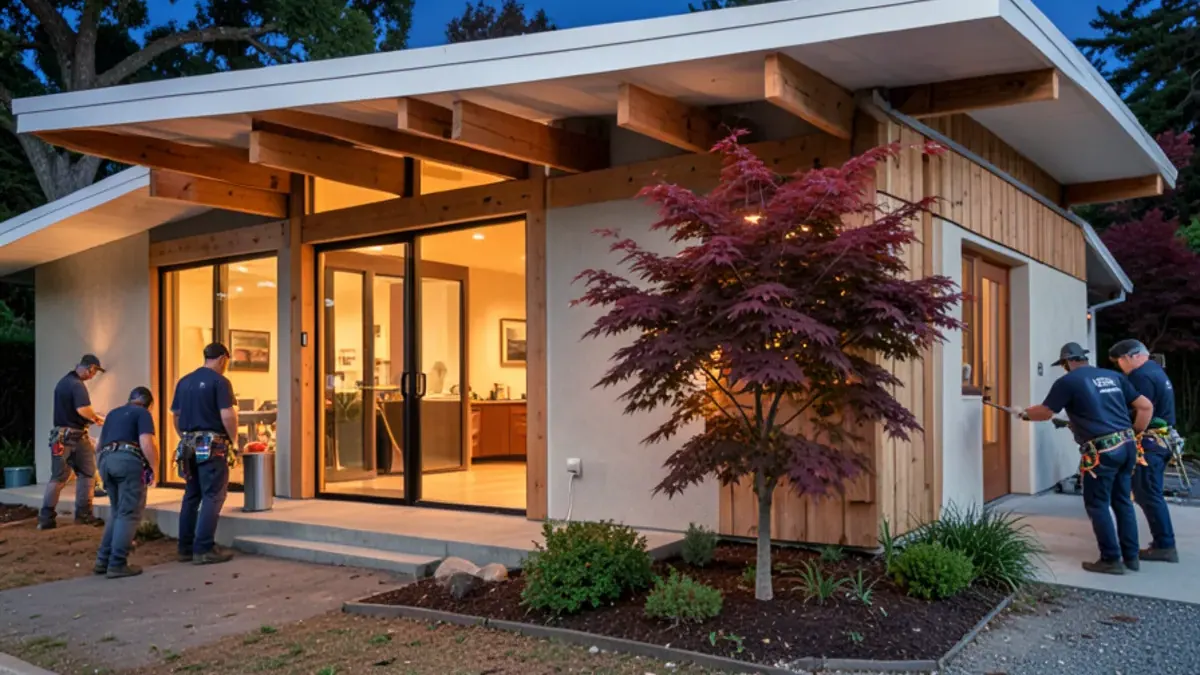
Why Eichler roofs behave differently
Eichler tracts went up from the 1950s into the 1970s across Sunnyvale, Cupertino, Palo Alto, Mountain View and San Jose. They share a few traits that shape every roof decision. The roofs are low-slope or nearly flat. The ceiling inside is usually the underside of the roof deck, tongue-and-groove boards left exposed. Beams run from inside the house straight out past the walls. And there is no attic, so there is nowhere to hide insulation, ducts or wiring.
That means a leak shows on a finished wood ceiling, insulation has to go on top of the deck, and anything changed on the roof is visible in the house's lines. Many owners also want to keep the original look, and some cities publish Eichler design guidance, so check with your city's planning department before altering roof edges or adding height.
Own an Eichler with a tired roof? We will walk it, photograph what we find and explain your options in writing.
Call (725) 745-8803Eichler roof problems, matched to their fixes
| Problem | What you notice | Typical fix |
|---|---|---|
| Ponding water | Puddles that last days after rain; stains on the wood ceiling | Clear drains and scuppers, add tapered insulation or crickets at reroof |
| Worn foam roof | Faded, chalky or eroded coating; exposed foam; bird pecks | Clean and recoat if the foam is sound; replace damaged areas |
| Old tar-and-gravel | Bare spots, blisters, gravel washed into gutters | Targeted repair, or tear-off and a modern membrane |
| Beam-end rot | Soft or split beam tips past the eave; peeling paint | Cut back and splice, epoxy consolidation, metal caps |
| Little or no insulation | Hot rooms in summer, cold ceilings in winter | Rigid insulation above the deck during reroof |
| Skylight and atrium leaks | Drips at skylight frames or atrium edges | Re-flash curbs, replace failed units |
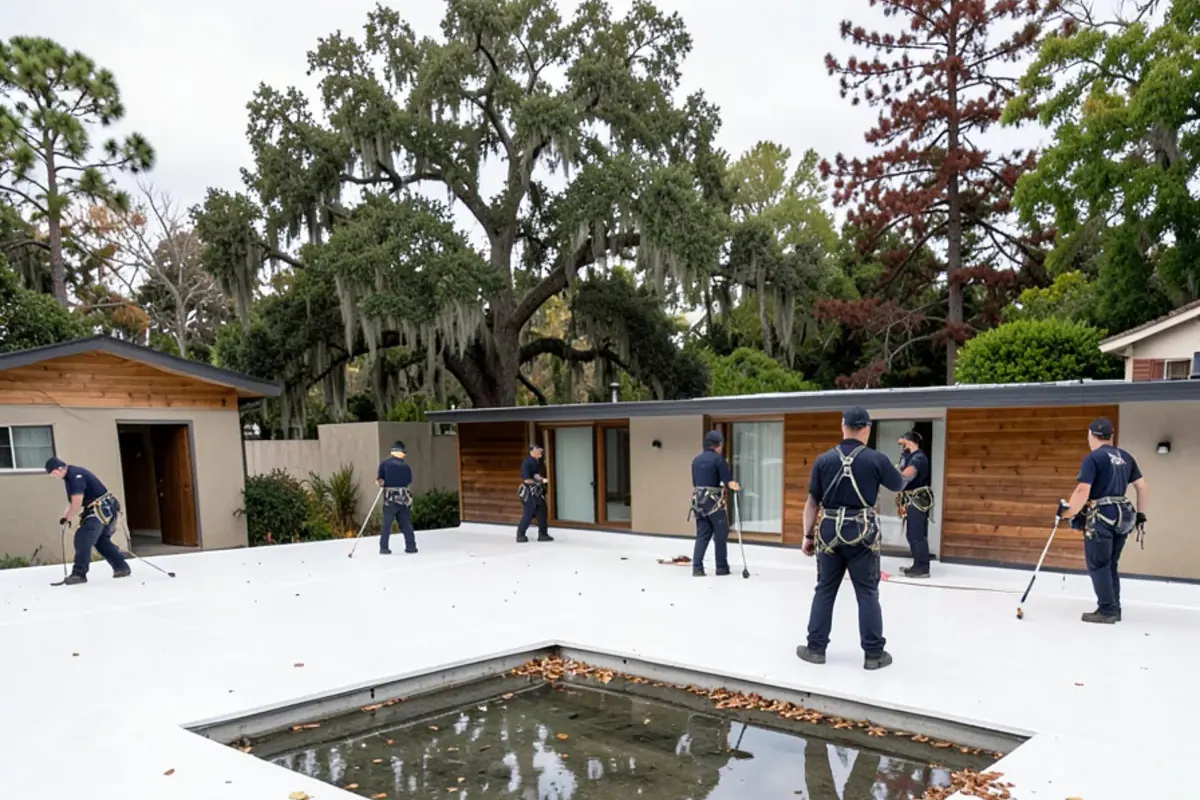
Is your Eichler foam roof worn out?
Many Eichlers were reroofed with spray polyurethane foam, which insulates and waterproofs in one layer. Foam itself breaks down in sunlight, so it depends on a protective elastomeric coating. When that coating wears thin, the foam underneath starts to erode.
- Healthy: coating intact and flexible, no exposed tan or yellow foam.
- Due for recoat: chalky surface, thin spots, fine cracks in the coating.
- Needs repair: exposed foam, pockmarks from birds, soft or wet areas when pressed.
- Near replacement: widespread erosion, trapped moisture, or foam separating from the deck.
Recoating sound foam is often far less expensive than replacing it. Catching the coating before the foam is exposed is what makes that possible. Our Eichler roofing inspections look at the coating, the foam and the deck below as one system.
How do you fix beam-end rot on an Eichler?
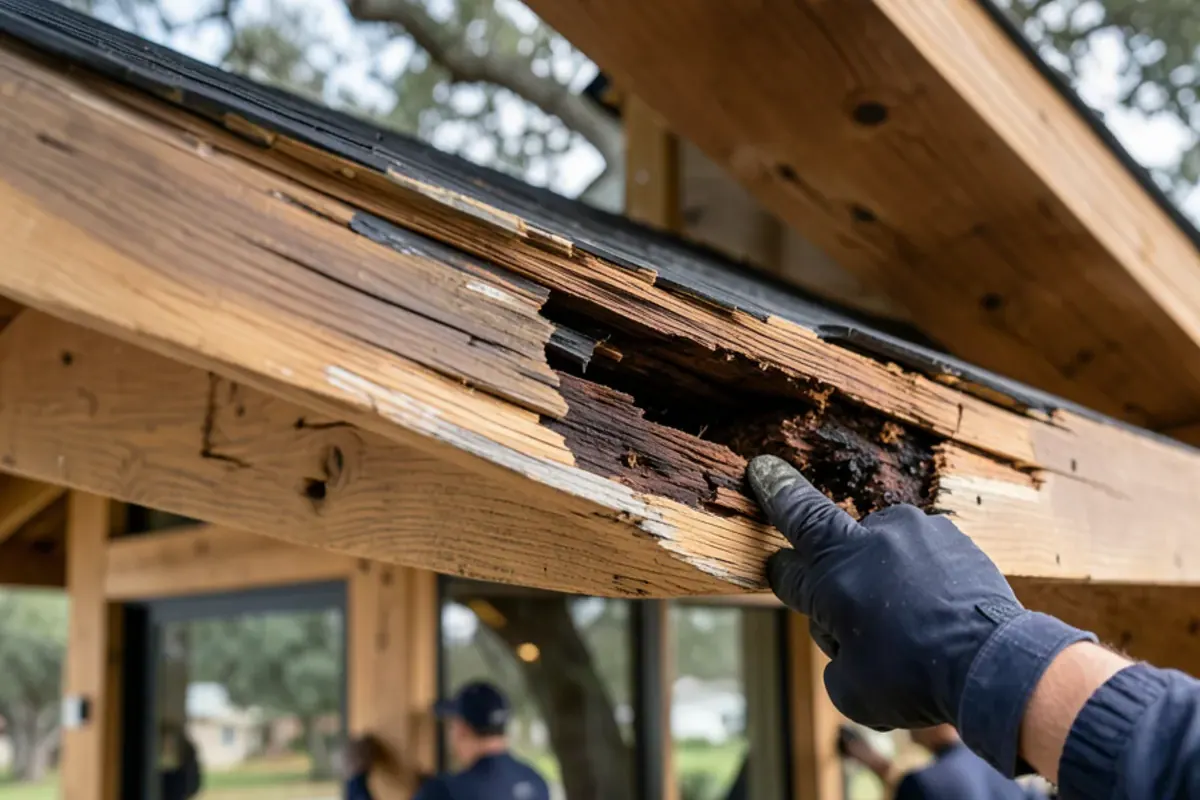
The beams that extend past the walls are the most exposed wood on the house. Rain hits the end grain, sun splits the paint, and water wicks in. Over years the tips turn soft. Because those same beams carry the roof inside, rot that travels inward is a structural concern, not just a cosmetic one.
Small, shallow rot can be dug out and consolidated with epoxy. Deeper damage is cut back to sound wood and a new section is spliced on. Sheet-metal caps over the beam tops then keep rain off the end grain. Where rot reaches inside the wall line, a structural engineer may need to weigh in, and the work may need a permit from your city.
Adding Eichler roof insulation without an attic
With no attic, insulation goes on top of the roof deck. The usual method during a reroof is to lay rigid foam board over the deck, then the new roof membrane over that. Foam roofing does something similar by building up insulating foam directly on the deck. Either way, the exposed wood ceiling inside stays untouched.
Adding thickness raises the roof edge, so fascia and trim details need planning to keep the slim Eichler profile. California's Title 24, Part 6 energy rules can also apply to low-slope reroofs, including cool-roof requirements, depending on the scope. We check those rules with the local building department as part of a flat roof repair or reroof plan.
Foam, single-ply or torch-down: weighing Eichler roof systems
Most Eichler reroofs come down to three systems. Each can work well; the right one depends on how much insulation you want to add, how the edges must look and how much upkeep you will accept.
| System | Strengths | Watch-outs |
|---|---|---|
| Spray foam with elastomeric coating | Insulates and waterproofs in one seamless layer; builds slope into low spots | Needs recoating on the coating maker's schedule; birds and foot traffic damage it |
| TPO or PVC over rigid insulation | Light-colored, heat-welded seams; insulation thickness is easy to specify | Seams and edge metal need careful detailing; adds height at the fascia |
| Modified bitumen (torch-down or self-adhered) | Tough, familiar, easy to patch | Open flame near an exposed wood ceiling deck calls for strict torch safety, or a self-adhered or cold-applied version instead |
Torch work is a real consideration on these houses because the roof deck is also the finished ceiling. The National Roofing Contractors Association runs a dedicated torch-safety training program for exactly this kind of risk. On many Eichlers we lean toward systems that need no open flame at the deck, and we explain why on the estimate.
Old roofing may need testing before tear-off
Roofing felts, mastics and some coatings from the 1950s through the 1970s can contain asbestos, according to the U.S. EPA. Before an original tar-and-gravel roof is torn off, ask whether samples should be tested, and check current requirements with the Bay Area Air Quality Management District.
Atriums, skylights and the drains nobody sees
Many Eichlers wrap around an open-air atrium, and the roof planes on every side drain toward it. That makes the atrium a collection point: leaves from the roof end up on its floor, and its floor drain has to carry storm water from several roof sections at once. If that drain backs up, water can rise against glass walls and door thresholds during a long storm.
Original bubble skylights
The acrylic dome skylights common on these houses turn brittle and cloudy with sun, and their curbs are often flashed with the same aging materials as the roof around them. Replacing them during a reroof lets new curbs and flashing tie into the new membrane in one pass; see our notes on skylight replacement for unit options.
- Clear atrium and roof drains before the first storm of the season.
- Check that downspouts and scuppers discharge away from glass walls.
- Look for brittle, yellowed skylight domes and cracked curb sealant.
- Watch the T&G ceiling near skylights for new dark lines after rain.
From our roof visits: what Eichler roofs teach us
Drains decide how long an Eichler roof lasts. A roof with clear drains and a little slope ages slowly. A roof with a clogged scupper and a low spot in the middle ages fast, because water sits on the same patch for days after every storm.
The leak and the stain are often far apart. Water can travel along the tongue-and-groove joints and appear several feet from where it entered, so we trace it from the roof side, not just from the ceiling.
Original details matter to owners in Sunnyvale and Palo Alto, and we plan edge heights, gravel stops and gutter lines with that in mind. A roof that works but changes the house's silhouette is not a good result.
Every fix on an Eichler trades something. Thicker insulation saves energy but raises the edge, which can make the classic thin fascia look heavy unless the trim is redesigned. Recoating foam costs far less than replacing it, yet it commits you to recoating again on schedule. A bright white membrane keeps rooms cooler but can glare into neighbors' windows on a hillside lot. We lay these out with photos and let the owner weigh them.
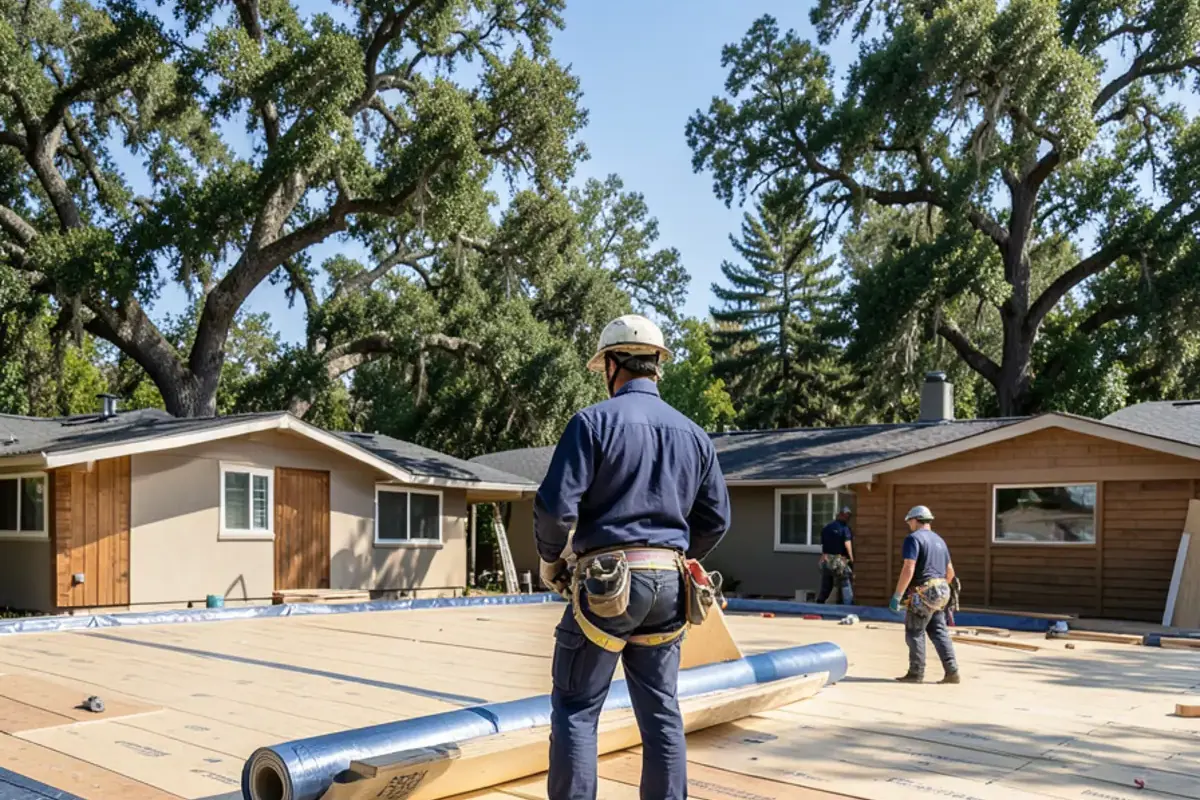
Planning your Eichler roof work: the order that saves money
Eichler roofs reward planning more than most, because every layer is visible or tied to the structure. Work through decisions in this order:
- Fix drainage first: drains, scuppers, crickets and low spots, since every system fails faster under standing water.
- Repair beam ends and soft deck boards while they are exposed, before new roofing covers them.
- Decide on insulation thickness and how the fascia will handle the added height.
- Choose the roof system, then plan skylights and atrium edges around it.
- Confirm permits, Title 24 cool-roof rules and any city Eichler design guidance before work starts.
Planning an Eichler reroof or recoat? We'll walk the roof, photograph the drains, beams and coating, and put each option in writing.
Call (725) 745-8803